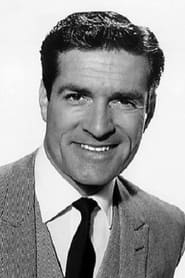
Hugh O'Brian
Actor
Born: April 19, 1925 in Rochester, New York, USA Died: September 5, 2016 Active: 1948-1999 Birth Name: Hugh Charles Krampe
Films
1 film
About Hugh O'Brian
Hugh O'Brian (born Hugh Charles Krampe) was an American actor best known for his starring role as Wyatt Earp in the ABC western television series 'The Life and Legend of Wyatt Earp' (1955-1961). Born in Rochester, New York, he served in the Marine Corps during World War II before beginning his acting career. After being discovered by actress Ida Lupino, he signed with Universal Pictures in 1948 and appeared in numerous films throughout the 1950s. His role as Wyatt Earp made him a household name and one of television's first major western stars. Beyond acting, he founded the Hugh O'Brian Youth Leadership Foundation (HOBY) in 1958, which has become one of the nation's foremost youth leadership development programs. He continued acting in films and television through the 1990s, making his final screen appearance in 1999. O'Brian was also known for his athletic prowess and was a skilled tennis player who competed in senior tournaments well into his later years.
The Craft
On Screen
Known for his tall, commanding presence and deep voice, O'Brian specialized in portraying strong, authoritative characters with a sense of moral integrity. His acting style was straightforward and authentic, particularly effective in western roles where he embodied the classic American hero archetype. He brought a naturalistic approach to his performances, avoiding theatrical affectations while maintaining a screen presence that combined toughness with underlying warmth.
Milestones
- Signed with Universal Pictures in 1948
- Starred as Wyatt Earp in TV series (1955-1961)
- Founded HOBY Youth Leadership Foundation in 1958
- Starred in 'The Ten Commandments' (1956)
- Received Golden Globe nomination in 1957
- Inducted into Western Performers Hall of Fame
- Appeared in over 40 films and television shows
Best Known For
Iconic Roles
Must-See Films
Accolades
Won
- Golden Boot Award (1984)
- Western Heritage Award (1957)
Nominated
- Golden Globe Award for Best Actor - Television (1957)
- Primetime Emmy Award for Best Actor in a Leading Role (1957)
Special Recognition
- Hollywood Walk of Fame Star (1960)
- Western Performers Hall of Fame (1992)
- Marine Corps Citizen Award (1997)
Working Relationships
Worked Often With
Studios
Why They Matter
Impact on Culture
Hugh O'Brian had a significant cultural impact as one of television's first western stars, helping to establish the western genre as a dominant force in 1950s television. His portrayal of Wyatt Earp created an enduring image of the American lawman that influenced countless subsequent westerns. Beyond entertainment, his creation of HOBY in 1958 revolutionized youth leadership development, inspiring over 500,000 high school students worldwide. O'Brian's combination of on-screen heroism and real-world philanthropy made him a role model who bridged the gap between Hollywood glamour and civic responsibility.
Lasting Legacy
Hugh O'Brian's legacy extends far beyond his acting career. While his portrayal of Wyatt Earp remains iconic, his most enduring contribution is the Hugh O'Brian Youth Leadership Foundation, which has become one of America's most prestigious youth leadership programs. The foundation's annual seminars continue to empower young people to become future leaders. In film history, O'Brian is remembered as a representative of the golden age of television westerns and as an actor who successfully transitioned from film to television during a pivotal moment in entertainment history. His life exemplifies the potential for celebrities to use their fame for positive social impact.
Who They Inspired
Hugh O'Brian influenced subsequent generations of western actors through his authentic portrayal of lawmen and his physical approach to action sequences. His success in television helped pave the way for other film actors to transition to the small screen during television's golden age. Through HOBY, he directly influenced hundreds of thousands of young leaders, including many who went on to prominent careers in politics, business, and entertainment. His example of combining entertainment career with philanthropic service inspired other celebrities to establish charitable foundations and youth programs.
Off Screen
Hugh O'Brian was married twice, first to actress Virginia Barber from 1948 to 1950, and later to fashion model Barbara O'Brian from 1962 until his death in 2016. He had no biological children but was a father figure to millions through his HOBY foundation. O'Brian was known for his athletic abilities and was an accomplished tennis player who competed in senior tournaments. He was also close friends with President Ronald Reagan and was active in Republican politics. In his later years, he divided his time between his homes in Beverly Hills and Montana.
Education
Attended New York University for one year, University of Cincinnati for two years, studied pre-law before leaving to serve in the Marines
Family
- Virginia Barber (1948-1950)
- Barbara O'Brian (1962-2016)
Did You Know?
- Was discovered by actress Ida Lupino while working as a department store stock boy
- Served as a Marine drill instructor during World War II
- Was once considered for the role of James Bond before Sean Connery was cast
- Spoke three languages fluently: English, French, and German
- Was an accomplished pilot and owned several aircraft
- Was a competitive tennis player who played in senior tournaments into his 80s
- Turned down the lead role in 'Rawhide' which went to Clint Eastwood
- Was a close friend of President Ronald Reagan and served on several presidential advisory committees
- His HOBY foundation has honored over 500,000 students since 1958
- Was the first celebrity to establish a nationwide youth leadership program
In Their Own Words
I've always believed that the greatest thing you can do is help someone else help themselves.
Playing Wyatt Earp wasn't just acting - it was about embodying the American spirit of justice and courage.
Leadership isn't about being in charge. It's about taking care of those in your charge.
The best role I ever played wasn't on screen - it was founding HOBY and watching young people grow into leaders.
Frequently Asked Questions
Who was Hugh O'Brian?
American with credits in this catalog. He was also a philanthropist who founded the Hugh O'Brian Youth Leadership Foundation (HOBY) in 1958, which has become one of the nation's premier youth leadership development programs.
What films is Hugh O'Brian best known for?
Titles linked here include The Life and Legend of Wyatt Earp (TV Series), The Ten Commandments (1956).
When was Hugh O'Brian born and when did he die?
Born April 19, 1925; died September 5, 2016.
What awards did Hugh O'Brian win?
Hugh O'Brian won the Golden Boot Award in 1984 and the Western Heritage Award in 1957. He received nominations for a Golden Globe Award for Best Actor in Television in 1957 and a Primetime Emmy Award for Best Actor in a Leading Role in 1957. He also received a star on the Hollywood Walk of Fame in 1960.
What was Hugh O'Brian's acting style?
Hugh O'Brian's acting style was characterized by his commanding presence, deep voice, and straightforward, authentic approach. He specialized in portraying strong, authoritative characters with moral integrity, particularly in western roles where he embodied the classic American hero archetype with naturalistic performances that avoided theatrical affectations.