Films
1 film
About Evgeniy Ivanov
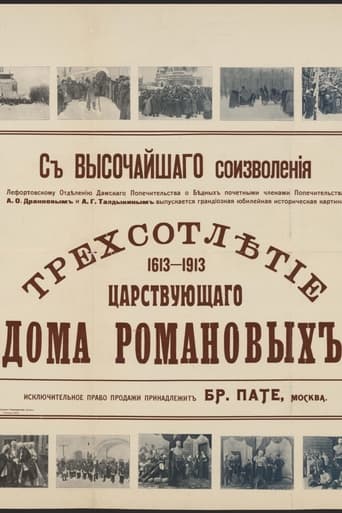
Russian actor active during the early silent film era of Imperial Russia. Evgeniy appears in the 1913 historical documentary 'Tercentenary of the Romanov Dynasty's Accession,' which commemorated the 300th anniversary of the Romanov dynasty's rule in Russia. This film was part of a series of celebratory productions created during the reign of Tsar Nicholas II, showcasing the grandeur and longevity of the Romanov monarchy. Ivanov's career appears to have been brief and concentrated in the year 1913, coinciding with the tercentenary celebrations that dominated Russian cultural life that year. Like many actors of this period in Russian cinema, his work was primarily in short films and documentaries that often served propagandistic or commemorative purposes for the imperial regime. The early Russian film industry was still in its infancy, and many actors from this era remain obscure due to the loss of films and documentation during the revolutionary period and subsequent political upheavals.
The Craft
Milestones
- Appeared in the historical documentary 'Tercentenary of the Romanov Dynasty's Accession' (1913)
Best Known For
Must-See Films
Why They Matter
Impact on Culture
Evgeniy Ivanov represents the early generation of Russian actors who helped establish the foundation of Russian cinema during the final years of the Imperial period. His participation in the 1913 tercentenary celebrations places him within a significant moment in Russian cultural history, when film was increasingly being used to promote imperial ideology and national identity. While his individual contribution may have been modest, he was part of the generation of Russian film actors who worked in an industry that would later produce some of cinema's most celebrated directors and performers during the Soviet era.
Lasting Legacy
Due to the extremely limited documentation and the loss of many early Russian films, Evgeniy Ivanov's legacy remains largely obscure. He is remembered primarily through his association with the 1913 Romanov tercentenary celebrations, which represent an important milestone in the development of Russian cinema as a medium for national commemoration and propaganda. His brief appearance in the historical record shows the many anonymous actors who contributed to the birth of Russian film art.
Who They Inspired
As an actor from the very early period of Russian cinema, Evgeniy Ivanov's direct influence on subsequent generations of performers is difficult to trace. However, he was part of the foundational generation that helped establish acting conventions and techniques in Russian film, which would later be refined and developed by the great actors of the Soviet era.
Off Screen
Very little is known about Evgeniy Ivanov's personal life, which is typical for actors from the very early period of Russian cinema. Many records from this era were lost during the Russian Revolution and subsequent political turmoil.
Did You Know?
- The 1913 film he appeared in was created to celebrate 300 years of Romanov rule in Russia
- 1913 was a significant year for Russian cinema, with increased production to mark the tercentenary
- Many early Russian films from this period have been lost or destroyed
- The Russian film industry was still in its infancy in 1913, with most productions being short documentaries or historical tableaux
- Actors from this era often came from theatrical backgrounds, as film acting techniques were still being developed
- The Romanov tercentenary was one of the last major celebrations of the Imperial regime before World War I and the Revolution
Frequently Asked Questions
Who was Evgeniy Ivanov?
Screen credits include the 1913 historical documentary 'Tercentenary of the Romanov Dynasty's Accession.' His career appears to have been brief and concentrated around the year 1913, during the major celebrations of the Romanov dynasty's 300th anniversary.
What films is Evgeniy Ivanov best known for?
Titles linked here include Tercentenary of the Romanov Dynasty's Accession (1913).
When was Evgeniy Ivanov born and when did he die?
Specific birth and death dates for Evgeniy Ivanov are not available in existing records, which is common for actors from the very early period of Russian cinema when documentation was limited and many records were later lost.
What awards did Evgeniy Ivanov win?
No awards or nominations for Evgeniy Ivanov are documented, which is typical for actors from the early 1910s when formal award systems for cinema had not yet been established in Russia.
What was Evgeniy Ivanov's acting style?
Specific details about Evgeniy Ivanov's acting style are not documented. However, actors from this period in Russian cinema typically employed theatrical techniques adapted for the silent medium, with exaggerated gestures and expressions to convey emotion without sound.
Why is so little known about Evgeniy Ivanov?
Limited information about Evgeniy Ivanov is typical for actors from early Russian cinema due to several factors: the loss of many films and records during the Russian Revolution, the obscurity of supporting actors in early productions, and the general lack of systematic documentation in the nascent Russian film industry of the 1910s.