Gemma De Ferrari
Actor
- Active
- 1909-1909
Films 1
About Gemma De Ferrari
Gemma De Ferrari appears in surviving film reference records as an early Italian screen actor active in the silent period, with a documented credit in the 1909 film The Garibaldi Boy. Beyond that single surviving screen citation, little securely verifiable biographical information has been preserved in widely accessible standard film reference sources, which is not unusual for performers from the earliest years of cinema. Like many actors of the 1900s, De Ferrari worked during a period when casts were often only partially documented and studio publicity was still in its infancy, making personal details such as birth, death, family background, and training difficult to confirm today. The available evidence suggests involvement in Italian silent cinema at a formative moment when short historical and patriotic subjects were helping define the medium's local identity. Because no additional reliable filmography has been consistently attributed to this name in major reference repositories, De Ferrari is best understood as a minor but real participant in the pioneering years of screen acting. Their surviving credit nonetheless places them among the early generation of performers who helped establish acting conventions for narrative film before feature-length cinema became dominant.
More about Gemma De Ferrari
On screen
No direct descriptions of Gemma De Ferrari's acting technique survive in commonly cited sources. Given the 1909 production date, the performance would likely have relied on expressive silent-era gestures, clear physical emphasis, and heightened facial articulation typical of early narrative cinema. In this period, actors often balanced stage-derived pantomime with the emerging demands of photographic realism, especially in short historical subjects. Any assessment beyond this general context would be speculative.
In film history
Gemma De Ferrari's cultural impact is primarily historical rather than star-driven: the name survives as evidence of the many working actors who contributed to the birth of Italian screen storytelling. Performers like De Ferrari helped populate the early silent landscape of historical recreations, literary adaptations, and patriotic dramas that gave cinema public legitimacy in the first decade of the 20th century. Even when an actor's individual fame did not endure, their participation mattered in shaping the collaborative grammar of silent film performance, where expression, framing, and gesture had to communicate clearly without spoken dialogue. In that sense, De Ferrari stands for an entire generation of early screen artists whose labor made later cinematic sophistication possible.
Later reputation
The lasting legacy of Gemma De Ferrari lies in their place within the earliest documented phase of Italian film history. With only a small surviving footprint, the name is significant to researchers because it anchors a real presence in 1909 cinema and underscores how incomplete the archival record remains for silent-era performers. De Ferrari's credit in The Garibaldi Boy contributes to our understanding of how quickly Italy was developing a national film culture around historical themes and recognizable public figures. For film historians, such names are valuable not only for what is known but also for what they reveal about the fragility of early screen careers and the uneven survival of film documentation.
Influence
There is no securely documented direct influence on later actors or filmmakers that can be attributed to Gemma De Ferrari. Their broader influence is indirect and collective, as part of the first generation of screen performers who helped establish early acting norms in Italian silent cinema. The work of such actors informed the evolution from theatrical presentation toward more restrained, camera-aware performance styles. In this respect, De Ferrari belongs to the foundational layer of cinema history rather than to the canon of widely influential stars.
Off screen
No reliable, widely documented personal-life information could be verified for Gemma De Ferrari in standard classic-cinema reference sources. Birth and family details, marital history, children, and later-life circumstances are not clearly established in the surviving record. This lack of documentation is common for early silent-era performers whose careers were brief or whose studio-era publicity did not preserve personal data. As a result, any attempt to reconstruct their private life would be conjectural rather than factual.
Credits
- Documented screen credit in the 1909 silent film The Garibaldi Boy
- Participation in one of the earliest eras of narrative Italian cinema
- Association with historical or patriotic filmmaking themes characteristic of the period
- Representation of the largely under-documented rank-and-file performers of early silent cinema
Roles
- A role in The Garibaldi Boy (1909)
Films
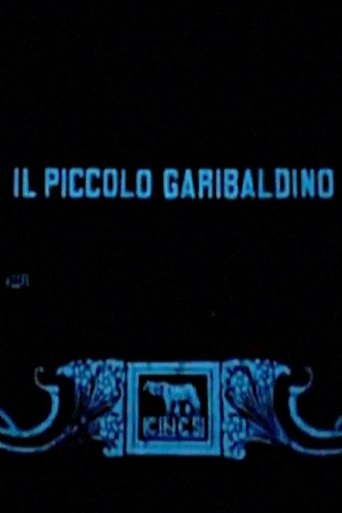
- The Garibaldi Boy (1909)
Notes
- Gemma De Ferrari is associated with one of the very earliest years of surviving Italian film documentation, 1909.
- The only firmly identified screen credit commonly attached to the name is The Garibaldi Boy.
- The Garibaldi Boy suggests a historical or patriotic subject, a popular genre in early Italian cinema.
- No verified birth, death, or family details are readily available in standard reference sources.
- The scarcity of information is typical of many silent-era performers whose careers were brief or poorly archived.
- De Ferrari's record is useful to historians because it helps reconstruct the cast lists of early films that might otherwise be anonymous.
- The name appears to be that of an actor rather than a director, producer, or behind-the-scenes filmmaker.
- Because documentation is limited, it is important not to confuse this person with similarly named individuals from later periods.
Questions
Who was Gemma De Ferrari?
Gemma De Ferrari was an early Italian silent-film actor, known in surviving records for appearing in The Garibaldi Boy (1909). Very little biographical information has survived about the person, which is common for performers from cinema's earliest years.
What films is Gemma De Ferrari best known for?
Gemma De Ferrari is best known for The Garibaldi Boy (1909), which is the principal surviving screen credit attached to the name in major reference materials. No additional widely confirmed film credits are readily verifiable.
When was Gemma De Ferrari born and when did they die?
No reliable birth or death dates have been securely documented in the surviving reference record. The available film evidence only confirms activity in 1909.
What awards did Gemma De Ferrari win?
No awards or formal honors are known to be documented for Gemma De Ferrari. This is not unusual for silent-era performers, many of whom worked before modern film-awards culture existed.
What was Gemma De Ferrari's acting style?
There is no direct contemporary description of Gemma De Ferrari's technique that survives in widely accessible sources. Given the 1909 context, the performance would likely have used expressive silent-era gestures and facial emphasis typical of early Italian cinema.
What is Gemma De Ferrari's legacy in film history?
Gemma De Ferrari's legacy is archival and historical: the name survives as evidence of the many early performers who helped build silent cinema. Even with limited documentation, the credit in The Garibaldi Boy places De Ferrari within the foundational phase of Italian film history.