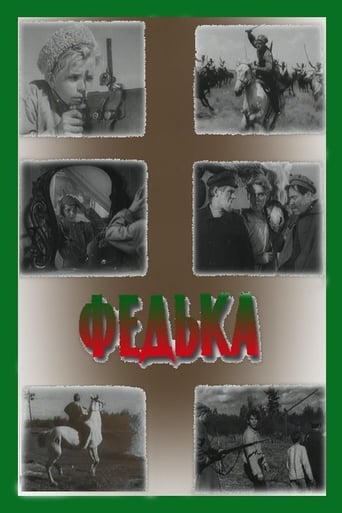
Films
1 film
About Aleksandr Zasorin
This archive lists one role for Aleksandr Zasorin: Fedka (1936). With his only documented film credit being the 1936 production 'Fedka'. His the brief period of 1936, suggesting he may have been a character actor or had a very limited filmography during Stalin's era of Soviet cinema. The film 'Fedka' was produced during a time when Soviet cinema was heavily state-controlled and focused on promoting socialist ideals through cinematic art. Like many actors of this period, Zasorin's work would have been subject to the strict artistic guidelines established by Soviet authorities. His appearance in this film places him among the generation of actors who helped transition Soviet cinema from the silent era to sound, though detailed records of many performers from this era remain limited. The scarcity of information about his career suggests he may have been primarily a stage actor or had other professional activities outside the film industry.
The Craft
Milestones
- Appeared in the Soviet film 'Fedka' (1936)
Best Known For
Iconic Roles
Must-See Films
Working Relationships
Studios
Why They Matter
Impact on Culture
As a minor actor from the early Soviet sound era, Aleksandr Zasorin represents the countless performers who contributed to the development of Soviet cinema during the Stalinist period. While his individual impact may have been limited, actors like him were essential to the Soviet film industry's efforts to create a new socialist cinema that would educate and entertain the masses. His work in 1936 places him during a crucial transitional period when Soviet cinema was establishing its distinctive style and ideological direction.
Lasting Legacy
The legacy of Aleksandr Zasorin is primarily preserved through his appearance in 'Fedka' (1936), making him part of the historical record of early Soviet sound cinema. While not widely recognized internationally, actors like Zasorin contributed to the Soviet film history during one of its most ideologically charged periods. His limited filmography reflects the challenges many actors faced in gaining prominence in the highly competitive and politically controlled Soviet film industry of the 1930s.
Who They Inspired
Given his brief documented career, there is limited evidence of Aleksandr Zasorin's direct influence on other actors or filmmakers. However, like all actors working in Soviet cinema during this period, he would have been part of the collective effort to establish acting techniques and performance styles appropriate to socialist realist cinema, which would influence generations of Soviet performers to follow.
Off Screen
Very limited information is available about Aleksandr Zasorin's personal life, which is common for many Soviet actors from the 1930s whose careers were brief or primarily focused on supporting roles.
Did You Know?
- Appeared in only one documented film, 'Fedka' (1936)
- His entire known film career lasted just one year
- Worked during the early sound era of Soviet cinema
- Active during Stalin's rule when Soviet cinema was heavily state-controlled
- Part of the generation that transitioned Soviet cinema from silent to sound films
- Like many Soviet actors of his era, limited biographical information survives
- His film 'Fedka' was produced during the height of socialist realist ideology in Soviet arts
Frequently Asked Questions
Who was Aleksandr Zasorin?
Screen credits include the 1936 film 'Fedka'. His documented film career was extremely brief, spanning only the year 1936, making him one of many lesser-known performers from early Soviet sound cinema.
What films is Aleksandr Zasorin best known for?
Titles linked here include Fedka (1936).
When was Aleksandr Zasorin born and when did he die?
Specific birth and death dates for Aleksandr Zasorin are not available in historical records. This is common for many Soviet actors from the 1930s who had brief or minor film careers, as detailed biographical information was not always preserved.
What awards did Aleksandr Zasorin win?
There are no documented awards or honors for Aleksandr Zasorin. Given his brief film career and the limited nature of his documented work, he did not receive formal recognition that would have been recorded in historical archives.
What was Aleksandr Zasorin's acting style?
Specific details about Aleksandr Zasorin's acting style are not documented. As a Soviet actor in 1936, he would have worked within the conventions of socialist realism, which emphasized clear, ideologically appropriate performances that served the educational and propaganda goals of Soviet cinema.
Why is there so little information about Aleksandr Zasorin?
The scarcity of information about Aleksandr Zasorin is typical of many Soviet actors who had brief film careers or primarily worked in supporting roles. During the 1930s, many performers were not extensively documented, especially if they were not prominent figures in the Soviet film industry or if they had careers primarily outside of cinema.