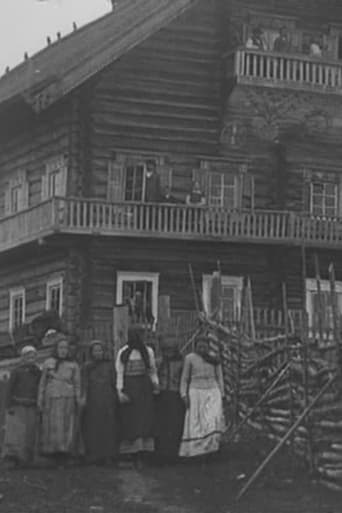
Olga Trofimova
Actor
- Active
- 1921-1921
Films 1
About Olga Trofimova
Olga Trofimova appears in surviving film records as a very early screen performer active in 1921, credited in the film Karelian Wedding in the Land of the Kalevala. Beyond that single confirmed credit, readily verifiable biographical information about her is extremely limited, which is not unusual for minor or regional performers from the silent era whose work was documented inconsistently. She is associated with a film drawn from Karelian and Finnish cultural material, suggesting participation in a production tied to ethnographic, folkloric, or national-romantic themes rather than mainstream commercial cinema. Because accessible archival sources do not reliably preserve additional details about her life, training, later career, or personal background, many standard biographical fields remain undocumented. Her surviving screen presence is therefore mainly of interest to film historians tracing the representation of regional culture and early Soviet or Northern European silent filmmaking. In the absence of corroborated records, she should be understood as a historically real but sparsely documented screen actor whose known career footprint is presently confined to a single early film credit.
More about Olga Trofimova
In film history
Olga Trofimova's cultural impact is difficult to measure in the conventional star-centered sense because no substantial body of verified work survives under her name. However, her credit in Karelian Wedding in the Land of the Kalevala places her within an important historical moment when cinema was being used to capture or interpret local folklore, ethnic identity, and regional traditions. Performers like Trofimova contributed to the texture and authenticity of these productions, even when their individual names were not widely publicized or preserved. For film historians, such figures are important because they illuminate how early cinema extended beyond major urban studios and celebrity culture into culturally specific projects that now serve as historical documents. Her presence in the record also underscores the fragility of silent-era attribution, especially for actors outside the best-documented national cinemas.
Later reputation
Trofimova's legacy lies less in fame than in historical significance: she is part of the surviving cast record of an early 1920s film connected to Karelian and Kalevala traditions. For scholars of silent cinema, every confirmed credit helps reconstruct the networks of actors, local performers, and cultural intermediaries who participated in early film production. Even a single preserved role can be valuable evidence of performance practices, casting patterns, and the circulation of folklore on screen. In that sense, her legacy is archival and historiographic, helping complete the picture of cinema beyond the famous names that dominate film history. She remains a reminder that many contributors to early film culture were active only briefly and left behind fragmentary traces.
Influence
There is no documented evidence that Olga Trofimova directly influenced later actors or directors in a traceable, named way. Her influence is instead indirect and cumulative, through her participation in an early folklore-based film that contributes to the broader visual tradition of representing regional identity on screen. For researchers, such performers help define the look and social fabric of silent-era cinema, even when individual stylistic signatures are no longer recoverable. Her historical importance is therefore more contextual than personal, existing within the larger development of ethnographic and culturally localized filmmaking.
Off screen
No reliably verified information about Olga Trofimova's personal life, family background, marriages, or private circumstances is readily available in standard film reference sources. Unlike major stars of the silent era, she does not appear to have a well-documented public biography preserved in widely accessible records. As a result, any claims about her upbringing, relationships, or later life would be speculative and are not included here. Her surviving identity in film history is therefore primarily professional and archival rather than biographical.
Credits
- Appeared in the silent-era film Karelian Wedding in the Land of the Kalevala (1921).
- Represents one of the many early screen performers whose surviving record is limited to a single verified film credit.
- Associated with a production rooted in Karelian and Kalevala-inspired cultural material, making her part of early cinematic interest in folklore and regional identity.
Roles
- Performer in Karelian Wedding in the Land of the Kalevala (1921)
Films
Notes
- Her known filmography, based on currently accessible records, consists of a single confirmed credit.
- She is associated with a film referencing the Kalevala, the Finnish national epic, indicating a folkloric rather than mainstream commercial context.
- The survival of her name in film records is valuable precisely because so many silent-era performers remain otherwise undocumented.
- Her career appears to have been confined to the year 1921, at least in surviving sources.
- She is an example of how many early screen actors were recorded only in cast lists, production notes, or archival databases.
- No reliable public biographical profile, awards record, or later-life documentation is readily available for her.
Questions
Who was Olga Trofimova?
Olga Trofimova was a silent-era actor known from surviving film records for her appearance in Karelian Wedding in the Land of the Kalevala (1921). Beyond that verified credit, detailed biographical information about her life and career is scarce. She is primarily of interest to film historians studying early regional or folklore-based cinema.
What films is Olga Trofimova best known for?
She is best known for Karelian Wedding in the Land of the Kalevala (1921), which is the only securely documented film credit currently associated with her. No other confirmed film appearances are readily available in standard references.
When was Olga Trofimova born and when did she die?
Her birth date and death date are not reliably documented in the accessible sources available for this profile. As a result, both details remain unknown rather than inferred.
What awards did Olga Trofimova win?
No awards or formal honors are currently documented for Olga Trofimova in the available record. This is not unusual for lesser-documented silent-era performers whose careers were not widely publicized.
What was Olga Trofimova's acting style?
There is no surviving critical description of her acting style in the sources currently accessible. Given the era and the type of film she appeared in, her performance would have followed silent-era screen acting conventions, but specific stylistic details are not verifiable.
What is Olga Trofimova's legacy in film history?
Her legacy is archival and historical: she is one of the many early screen performers whose name survives mainly through a single credit. That makes her useful to researchers reconstructing silent cinema, regional film production, and the representation of folklore on screen.