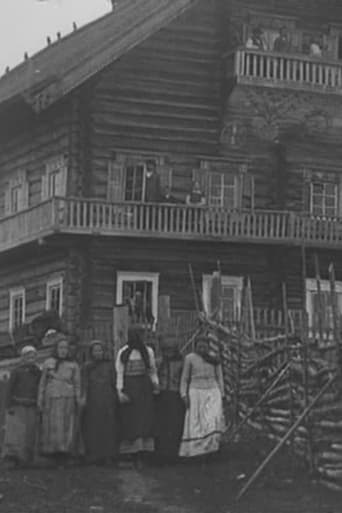
Ivan Brelo
Actor
- Active
- 1921-1921
Films 1
About Ivan Brelo
Ivan Brelo is a scarcely documented early Finnish/Scandinavian screen actor associated with the silent-era production "Karelian Wedding in the Land of the Kalevala" (1921), a film tied to the romanticized folkloric imagery of the Kalevala tradition. Surviving reference sources identify him primarily through this single credited screen appearance, and no reliable biographical record has been widely preserved in standard film histories, archival actor directories, or mainstream reference works. Because of that, his life beyond this brief film credit remains obscure, including his birth details, training, stage background, and any later career in theater, film, or public life. His presence in a 1921 production places him in the formative period of Nordic cinema, when many performers worked in a small, closely connected production environment and often appeared in only one or a handful of surviving films. It is possible that he was a local stage or amateur performer brought into the project for its folkloric or regional authenticity, but this cannot be stated with certainty without corroborating archival evidence. At present, he is best understood as a minor but historically interesting figure in early regional cinema, remembered chiefly because of his association with a culturally significant silent film.
More about Ivan Brelo
On screen
No authenticated descriptions of Ivan Brelo's acting style survive in available reference material. Given the period and the silent medium, any performance would have depended on gesture, facial expression, and broad visual storytelling rather than dialogue. If he was cast in a folklore-centered production, his screen presence was likely shaped by ensemble staging and stylized regional characterization rather than star-focused performance technique. However, without surviving reviews or production notes naming and describing his role, this remains an informed but unverified inference.
In film history
Ivan Brelo's cultural impact is necessarily modest and indirect, but his name survives as part of the cast record for a silent film connected to the Kalevala, one of the foundational mythic texts of Finnish cultural identity. Performers like Brelo are historically important because they help reconstruct the personnel of early regional cinema, where many contributors were not star figures but still participated in the creation of culturally resonant films. His credit also reflects how silent-era national and folkloric cinema relied on a mixture of professional and semi-professional talent to bring local stories to the screen. Even with little biographical detail, his participation in such a project places him within the broader history of early Scandinavian screen culture and the visual representation of folklore.
Later reputation
Brelo's legacy lies primarily in archival presence rather than in a widely documented body of work. For film historians, names like his are valuable because they preserve evidence of who contributed to early productions that may otherwise be poorly documented or partially lost. His association with a Kalevala-related film gives him a small but meaningful place in the history of culturally nationalist cinema in the Nordic region. In that sense, his legacy is the survival of a credit and the reminder that early cinema was built not only by major auteurs and stars, but also by many lesser-known performers whose contributions are now fragmentary in the historical record.
Influence
There is no documented evidence that Ivan Brelo directly influenced later actors or filmmakers in a traceable way. Any influence he may have had would have been local, ephemeral, or absorbed into the collaborative performance traditions of early regional cinema. His significance for later scholarship is primarily archival: he helps establish cast lists, production histories, and the human texture of silent-era filmmaking. As such, his influence is best understood as indirect, through the preservation of early film history rather than through a clearly identifiable artistic school or lineage.
Off screen
No reliable public information has been located about Ivan Brelo's personal life, including family background, marriages, children, residence, or later occupation. He does not appear to have a documented celebrity profile in the standard historical record, which suggests that he may have been a minor performer, a local participant in a regional production, or someone whose archival trace has largely been lost. Because of this absence of corroborated data, any claim about his private life would be speculative and should be treated cautiously.
Education
No verified educational background is available in accessible historical sources.
Credits
- Appeared in the silent film "Karelian Wedding in the Land of the Kalevala" (1921), the only firmly identified screen credit associated with him
- Participated in an early film drawing on Kalevala-inspired national folklore and regional imagery
- Represents the kind of lightly documented performer common in silent-era local and national film production
- Provides a historical trace of cast participation in an otherwise obscure early 1920s production
Roles
- Cast member in "Karelian Wedding in the Land of the Kalevala" (1921)
Films
Notes
- Ivan Brelo is known almost entirely from a single surviving film credit in the 1921 silent production "Karelian Wedding in the Land of the Kalevala."
- He appears to have been part of an early Nordic or Finnish cinema context, but standard reference sources do not preserve a detailed biography.
- His case is typical of many silent-era performers whose careers are difficult to reconstruct because records were incomplete or later lost.
- The film associated with him draws on the Kalevala, linking his screen work to Finnish national mythology and folk culture.
- No reliable public information has been located about his birth, death, family, or subsequent career.
- He may have been a local performer or an otherwise undocumented stage actor, but this remains unconfirmed.
- Because he is so sparsely documented, his name is of particular interest to film archivists and researchers reconstructing regional cast histories.
Questions
Who was Ivan Brelo?
Ivan Brelo was a little-documented silent-era actor known primarily for appearing in "Karelian Wedding in the Land of the Kalevala" (1921). Beyond that screen credit, reliable biographical information is extremely limited, and he remains an obscure figure in early cinema history.
What films is Ivan Brelo best known for?
He is best known for "Karelian Wedding in the Land of the Kalevala" (1921), which is the only firmly identified film credit currently associated with him. No other verified film roles are available in the accessible record.
When was Ivan Brelo born and when did he die?
His birth and death dates are not reliably documented in the sources currently available. Because of that, both dates must be treated as unknown rather than inferred.
What awards did Ivan Brelo win?
No awards or formal honors are known for Ivan Brelo. He appears in the historical record only as a cast member in a single early film, and no award documentation has survived or been located.
What was Ivan Brelo's acting style?
There are no surviving reviews or descriptions that clearly define his acting style. Since he worked in silent cinema, his performance would have relied on visual expression and gesture, but any further detail would be speculative.
Why is Ivan Brelo historically significant?
His significance lies in his connection to early Nordic silent cinema and a film inspired by the Kalevala tradition. Even though he is obscure, his name helps preserve the cast history of a culturally meaningful production.
Did Ivan Brelo work with major stars or directors?
No frequent collaborators or major creative partnerships are firmly documented for him. The surviving record does not provide enough information to identify a broader professional network.