Films
1 film
About Armando Novi
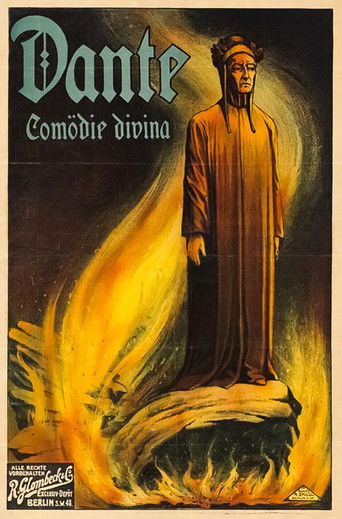
Armando Novi appears once in this catalog: Dante's Inferno (1911). His known filmography consists of a single appearance in the 1911 film 'Dante's Inferno' (L'Inferno), which was one of the first full-length feature films ever produced in Italy. As an actor in the nascent Italian film industry, Novi was part of a generation of performers who helped establish the language of cinema before the development of established acting techniques for the screen. His participation in this ambitious adaptation of Dante Alighieri's Divine Comedy places him among the early pioneers of narrative filmmaking. Unfortunately, like many actors from this period, detailed records of his life and career are scarce, reflecting the limited documentation practices of early cinema. His brief appearance in film history coincides with the emergence of Italy as a major force in international filmmaking during the silent era.
The Craft
Milestones
- Appeared in 'Dante's Inferno' (1911), one of the first feature-length films ever made
Best Known For
Must-See Films
Working Relationships
Studios
Why They Matter
Impact on Culture
Armando Novi's contribution to cinema, while brief, is part of the foundation of narrative filmmaking. His appearance in 'Dante's Inferno' (1911) places him within a historically significant production that demonstrated cinema's potential for epic storytelling and complex visual effects. The film itself was groundbreaking for its time, featuring elaborate sets and special effects that influenced countless future productions. Though his individual role may have been small, Novi was part of a cast that helped prove that feature-length films could be commercially and artistically viable, paving the way for the future of the medium. The film's international success helped establish Italian cinema as a major force in the early 20th century.
Lasting Legacy
Armando Novi represents the countless anonymous actors who participated in cinema's formative years. While his name may not be widely recognized, his contribution to. The preservation of 'Dante's Inferno' means that his performance, however brief, continues to be viewed by film scholars and enthusiasts interested in the origins of cinema. His legacy is tied to the broader story of how cinema evolved from simple novelty to sophisticated art form, with actors like Novi serving as the building blocks of this transformation.
Who They Inspired
As an actor from the earliest period of feature filmmaking, Armando Novi's direct influence on subsequent performers is difficult to trace. However, his participation in productions like 'Dante's Inferno' contributed to the development of screen acting techniques that would later be refined and codified by more famous silent film stars. The work of early actors like Novi helped establish the basic vocabulary of film performance that later generations would build upon and perfect.
Off Screen
Very little is documented about Armando Novi's personal life, which is typical for actors from the earliest days of cinema when film performers were not yet considered celebrities and detailed biographical records were not maintained.
Did You Know?
- Dante's Inferno (1911) was one of the first feature-length films ever produced, running approximately 68 minutes
- The film was an international success and was the first Italian film to be screened in the United States
- The production took over three years to complete due to the complexity of the special effects and set designs
- Armando Novi was one of dozens of actors who appeared in the film, which featured over 100 credited performers
- The film's budget was enormous for its time, equivalent to over $2 million in today's currency
- Many prints of the film were hand-colored frame by frame, a common practice in early cinema
- The film was considered scandalous in some regions due to its depiction of hell and nudity
- Dante's Inferno is one of the few surviving films from this very early period of Italian cinema
Frequently Asked Questions
Who was Armando Novi?
Screen credits include the groundbreaking 1911 film 'Dante's Inferno.' His career appears to have been limited to this single film, making him one of the many anonymous actors who participated in cinema's formative years.
What films is Armando Novi best known for?
Titles linked here include Dante's Inferno (1911).
When was Armando Novi born and when did he die?
Unfortunately, specific birth and death dates for Armando Novi are not documented, which is common for actors from the earliest days of cinema when detailed biographical records were not maintained.
What awards did Armando Novi win?
Armando Novi did not receive any known awards or recognition during his brief career, as formal award systems for cinema did not exist in 1911 when he appeared in his only known film.
What was Armando Novi's acting style?
Due to the lack of documentation about Armando Novi and the limited nature of early film acting, his specific acting style cannot be determined. Actors in this period typically used theatrical techniques adapted for the camera.
Why is Dante's Inferno (1911) historically significant?
Dante's Inferno was revolutionary as one of the first feature-length films, demonstrating cinema's potential for epic storytelling with elaborate sets and special effects. Its international success helped establish Italian cinema as a major force in early filmmaking.