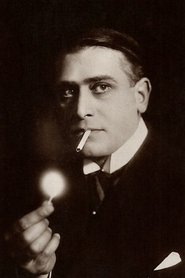
René Alexandre
Actor
Born: December 22, 1885 in Reims, France Died: August 19, 1946 Active: 1908-1940
Films
3 films
About René Alexandre
French stage and screen actor: the transition from silent shorts to early sound cinema. Born in Reims to a Jewish family, he was the son of a salesman and the grandson of a rabbi, eventually rising to become respected members of the Comédie-Française. He studied under the Paul Mounet at the Conservatoire national supérieur d'art dramatique, graduating in 1908 with top honors in both tragedy and comedy. His film career began almost immediately with Pathé, where he became a staple of early French cinema, often starring alongside his wife, the celebrated actress Gabrielle Robinne. Despite a prolific career in film and theater, his life was deeply impacted by world events; he served with distinction in World War I, receiving the Croix de Guerre, but was later forced to cease all professional activities in 1940 due to the German occupation of France and anti-Semitic laws. He remained an honorary member of the Comédie-Française until his death in 1946, leaving behind a legacy of artistic excellence and humanitarian service to his fellow actors.
The Craft
On Screen
Known for his tall stature and a 'warm, resonant voice' (voix chaude), Alexandre excelled in tragic and romantic roles. His style blended the disciplined, classical technique of the Comédie-Française with the expressive requirements of early silent cinema, often portraying 'fatal lovers' or noble authority figures.
Milestones
- Graduated from the Conservatoire with first prizes in tragedy and comedy (1908)
- Became a Sociétaire of the Comédie-Française in 1920
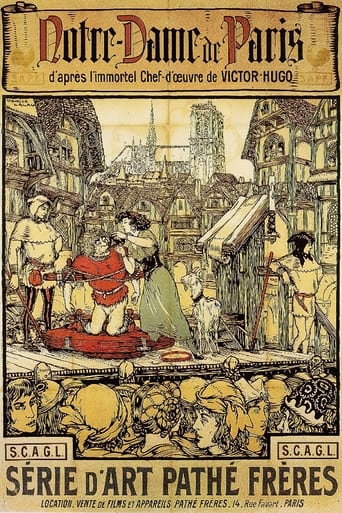
- Starred as Captain Phoebus in the 1911 adaptation of The Hunchback of Notre Dame
- Lead role in André Antoine's landmark realist film La Terre (1921)
- Founded the Association des Comédiens combattants for veteran actors
- Served as the Mayor of Grosley-sur-Risle from 1935 to 1940
- Named an Honorary Member of the Comédie-Française in 1945
Best Known For
Iconic Roles
Must-See Films
Accolades
Won
- Croix de Guerre 1914-1918 (1917)
- Commander of the Legion of Honour (Légion d'honneur)
Special Recognition
- First Prize for Tragedy, Conservatoire national supérieur d'art dramatique (1908)
- First Prize for Comedy, Conservatoire national supérieur d'art dramatique (1908)
- Sociétaire Honoraire of the Comédie-Française (1945)
Working Relationships
Worked Often With
Studios
Why They Matter
Impact on Culture
Bridge between the high art of the French stage and the emerging medium of cinema. By bringing the prestige of the Comédie-Française to the screen, he helped elevate the 'Film d'Art' movement, which sought to make cinema a respectable medium for the middle and upper classes. His involvement in the 1911 'Hunchback of Notre Dame' helped set the standard for literary adaptations that would dominate early European cinema.
Lasting Legacy
His legacy is preserved through his dual contributions to French culture: his extensive filmography of over 50 films and his humanitarian work for the acting community. The retirement home he founded in Grosley-sur-Risle stands as proof of his commitment to the welfare of performers. In the history of the Comédie-Française, he is remembered as a pillar of the troupe during the interwar period.
Who They Inspired
He influenced the transition of acting styles from the grandiosity of the 19th-century stage to the more nuanced requirements of the camera. His collaboration with director André Antoine on 'La Terre' is particularly noted for its early embrace of naturalism, influencing later generations of French realist actors.
Off Screen
René Alexandre was born into a Jewish family in Reims; his father was Jean-Joseph Alexandre and his mother was Caroline Haguenauer. He was a veteran of World War I, serving as an infantry sergeant and later an adjutant before being wounded by shrapnel in 1916. He was deeply involved in civic life, serving as a local mayor and establishing a retirement home for elderly actors.
Education
Conservatoire national supérieur d'art dramatique (Class of 1908)
Family
- Gabrielle Robinne (1912-1946)
Did You Know?
- He was the first actor to play a version of Hercule Poirot on the French screen in 'Le Coffret de laque' (1932).
- He won two first prizes at the Conservatoire in the same year, a rare feat for a young actor.
- During WWII, he was stripped of his right to perform because of his Jewish heritage under the Vichy regime.
- He served as the Mayor of Grosley-sur-Risle for five years.
- He was wounded by shrapnel from an airplane bomb during WWI in Bar-le-Duc.
- His wife, Gabrielle Robinne, was one of the first true 'stars' of the silent screen in France.
- He is buried alongside his wife in the Saint-Cloud Cemetery near Paris.
In Their Own Words
I lend my voice to the heroes of the past so that they may live in the hearts of the present.
Frequently Asked Questions
Who was René Alexandre?
Prominent French with credits in this catalog. He was a major star of the silent film era in France, appearing in over 50 films between 1908 and 1940.
What are René Alexandre's most famous films?
He is best known for playing Captain Phoebus in the 1911 version of 'The Hunchback of Notre Dame' (Notre-Dame de Paris) and for his lead role in the realist masterpiece 'La Terre' (1921).
Was René Alexandre involved in World War I?
Yes, he served as an infantry sergeant and was wounded in action in 1916. He was later awarded the Croix de Guerre and founded an association to help fellow veteran actors.
What happened to René Alexandre during World War II?
Because of his Jewish ancestry, Alexandre was forced to stop acting and flee his professional posts in 1940 following the German occupation of France. He was unable to return to the stage before his death in 1946.
Who was René Alexandre married to?
He was married to Gabrielle Robinne, a famous fellow actress of the Comédie-Française and a major star of early French cinema. They often appeared in films together.