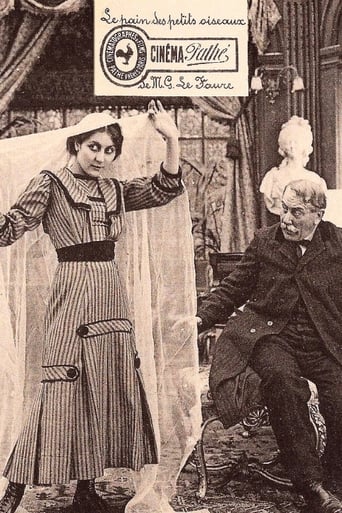
Pauline Patry
Actor
- Active
- 1911-1911
Films 1
About Pauline Patry
Pauline Patry is a little-documented silent-era film performer who is credited in the 1911 short Bread for the Birds, placing her among the many early motion-picture players who worked during cinema's first formative years. Very little verified biographical information survives about her life outside that single known screen credit, which is not unusual for actors who appeared in the earliest nickelodeon era, when studio records, publicity files, and personal papers were often not preserved. Her surviving filmography suggests a brief or currently incomplete screen career, and there is no reliable evidence that she continued acting into the feature-film era or into sound cinema. Because she appears in records from 1911, she belongs to the period when American film production was still largely centered on short subjects and anonymous or lightly promoted performers. No secure documentation has been found for her birth date, birthplace, family background, education, or later life, so any attempt to expand her biography beyond the surviving record would be speculative. Her significance lies primarily in her presence within the earliest years of narrative film history, when countless performers contributed to the development of screen acting even if their names later faded from public memory. As a result, Pauline Patry is best understood as a genuine but obscure participant in silent cinema rather than as a widely documented star.
More about Pauline Patry
On screen
No detailed contemporary criticism of Pauline Patry's acting style appears to survive in readily accessible reference sources. As a performer in 1911, her work would have been shaped by the conventions of early silent acting, which typically relied on clear physical expression, visible gesture, and straightforward emotional readability rather than later naturalistic screen techniques. Beyond that general context, no verified description of her individual style can be given.
In film history
Pauline Patry's cultural impact is indirect but historically meaningful, because she belongs to the population of early film workers whose labor helped establish the conventions of screen performance, production rhythms, and narrative short subjects in the 1910s. Even when little survives about an individual performer, the surviving credit itself is evidence of participation in a rapidly evolving mass medium that would soon reshape global popular culture. Her presence in Bread for the Birds contributes to the historical record used by scholars reconstructing the transition from stage-based exhibition to the emerging language of silent cinema. In that sense, she represents the thousands of early players whose names are now obscure but whose work formed the foundation for later star systems and studio practices.
Later reputation
Pauline Patry's legacy is primarily archival: she remains part of the documented personnel of early American silent film, preserving a trace of the era's otherwise often anonymous performers. Because only one confirmed credit is readily associated with her name, her historical importance lies less in fame than in representation of the vast supporting workforce that made early cinema possible. For researchers, such names are valuable markers in reconstructing production histories, cast lists, and the social history of filmmaking in the 1910s. Her surviving record also underscores how much of silent film history has been lost or fragmented, leaving many contributors known only through scattered credits. In that sense, her name endures as a small but real part of film history's foundational record.
Influence
There is no documented evidence that Pauline Patry directly influenced later actors or directors in a traceable way. Her influence should instead be understood collectively, through participation in the early silent-era performance tradition that helped establish expressive physical acting for the screen. Performers like her contributed to a shared vocabulary of motion-picture acting that later stars and filmmakers refined into more sophisticated styles.
Off screen
No reliable biographical record currently establishes Pauline Patry's personal life, including marriage, family, residence, or later career. She does not appear to have left a well-documented public profile in the surviving historical record, and no verifiable information is available about spouses, children, or private affiliations. This kind of obscurity is common among early silent-era players, especially those whose film careers were brief or whose names were recorded only in cast lists and archival indexes.
Education
Unknown; no verified information located regarding her schooling or professional training.
Credits
- Appeared in the 1911 silent short Bread for the Birds
- Worked during the formative nickelodeon era of American cinema
- Represents one of the many early screen performers whose names survive in film credits despite limited biographical documentation
Roles
- Role in Bread for the Birds (1911)
Films
- Bread for the Birds (1911)
Notes
- Pauline Patry is currently associated with only one verified screen credit: Bread for the Birds (1911).
- Her career falls within the earliest years of American narrative filmmaking, before feature-length cinema became dominant.
- She is an example of how many silent-era performers are known primarily through film credits rather than biographical records.
- No confirmed photographs, interviews, or publicity materials are readily associated with her in standard reference sources.
- The scarcity of information about her is typical of many non-starring film performers from the 1910s.
- Her surviving credit helps historians map early cast participation in short-format silent films.
- Because she worked in 1911, her performances would have been created before synchronized sound and before the full development of modern screen acting style.
Questions
Who was Pauline Patry?
Pauline Patry was a silent-era film actor known from the 1911 short Bread for the Birds. Beyond that credit, little verified biographical information has survived, which is common for early cinema performers.
What films is Pauline Patry best known for?
She is currently best known for Bread for the Birds (1911), the one confirmed screen credit associated with her name. No other verified film appearances are readily documented in standard reference sources.
When was Pauline Patry born and when did she die?
Her birth date and death date are not currently verified in accessible historical records. Likewise, her birthplace and later life details remain undocumented in the surviving record.
What awards did Pauline Patry win?
No awards or nominations are documented for Pauline Patry. As an obscure early silent-era performer, she does not appear in the modern awards record.
What was Pauline Patry's acting style?
No specific contemporary description of her personal acting style survives. As a 1911 silent-film performer, her work would have relied on expressive gesture, clear physical communication, and the conventions of early screen acting.
What is Pauline Patry's legacy in film history?
Her legacy is archival and historical: she is part of the documented cast of the early silent era and helps preserve the record of cinema's formative years. Even when little personal information survives, her name remains a trace of the many performers who helped build the medium.