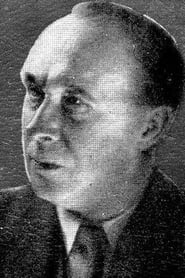
Ernst Behmer
Actor
- Active
- 1909-1909
Films 1
About Ernst Behmer
Ernst Behmer was a German stage and film actor best remembered for his work during the silent era and the earliest years of German cinema. His surviving film record is relatively sparse, but he is documented as appearing in the 1909 short film "Klebolin Sticks to Everything," placing him among the early screen performers active in the formative years of narrative filmmaking. Because many productions of this period were short, ephemeral, and incompletely preserved, much of his broader career is difficult to reconstruct with certainty from surviving records alone. Like many actors of his generation, he likely moved between stage work and film work at a time when cinema was still developing its own performance style and industrial identity. Available evidence suggests that he was active in the German film world at the dawn of the medium, when companies were experimenting with comic shorts, melodramatic scenes, and rapidly evolving production methods. Beyond this early credit, reliable biographical detail about his later life, training, and full filmography is limited in widely accessible sources. As a result, Ernst Behmer is principally remembered today as one of the many early German screen actors who helped establish the foundations of silent cinema, even if his individual fame did not endure into the sound era.
More about Ernst Behmer
On screen
No detailed contemporary descriptions of Ernst Behmer's acting style are readily documented in surviving sources. As a performer in 1909, he would have worked in the expressive silent-era mode typical of the period, relying on physical gesture, facial expression, and clear visual characterization rather than spoken dialogue. His screen work likely reflected the early cinematic performance style used in German short films, which tended to be direct, readable, and tailored to the technical limitations of the period.
In film history
Ernst Behmer's cultural impact lies less in star persona than in historical significance: he is part of the first generation of performers who helped define what film acting looked like before cinema became an established mass medium. His documented appearance in a 1909 production places him in the pioneering phase of German film history, a period that laid groundwork for later silent masterpieces and the internationally recognized achievements of Weimar cinema. Even when individual details are scarce, actors like Behmer are important to film historians because they represent the working talent that made early production systems viable. Their contributions helped normalize moving pictures as a form of popular entertainment and performance art.
Later reputation
Ernst Behmer's legacy is that of an early, historically situated film actor whose surviving record reminds researchers how fragmentary silent-era personnel histories can be. He does not appear to have become a major international star, but his presence in a 1909 film makes him part of the foundational generation of European screen performers. In film history, such figures are significant because they occupy the transitional space between stage traditions and the emerging language of cinema. His name persists chiefly through archival filmographies and databases, where he remains a trace of cinema's earliest years.
Influence
There is no clear evidence that Ernst Behmer directly influenced later named actors or directors in a documented way. His broader influence is indirect: as one of the early performers working in pre-World War I German cinema, he contributed to the collective performance practices that later actors would inherit and refine. The early screen techniques developed by actors of his era helped establish conventions of gesture, timing, and visual storytelling that became standard in silent cinema. In that sense, his importance is historical and cumulative rather than tied to a well-documented individual legacy.
Off screen
Reliable information about Ernst Behmer's personal life is not readily available in standard film references or commonly accessible historical sources. His date and place of birth, family background, marriages, and later life are not clearly documented in the surviving public record. This is common for many early silent-era performers whose careers were brief, locally recorded, or only partially preserved in archival materials. As a result, any detailed personal biography would require archival research in German theater and film records, trade publications, or civil registration documents.
Education
Unknown; no verifiable information about formal education or acting training is readily available.
Credits
- Appeared in the early German short film "Klebolin Sticks to Everything" (1909)
- Worked as a screen performer during the formative years of pre-World War I German cinema
- Represents one of the many early actors whose careers bridge stage performance and the first decade of film production
- Contributed to the silent-film era at a time when acting styles and screen techniques were still being established
- Has a documented presence in early film history despite limited surviving biographical records
Roles
- Role in "Klebolin Sticks to Everything" (1909)
Films
Notes
- Ernst Behmer is specifically documented in connection with the 1909 film "Klebolin Sticks to Everything."
- He is associated with the very earliest phase of German film history, before feature films became the norm.
- His surviving film record is extremely limited, which is typical of many silent-era actors whose work was only partially preserved.
- Because he worked in 1909, he would have performed in a fully silent cinematic environment, relying on gesture and visual clarity.
- He is an example of a performer whose historical importance rests on archival evidence rather than celebrity status.
- No widely verified biographical profile appears to survive in standard reference summaries, making him somewhat obscure to modern audiences.
- His name is of interest mainly to film historians and archival researchers studying early German cinema.
Questions
Who was Ernst Behmer?
Ernst Behmer was a German actor from the silent-film era, documented in the 1909 production "Klebolin Sticks to Everything." He is best understood as an early cinema performer whose surviving record is sparse, but whose work belongs to the foundational period of German film history.
What films is Ernst Behmer best known for?
He is currently best known for "Klebolin Sticks to Everything" (1909), which is the principal surviving credit associated with his name in accessible film references. Additional credits may exist in archival sources, but they are not widely verified in standard public databases.
When was Ernst Behmer born and when did he die?
His birth date, place of birth, and death date are not reliably documented in the readily accessible historical record. As a result, those basic biographical details remain unknown or unconfirmed.
What awards did Ernst Behmer win?
No awards or formal honors are known for Ernst Behmer in the available record. This is not unusual for early silent-era performers, many of whom worked before modern awards systems and celebrity documentation were established.
What was Ernst Behmer's acting style?
No contemporary description of his personal acting technique has survived in common reference sources, but as a 1909 screen actor he would have worked in the expressive silent-film style of the period. That usually meant clear body language, strong facial expression, and visually legible performance choices suited to early filmmaking.
What is Ernst Behmer's legacy in film history?
His legacy is historical rather than star-based: he stands as one of the early German film actors working during cinema's formative years. Even with limited surviving information, his documented credit helps film historians map the personnel and performance culture of very early European cinema.