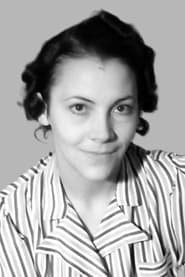
Tatjana Sais
Actor
- Born
- January 28, 1910, Frankfurt am Main, Germany
- Died
- February 26, 1981
- Active
- 1930-1979
- Birth name
- Tatjana Höfler
Films 1
About Tatjana Sais
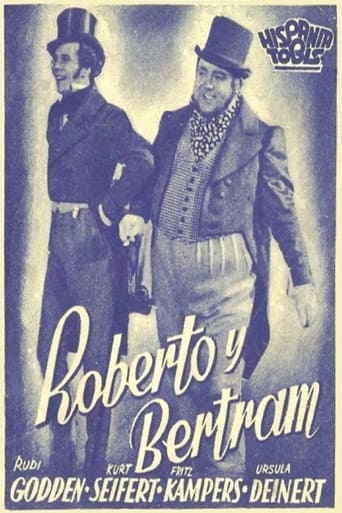
Tatjana Sais was a prominent German actress, cabaret artist, and voice actress whose career spanned from the pre-war era through the height of West German cinema in the 1960s. Born Tatjana Höfler in Frankfurt am Main, she began her artistic journey as a child ballet dancer at the Frankfurt Opera before training in singing and acting. In the early 1930s, she moved to Berlin and became a central figure in the city's legendary cabaret scene, performing at Werner Finck's politically charged 'Die Katakombe' and later co-founding the 'Tatzelwurm' cabaret. During the Nazi era, she balanced her stage work with film roles, most notably appearing in the 1939 comedy 'Robert and Bertram,' a film later criticized for its antisemitic undertones. Following World War II, Sais became an iconic voice of West Berlin as a founding member of the satirical radio cabaret 'Die Insulaner,' which provided a humorous but defiant response to the Soviet blockade. Her post-war film career flourished with roles in satirical masterpieces like 'Berliner Ballade' (1948) and 'Wir Wunderkinder' (1958), often collaborating with her first husband, the writer and composer Günter Neumann. In her later years, she married Sir Hugh Carleton Greene, the Director-General of the BBC, and spent time in London as Lady Greene while remaining a beloved figure in the Berlin arts community until her death in 1981.
More about Tatjana Sais
On screen
Sais was celebrated for her sharp comedic timing, sophisticated wit, and versatile vocal delivery. Her background in ballet and cabaret gave her a distinct physical presence and the ability to pivot seamlessly between satirical sketches, musical numbers, and dramatic character roles. She was known for portraying 'kluge Frauen' (clever women) with a touch of irony and elegance.
Impact on culture
Tatjana Sais was a vital cultural bridge between the Weimar-era cabaret tradition and the post-war reconstruction of German identity. Through 'Die Insulaner,' she helped provide a psychological lifeline to West Berliners during the Cold War, using satire to process the trauma of the blockade and the division of the city. Her contribution to the founding of the Berlinale helped establish Berlin as a global hub for cinema once again.
Lasting legacy
She is remembered as a 'Grand Dame' of Berlin cabaret and a versatile character actress who could navigate the complexities of 20th-century German history with grace and humor. Her voice remains preserved in numerous radio plays and dubbed versions of classic Hollywood films, and her name is permanently linked to the 'Berlinale' festival she helped name.
Who they inspired
She influenced a generation of post-war German comedians and satirists by demonstrating how political commentary could be delivered with musicality and sophisticated wit.
Off screen
Sais was deeply integrated into the intellectual and artistic circles of Berlin. She married her frequent collaborator, the cabaret writer and composer Günter Neumann, in 1938; though they later divorced, they remained lifelong artistic partners. In 1970, she married the British journalist Sir Hugh Carleton Greene, who had been a key figure in establishing post-war German broadcasting and later became the Director-General of the BBC.
Education
Trained in ballet at the Frankfurt Opera; studied singing and acting in Frankfurt (1928–1930).
Career milestones
- Co-founded the cabaret 'Tatzelwurm' after the closure of 'Die Katakombe' in 1935
- Star of the iconic post-war radio cabaret 'Die Insulaner' (1948–1964)
- Member of the very first Berlin International Film Festival (Berlinale) jury in 1951
- Credited with coining the term 'Berlinale' for the Berlin International Film Festival
- Prolific voice actress providing German dubbing for Hollywood stars like Elsa Lanchester and Miriam Hopkins
Iconic roles
- Klatschdame (Gossip Lady) in 'Die Insulaner'
- Frau Ida Holle in 'Berliner Ballade' (1948)
- Madame Sperling in 'Feuerwerk' (1954)
- Stascha Ipplmeyer in 'Robert und Bertram' (1939)
Must-see films
- Robert und Bertram (1939)
- Bel Ami (1939)
- Berliner Ballade (1948)
- Wir Wunderkinder (1958)
- Feuerwerk (1954)
- Hokuspokus oder: Wie lasse ich meinen Mann verschwinden...? (1966)
Awards
- Berliner Kunstpreis (Berlin Art Prize) for Performing Arts
Special recognition
- Jury Member of the 1st Berlin International Film Festival (1951)
- The 'Insulaner' hill in Berlin-Schöneberg is named after the cabaret group she helped make famous
- Universal heir to the artistic estate of Günter Neumann
Worked often with
- Günter Neumann (Writer/Composer)
- Kurt Hoffmann (Director)
- Bruno Fritz (Actor)
- Walter Gross (Actor)
- Edith Schollwer (Actress)
Studios
- Tobis Film
- UFA
- RIAS (Radio in the American Sector)
Family
- Günter Neumann (1938-1960s)
- Sir Hugh Carleton Greene (1970-1981)
Did you know?
- She is widely credited with inventing the name 'Berlinale' for the Berlin International Film Festival.
- Her ancestors were of Russian descent.
- She began her career as a professional dancer at the age of four.
- Sais was a prolific dubbing artist, providing the German voice for Elsa Lanchester in 'The Bride of Frankenstein' and Maureen O'Sullivan in 'The Big Clock'.
- She is buried in the same grave as her first husband, Günter Neumann, in Berlin's Luisenfriedhof III.
- She recorded a famous cycle of chansons titled 'Die Dame von heute' (The Lady of Today).
In their own words
It is a delicate feeling to enter the public consciousness as a Jewish girl. This became clear to me from the horrified looks with which the many visitors stared at us during the filming. (Regarding her role in 'Robert and Bertram', 1939)
The Insulaner loses his calm. (Refrain from her famous cabaret show)
Questions and answers
Who was Tatjana Sais?
Tatjana Sais was a celebrated German actress and cabaret star best known for her work in Berlin's satirical theater and her roles in post-war German films. She was a founding member of the famous 'Die Insulaner' cabaret and a jury member for the first Berlin International Film Festival.
What films is Tatjana Sais best known for?
She is best known for 'Berliner Ballade' (1948), the satirical 'Wir Wunderkinder' (1958), and the pre-war comedy 'Robert und Bertram' (1939). She also appeared in several popular 1960s films like 'Hokuspokus' and 'Dr. med. Hiob Prätorius'.
When was Tatjana Sais born and when did she die?
She was born on January 28, 1910, in Frankfurt am Main, Germany, and passed away on February 26, 1981, in West Berlin.
What was Tatjana Sais's role in the Berlin Film Festival?
Sais was a member of the very first jury in 1951 and is famously credited with coining the nickname 'Berlinale,' which is still used as the official name of the festival today.
What was Tatjana Sais's acting style?
She was known for a sophisticated, witty, and highly musical acting style rooted in the Berlin cabaret tradition. She excelled at playing intelligent, sharp-tongued characters with great comedic timing.