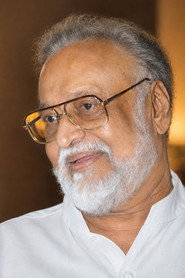
K. Balaji
Actor
- Active
- 1958-1958
Films 1
About K. Balaji
K. Balaji was an Indian actor and film producer associated primarily with Tamil cinema, best remembered for his work in the late 1950s and beyond. He is credited in film histories and filmographies for appearing in Manamulla Maruthaaram (1958), which places him within the important transitional phase of Tamil cinema when studio-era storytelling was giving way to a more modern, star-driven industry. Available records do not preserve a detailed public biography of his early life, education, or family background, and he should not be confused with later personalities of the same or similar names. As an actor, he appears to have had a relatively limited documented screen presence compared with more widely documented contemporaries, but his name survives in vintage film references because of his association with a recognized 1958 production. In later references, K. Balaji is more broadly remembered in Tamil cinema circles as a film personality who worked in the industry as both performer and producer, contributing to the ecosystem of classic South Indian filmmaking. Because surviving accessible documentation is sparse, many personal details remain unverified, but his presence in period film credits confirms his role in the early decades of post-independence Tamil cinema. His significance today lies less in a large surviving filmography than in his place within the history of classic Tamil screen culture.
More about K. Balaji
On screen
No detailed contemporary critical descriptions of his acting style have survived in readily accessible sources. Based on the era and the type of roles typically written for supporting and emerging actors in late-1950s Tamil cinema, his performance style would likely have aligned with the period's generally theatrical, dialogue-driven screen acting rather than the understated realism of later decades. Because there is insufficient verified commentary, any more specific description would be speculative.
In film history
K. Balaji's cultural impact is best understood as archival and historical rather than celebrity-driven. His presence in a 1958 Tamil film helps document the broad network of actors who sustained the classic Indian studio and early post-studio film industries, even when they did not become major stars with extensive surviving publicity. For researchers and database users, his credit is valuable because it preserves the names of lesser-documented contributors who formed part of the working fabric of Tamil cinema. In this sense, he represents the many actors whose careers are visible in film prints and credits even when biographical records are incomplete.
Later reputation
His legacy lies in his documented participation in classic Tamil cinema and in the survival of his name in filmographic records. While he does not appear, from available evidence, to have left behind a large or widely publicized body of work, his credit in Manamulla Maruthaaram ensures that he remains part of the historical record of 1950s Indian filmmaking. For modern historians, such figures are important because they reflect the collaborative nature of regional cinema during its formative decades. His name continues to matter to archivists and database compilers who seek to reconstruct comprehensive personnel histories for vintage Tamil films.
Influence
There is no verified evidence of a direct, widely documented influence on later actors or filmmakers. However, as a participant in the classic-era Tamil industry, he would have been part of the professional environment that shaped subsequent generations of performers and production personnel. His contribution is therefore indirect: he belongs to the body of working artists whose accumulated labor helped define the industrial and artistic standards of mid-century Tamil cinema.
Off screen
No reliably documented public information is readily available about K. Balaji's personal life, including his family background, marriages, children, or private activities. Surviving accessible records focus almost entirely on his name appearing in film credits rather than on biographical reporting. For that reason, details about his home life cannot be stated with confidence without risking confusion with other individuals of the same name.
Education
Unknown; no verified public information located in accessible classic-cinema references.
Credits
- Appeared in the Tamil film Manamulla Maruthaaram (1958), the clearest documented screen credit associated with him in available film records
- Represents the generation of Tamil film personalities active during the late studio era and early modern period of South Indian cinema
- Associated in film reference sources with both acting and film production work in Tamil cinema
Roles
- Role in Manamulla Maruthaaram (1958)
Films
- Manamulla Maruthaaram (1958)
Notes
- He is credited in connection with Manamulla Maruthaaram (1958), which is the most concrete identifier available for this personality.
- He should not be confused with other individuals named K. Balaji, including later figures in Indian cinema with better-documented careers.
- Accessible public sources provide very little biographical detail, making him a relatively obscure figure in mainstream film history despite his legitimate screen credit.
- His documented activity falls in 1958, placing him squarely within the late 1950s phase of Tamil film history.
- He is one of many classic-era performers whose names survive in film credits even when personal histories are not well preserved.
- Film database entries often conflate people with similar initials and surnames, so careful identification is necessary when researching him.
Questions
Who was K. Balaji?
K. Balaji was an Indian actor associated with Tamil cinema, known from surviving film records for appearing in Manamulla Maruthaaram (1958). He appears to have been active during the late 1950s, though detailed biographical information about him is scarce.
What films is K. Balaji best known for?
He is best known for Manamulla Maruthaaram (1958), which is the clearest documented screen credit linked to him in accessible classic-cinema references. No additional reliably verified film credits are widely available in the sources used for this profile.
When was K. Balaji born and when did he die?
His birth date and death date are not clearly documented in accessible public classic-cinema sources. Because of that, both details remain unverified rather than guessed.
What awards did K. Balaji win?
No major awards or nominations could be reliably verified from accessible records. He is primarily documented through film credits rather than through award histories.
What was K. Balaji's acting style?
There is no surviving critical description that clearly defines his acting style. Given the era in which he appeared, his work would likely have followed the expressive, dialogue-centered performance mode common in 1950s Tamil cinema.
What is K. Balaji's legacy in film history?
His legacy is mainly historical and archival, as a documented participant in classic Tamil cinema. He is part of the wider group of actors whose names help researchers reconstruct the personnel of mid-century Indian films.