
Films
1 film
About K. P. Kamakshi
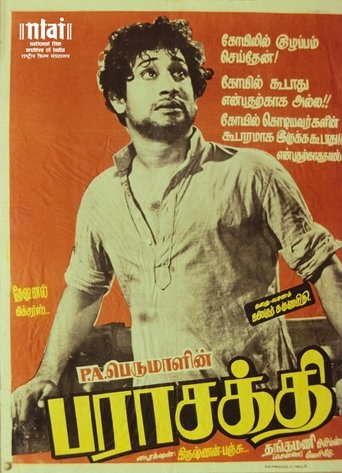
Made her mark in Tamil cinema during the early 1950s. Her most notable and perhaps only credited role was in the landmark 1952 film 'Parasakthi,' which became a significant cultural and political milestone in Tamil cinema history. The film marked the debut of future superstar Sivaji Ganesan and was written by the future Chief Minister of Tamil Nadu, M. Karunanidhi. Kamakshi's performance, though in a supporting capacity, contributed to the film's powerful narrative that challenged social conventions and caste discrimination. Despite appearing in what would become Tamil films of the era, her career appears to have been brief, with records showing her active only in 1952. Her role in 'Parasakthi' placed her among the actresses of early post-independence Tamil cinema, a period marked by significant social and political themes in filmmaking.
The Craft
Milestones
- Debut and notable role in 'Parasakthi' (1952)
- Part of the cast that launched Sivaji Ganesan's legendary career
- Contributed to a landmark film that addressed social issues in post-independence India
Best Known For
Iconic Roles
Must-See Films
Working Relationships
Worked Often With
Studios
Why They Matter
Impact on Culture
K. P. Kamakshi's contribution to Indian cinema, though brief, is significant through her participation in 'Parasakthi,' a film that revolutionized Tamil cinema by introducing bold social themes and political commentary. The film was groundbreaking for its time, addressing issues such as caste discrimination, religious hypocrisy, and women's rights in post-independence India. By being part of this cinematic milestone, Kamakshi contributed to the emerging trend of socially conscious cinema in Tamil Nadu that would influence generations of filmmakers. The film's success also marked the beginning of the Dravidian movement's influence on cinema, with 'Parasakthi' serving as a vehicle for progressive ideas and social reform.
Lasting Legacy
K. P. Kamakshi's legacy is primarily tied to her role in 'Parasakthi,'. While her own career may have been brief, her contribution to this landmark film ensures her place in the annals of Indian cinema. 'Parasakthi' continues to be studied and celebrated for its bold themes and for launching the career of Sivaji Ganesan, one of Indian cinema's greatest actors. The film's enduring cultural significance means that even supporting actors like Kamakshi are remembered as part of a revolutionary moment in Indian filmmaking that bridged cinema with social and political change.
Who They Inspired
Due to the limited scope of her documented career, specific information about K. P. Kamakshi's influence on other actors or filmmakers is not readily available. However, her participation in 'Parasakthi' contributed to a film that influenced countless future Tamil filmmakers and actors in terms of addressing social issues through cinema.
Off Screen
Very limited information is available about K. P. Kamakshi's personal life, as was common for many supporting actors of early Indian cinema whose biographical details were not extensively documented.
Did You Know?
- 'Parasakthi' was the debut film of legendary Tamil actor Sivaji Ganesan
- The film's dialogues were written by M. Karunanidhi, who would later become Chief Minister of Tamil Nadu
- 'Parasakthi' was controversial upon release for its anti-religious and anti-caste themes
- The film was produced by AVM Productions, one of Tamil cinema's most established studios
- Despite being her only known film, 'Parasakthi' became
- The film marked a shift in Tamil cinema towards more socially relevant themes
- K. P. Kamakshi was part of a cast that included several actors who would become prominent in Tamil cinema
Frequently Asked Questions
Who was K. P. Kamakshi?
Indian actress active in Tamil cinema during the early 1950s, best known for her role in the landmark 1952 film 'Parasakthi.' Her career appears to have been brief, with documented activity only in 1952.
What films is K. P. Kamakshi best known for?
Titles linked here include Parasakthi (1952).
When was K. P. Kamakshi born and when did she die?
Specific birth and death dates for K. P. Kamakshi are not documented in available historical records, which was common for many supporting actors of early Indian cinema.
What awards did K. P. Kamakshi win?
There are no documented awards or nominations for K. P. Kamakshi, which was not uncommon for supporting actors in early Indian cinema where formal recognition systems were limited.
What was K. P. Kamakshi's acting style?
Specific details about K. P. Kamakshi's acting style are not extensively documented, but as part of 'Parasakthi,' she contributed to the film's realistic and socially conscious approach to storytelling that was revolutionary for its time.
Why is 'Parasakthi' considered significant in cinema history?
'Parasakthi' is considered a milestone in Tamil cinema for introducing bold social themes, launching Sivaji Ganesan's legendary career, and featuring dialogues by future Chief Minister M. Karunanidhi that challenged social conventions.