Renée Doux
Actor
Born: 1878 in Paris, France Died: 1919 Active: 1903-1910 Birth Name: Marie Doux
Films
1 film
About Renée Doux
Renée Doux, born Marie Doux, was a prominent French actress and singer who became a familiar face in the early productions of Pathé Frères during the first decade of the 20th century. Originally an opera singer and dancer at the Olympia in Paris, she transitioned to the burgeoning medium of cinema around 1903, quickly becoming one of the studio's most versatile performers. Her career was closely linked to the filmmaker Ferdinand Zecca, whom she married in 1910, and she appeared in approximately 60 films ranging from historical epics like 'Marie-Antoinette' (1903) to experimental trick films and comedies. Known for her striking beauty and expressive acting, she was one of the few performers of the era whose name began to appear in newspapers and on promotional postcards before the widespread use of screen credits. Despite her early success and influence—which she used to bring family members like her sister Henriette into the industry—her film career began to wane after 1910 following personal upheavals. She tragically passed away in 1919 at the age of 41, a victim of the Spanish Flu pandemic while hospitalized in Saint-Louis.
The Craft
On Screen
Renée Doux was noted for her versatility, moving seamlessly between 'scènes comiques' (comic sketches), dramatic historical roles, and 'scènes de trucs' (trick films). Her style was characterized by the expressive physicality required of the silent era, yet she was praised by modern archivists for a 'strikingly versatile' and 'accomplished' presence that transcended the standard theatricality of the time.
Milestones
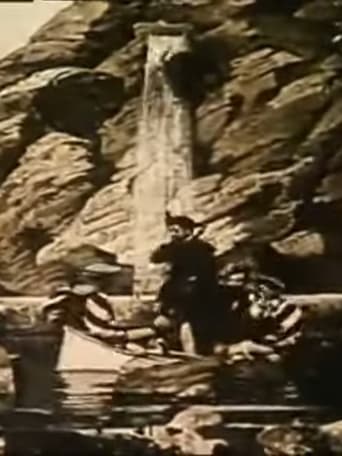
- Starred in 'Guillaume Tell' (1903), one of the first cinematic adaptations of Friedrich Schiller's play
- Became a leading actress for Pathé Frères, appearing in approximately 60 films between 1903 and 1910
- Featured in 'Marie-Antoinette' (1903), a significant early historical production
- Collaborated extensively with cinema pioneer Ferdinand Zecca
- Identified by modern film historians as a 'lost' star of the silent era through archival research at the Fondation Jérôme Seydoux-Pathé
Best Known For
Iconic Roles
Must-See Films
Accolades
Special Recognition
- Subject of a major retrospective and identification project at the Il Cinema Ritrovato Festival (2021)
- Featured in the 'Edition Pathé Frères' early star postcard series
Working Relationships
Worked Often With
Studios
Why They Matter
Impact on Culture
Pioneer of the 'star system' before it was fully codified. In an era where actors were often anonymous, her name and image were used on postcards and in press mentions to sell films, indicating her status as a recognizable public figure. She represented the transition from the theatrical stage and cabaret (Olympia) to the new medium of the moving image, helping to legitimize cinema as an art form for established performers.
Lasting Legacy
For decades, Renée Doux was one of the many 'anonymous' faces of early Pathé cinema until her identity was painstakingly reconstructed by historians Mariann Lewinsky and Stéphanie Salmon. Her legacy is now preserved through the restoration of her films, which serve as vital examples of early French cinematic technique, including stencil-coloring and tableau-style storytelling. She is remembered as a key figure in the first 'Golden Age' of French cinema (1903-1910).
Who They Inspired
As one of the primary actresses for Ferdinand Zecca, she influenced the development of the 'Pathé style' of acting, which balanced broad pantomime with a burgeoning sense of screen naturalism. Her success paved the way for other stage actresses to enter the film industry.
Off Screen
Renée Doux was the daughter of a single mother and grew up in the artistic circles of Paris. She had a daughter, also named Renée (born 1896), who later acted under the name Renée Dauge. In 1910, she married the influential director Ferdinand Zecca in Nice, though the marriage was reportedly troubled and she eventually left him in 1913 for the entrepreneur Maurice Charles Maître.
Education
Trained as an opera singer and dancer, performing at the Grands Boulevards and the Olympia in Paris.
Family
- Ferdinand Zecca (1910-1913)
Did You Know?
- She was known for her personal wardrobe used in films, which included real diamonds and high-end fashion.
- Her identity was 'lost' to history for nearly a century until researchers identified her from the back of film stills in 2005.
- She survived a serious car accident in 1904 which injured her leg, an event some historians believe pushed her further into film work as it was less physically demanding than stage dancing.
- She appeared in approximately 50 to 60 films, all produced by Pathé Frères.
- Her sister Henriette married the famous cinematographer Jacques Bizeul.
- She was part of the horticultural festival at the Paris Exposition of 1900, where she was celebrated for her beauty.
In Their Own Words
Renée Doux, a dancing girl from the Olympia who worked at Pathé. (Context: Description of her by film pioneer Georges Hatot in a 1948 interview)
Frequently Asked Questions
Who was Renée Doux?
Renée Doux (born Marie Doux) was a French opera singer and actress who became a major star of early silent cinema, appearing in dozens of films for Pathé Frères between 1903 and 1910.
What films is Renée Doux best known for?
Titles linked here include Guillaume Tell (1903), Marie-Antoinette (1903).
When was Renée Doux born and when did she die?
Born 1878; died 1919.
Was Renée Doux married to anyone famous?
Yes, she was married to Ferdinand Zecca,.
Why was Renée Doux's identity forgotten for so long?
In the early 1900s, screen credits were rare, and most actors remained anonymous to the public; her identity was only rediscovered in the 21st century through archival research and vintage postcards.