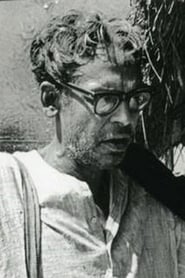
Ritwik Ghatak
Director
Born: November 4, 1925 in Dhaka, Bengal Presidency, British India (now Dhaka, Bangladesh) Died: February 6, 1976 Active: 1952-1976 Birth Name: Ritwik Kumar Ghatak
Films
1 film
About Ritwik Ghatak
Indian filmmaker and figures in Bengali cinema, renowned for his powerful depictions of the trauma and displacement caused by the Partition of India. Born in 1925 in Dhaka (now Bangladesh), Ghatak's personal experience as a refugee deeply influenced his cinematic vision, leading to his acclaimed 'Partition Trilogy' consisting of 'Meghe Dhaka Tara' (1960), 'Komal Gandhar' (1961), and 'Subarnarekha' (1965). His filmmaking style was characterized by a unique blend of Indian theatrical traditions, particularly Jatra, and Western cinematic techniques, especially German Expressionism. Ghatak was also a respected teacher at the Film and Television Institute of India (FTII) in Pune, where he influenced generations of future filmmakers. Despite his critical acclaim, his films often struggled commercially during his lifetime, though they later gained international recognition as masterpieces of world cinema. His career was marked by personal struggles with alcoholism and financial difficulties, yet he continued to create innovative and socially conscious cinema until his death in 1976. Ghatak's work is celebrated for its raw emotional power, political consciousness, and experimental narrative techniques that pushed the boundaries of Indian cinema.
The Craft
Behind the Camera
Ghatak's directing style was revolutionary for its time, combining elements of Indian classical music, folk theater traditions like Jatra, and Western cinematic influences including German Expressionism and Soviet montage. He employed innovative camera techniques, dramatic lighting, and sound design to create emotionally charged narratives that addressed social and political issues. His films often featured long takes, jump cuts, and a Brechtian approach that broke the fourth wall, making audiences consciously aware of the cinematic medium.
Milestones
- First feature film 'Nagarik' (1952-53, released 1977)
- First released film 'Ajantrik' (1958)
- Partition Trilogy: 'Meghe Dhaka Tara' (1960), 'Komal Gandhar' (1961), 'Subarnarekha' (1965)
- Teaching at FTII Pune (1966-1967)
- National Film Award for 'Titash Ekti Nadir Naam' (1973)
Best Known For
Iconic Roles
Must-See Films
Accolades
Won
- National Film Award for Best Feature Film for 'Titash Ekti Nadir Naam' (1973)
- BFJA Award for Best Director for 'Meghe Dhaka Tara' (1961)
- President's Silver Medal for 'Ajantrik' (1958)
Nominated
- Multiple National Film Award nominations throughout his career
Special Recognition
- Posthumously awarded the Padma Shri by the Government of India (1970)
- Retrospectives at major international film festivals including Cannes and Venice
- Film and Television Institute of India named a theater after him
Working Relationships
Worked Often With
Studios
Why They Matter
Impact on Culture
Ritwik Ghatak revolutionized Indian cinema by introducing avant-garde techniques and addressing complex social and political themes that were rarely explored in mainstream Indian films of his era. His work provided a powerful voice to the marginalized and displaced, particularly focusing on the refugee crisis following the Partition of India. Ghatak's films transcended regional boundaries to speak universal truths about human suffering, resilience, and dignity. His innovative use of sound, particularly the incorporation of folk songs and classical music, created a new cinematic language that influenced subsequent generations of Indian filmmakers. His portrayal of strong female characters challenged traditional gender roles in Indian cinema, and his political engagement through art established him as a pioneer of socially conscious filmmaking in India.
Lasting Legacy
Ritwik Ghatak's legacy as one of India's greatest filmmakers has grown exponentially since his death, with his films now recognized as masterpieces of world cinema. He is often mentioned alongside Satyajit Ray and Mrinal Sen as one of the three pillars of Bengali cinema's golden age. His films are studied in film schools worldwide for their innovative techniques and powerful storytelling. The Ritwik Ghatak Memorial Trust works to preserve his films and promote his artistic vision. International film festivals regularly feature retrospectives of his work, and scholars continue to analyze his contributions to cinema theory and practice. His influence extends beyond cinema to literature, theater, and visual arts, making him a cultural icon whose relevance continues to grow in contemporary discourse about art, politics, and identity.
Who They Inspired
Ghatak's influence on world cinema is profound, particularly among filmmakers interested in blending political consciousness with artistic innovation. The French New Wave directors, particularly Jean-Luc Godard, admired his work, and his films influenced the parallel cinema movement in India. Directors like Mrinal Sen, Goutam Ghose, and Aparna Sen have acknowledged his impact on their work. His experimental techniques inspired filmmakers across Asia and Europe, and his approach to depicting trauma and displacement has influenced war and refugee cinema globally. Contemporary filmmakers including Deepa Mehta, Mira Nair, and Anurag Kashyap have cited Ghatak as an influence on their approach to socially relevant storytelling.
Off Screen
Ghatak's personal life was marked by both creative brilliance and personal turmoil. He married Surama Ghatak in 1950, and they had three children. The family experienced the trauma of Partition firsthand, fleeing Dhaka for Kolkata in 1947, which deeply influenced Ghatak's artistic vision. His later years were characterized by financial difficulties, health problems, and struggles with alcoholism, which contributed to his premature death at age 50. Despite these challenges, he remained dedicated to his artistic vision and continued to create innovative cinema until his final days.
Education
University of Calcutta (graduated with honors), Studied at South Point School and Baharampur Krishnath College
Family
- Surama Devi (1950-1976)
Did You Know?
- His first feature film 'Nagarik' was made in 1952-53 but wasn't released until 1977, a year after his death
- He was a trained classical singer and incorporated music extensively in his films
- His film 'Ajantrik' featured an old car as a central character, considered one of the earliest Indian films with non-human protagonists
- He wrote extensively about cinema theory and practice in Bengali journals
- His films were initially more popular in international film festivals than in India
- He was influenced by both Indian classical traditions and Western cinema, particularly German Expressionism
- His brother Tapan Ghatak was also a filmmaker
- He worked briefly as a radio announcer and playwright before entering films
- His last film 'Jukti Takko Aar Gappo' was made when he was critically ill
- The Government of India issued a commemorative postage stamp in his honor in 2012
In Their Own Words
Cinema is not merely a craft, it is a mission. The mission is to build a new human being, a new society.
I want to make films that will make people think, feel, and act. Cinema must be a weapon for social change.
The refugee is the central figure of our times. I have tried to capture his agony, his hope, his humanity.
Art must be rooted in reality but must transcend it to reach the universal.
I make films not for entertainment but to awaken consciousness, to provoke, to challenge.
Frequently Asked Questions
Who was Ritwik Ghatak?
Indian filmmaker and screenwriter, considered one of the greatest on YTB.my. He was known for his powerful films dealing with social issues, particularly the trauma of the Partition of India, and his innovative cinematic techniques that blended Indian traditions with Western influences.
What films is Ritwik Ghatak best known for?
Titles linked here include Meghe Dhaka Tara (1960), Komal Gandhar (1961).
When was Ritwik Ghatak born and when did he die?
Born November 4, 1925; died February 6, 1976.
What awards did Ritwik Ghatak win?
Ghatak won the National Film Award for Best Feature Film for 'Titash Ekti Nadir Naam' in 1973, the BFJA Award for Best Director for 'Meghe Dhaka Tara' in 1961, and the President's Silver Medal for 'Ajantrik' in 1958. He was also posthumously awarded the Padma Shri by the Government of India in 1970.
What was Ritwik Ghatak's directing style?
Ghatak's directing style was innovative and experimental, combining Indian theatrical traditions like Jatra with Western cinematic influences, particularly German Expressionism. He used dramatic lighting, innovative camera techniques, and sound design to create emotionally charged narratives that addressed social and political issues, often breaking conventional cinematic boundaries.