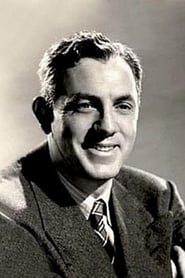
David Hand
Director
Born: January 23, 1900 in Plainfield, New Jersey, USA Died: October 11, 1986 Active: 1920s-1950s Birth Name: David Dodd Hand
Films
1 film
About David Hand
David Dodd Hand — American animator and director whose the golden age of animation. He began his animation career in the 1920s at the J.R. Bray Studios before joining Walt Disney Productions in 1930, where he quickly rose to become one of Disney's most trusted directors. Hand served as the supervising director for Disney's first feature-length animated film 'Snow White and the Seven Dwarfs' (1937), a achievement that revolutionized the animation industry. He later directed the beloved classic 'Bambi' (1942), showcasing his exceptional ability to bring emotional depth and naturalistic movement to animated characters. In 1944, Disney sent Hand to England to establish an animation studio, where he founded Gaumont British Animation and created the 'Animaland' and 'Musical Paintbox' series. After returning to the United States in the early 1950s, he continued working in animation and television, contributing to various projects until his retirement. Hand's innovative techniques and leadership helped establish many of the foundational principles of character animation that continue to influence the industry today.
The Craft
Behind the Camera
David Hand was known for his meticulous attention to detail and his ability to bring emotional depth to animated characters. He pioneered techniques in character animation that emphasized natural movement and realistic expressions. His directing style combined technical precision with strong storytelling, often focusing on the emotional journey of his characters. Hand was particularly skilled at directing sequences that required complex animation, such as the multi-plane camera work in 'Bambi'. He believed in pushing the boundaries of what animation could achieve, constantly seeking new ways to make characters more lifelike and stories more compelling.
Milestones
- Joined Walt Disney Productions in 1930
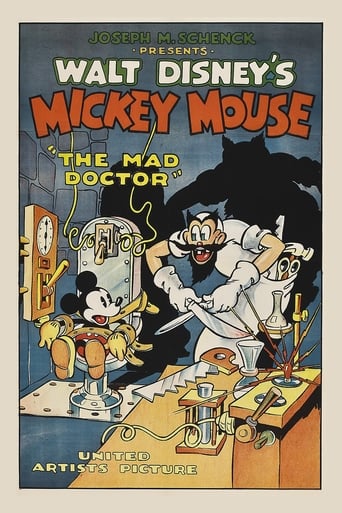
- Directed 'The Mad Doctor' (1933) and other classic Disney shorts
- Served as supervising director for 'Snow White and the Seven Dwarfs' (1937)
- Directed 'Bambi' (1942)
- Established Gaumont British Animation studio in England (1944)
- Created 'Animaland' and 'Musical Paintbox' series in England
- Returned to US to work in television animation in the 1950s
Best Known For
Must-See Films
Accolades
Won
- Academy Award for Best Short Subject (Cartoon) for 'Three Orphan Kittens' (1935)
- Academy Award nomination for Best Short Subject (Cartoon) for 'Who Killed Cock Robin?' (1935)
- Winsor McCay Award (1978) for lifetime achievement in animation
- Disney Legend Award (posthumous)
Nominated
- Academy Award nomination for Best Short Subject (Cartoon) for 'The Old Mill' (1937) as supervising director
- Academy Award nomination for Best Short Subject (Cartoon) for 'The Ugly Duckling' (1939) as supervising director
Special Recognition
- Disney Legend Award (inducted posthumously)
- Winsor McCay Award recipient (1978)
- International Animated Film Association Hall of Fame
Working Relationships
Worked Often With
Studios
Why They Matter
Impact on Culture
David Hand's work fundamentally shaped the development of feature-length animation and established many of the techniques still used in modern animation. As supervising director of 'Snow White and the Seven Dwarfs,' he helped prove that animation could sustain feature-length storytelling, paving the way for all animated features that followed. His direction of 'Bambi' set new standards for realistic animal animation and emotional storytelling in cartoons. Hand's establishment of an animation studio in England helped internationalize the animation industry and demonstrated that quality animation could be produced outside Hollywood. His techniques in character animation, particularly in conveying emotion through movement, became foundational principles taught in animation schools worldwide.
Lasting Legacy
David Hand's legacy endures through the timeless Disney classics he helped create and the animation techniques he pioneered. His work on 'Snow White' and 'Bambi' continues to be studied by animators and film scholars as exemplars of the art form. The animation studio he established in England, though short-lived, influenced the development of British animation and inspired future generations of UK animators. Hand's emphasis on emotional storytelling and technical innovation helped elevate animation from simple entertainment to a respected art form. His contributions were recognized with numerous awards, including the Winsor McCay Award for lifetime achievement, cementing his place among the pioneers of animation history. The principles and techniques he developed continue to influence modern animation, from traditional hand-drawn features to contemporary computer-generated films.
Who They Inspired
David Hand influenced countless animators and directors through his innovative techniques and leadership at Disney. His approach to character animation, emphasizing realistic movement and emotional expression, became standard practice in the industry. Many of the 'Nine Old Men' of Disney animation learned under his supervision and carried his principles forward in their own work. His establishment of animation training programs at both Disney and Gaumont British helped formalize animation education. Directors from Brad Bird to John Lasseter have cited the early Disney features Hand worked on as major influences. His techniques in multi-plane camera usage and background animation continue to be referenced in modern animation production. The emotional depth he brought to animation helped establish it as a medium capable of sophisticated storytelling, influencing generations of filmmakers who followed.
Off Screen
David Hand married Elizabeth Ryves in 1924, and they had two children together. The family moved to California when Hand joined Disney Studios, and later relocated to England during his tenure with Gaumont British Animation. Hand was known as a family man who maintained a work-life balance despite his demanding career. After returning to the United States, he settled in California where he lived until his death. His son, David Hand Jr., also worked in the animation industry, continuing the family legacy.
Education
Attended Chicago Art Institute and studied commercial art
Family
- Elizabeth Ryves (1924-1986)
Did You Know?
- The Mad Doctor (1933) was one of Disney's early horror-themed cartoons, featuring Mickey Mouse in a spooky setting
- Hand was one of the few directors Walt Disney trusted to supervise major sequences in 'Snow White'
- He was the first American animator to establish his own animation studio in England
- Hand worked on over 60 Disney shorts during his tenure at the studio
- He was known for his ability to direct both comedic and dramatic animation with equal skill
- The 'Animaland' series he created in England was among the first color animated series produced in Britain
- Hand was instrumental in developing the multi-plane camera technique used in Disney features
- He returned to Disney briefly in the 1950s to work on television animation projects
- His son David Hand Jr. Became an animator and worked on several Disney projects
- Hand received the Winsor McCay Award in 1978, animation's highest honor
In Their Own Words
Animation can explain whatever the mind of man can conceive. This facility makes it the most versatile and explicit means of communication yet devised for quick mass appreciation.
The secret of good animation is not in the drawing, but in the feeling behind the drawing.
When Walt sent me to England, he told me to teach them how we do it in Hollywood. I ended up learning as much as I taught.
Every frame of animation should tell a story. If it doesn't, cut it out.
The challenge of animation is to make the impossible look natural and the natural look magical.
Frequently Asked Questions
Who was David Hand?
American animator and on YTB.my. He served as supervising director for 'Snow White and the Seven Dwarfs' and directed 'Bambi,' helping establish many foundational techniques in feature-length animation.
What films is David Hand best known for?
Titles linked here include Snow White and the Seven Dwarfs (1937) - Supervising Director, Bambi (1942) - Director.
When was David Hand born and when did he die?
Born January 23, 1900; died October 11, 1986.
What awards did David Hand win?
David Hand won an Academy Award for Best Short Subject (Cartoon) for 'Three Orphan Kittens' (1935) and received the Winsor McCay Award for lifetime achievement in animation in 1978. He was also posthumously inducted as a Disney Legend.
What was David Hand's directing style?
Hand's directing style emphasized emotional depth, naturalistic movement, and technical precision. He pioneered techniques in character animation that focused on realistic expressions and was particularly skilled at directing complex sequences using innovative camera techniques.
Did David Hand work outside of Disney?
Yes, in 1944 Walt Disney sent Hand to England to establish Gaumont British Animation, where he created the 'Animaland' and 'Musical Paintbox' series. He returned to the US in the 1950s and worked in television animation before retiring.
What was David Hand's contribution to animation education?
Hand established training programs at both Disney and his British studio, helping formalize animation education. He mentored many of Disney's 'Nine Old Men' and influenced generations of British animators through his work at Gaumont British Animation.