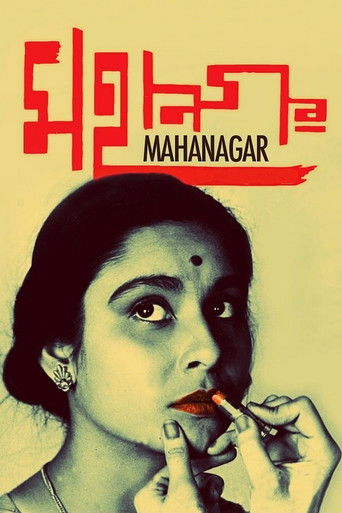
Born: February 10, 1943 in Kolkata, West Bengal, IndiaActive: 1959-1990s
About Madhabi Mukherjee
Madhabi Mukherjee is a legendary Indian actress who revolutionized Bengali cinema with her naturalistic and deeply nuanced performances. Born in Kolkata in 1943, she was discovered by director Tapan Sinha and made her film debut in 1959. Her career reached its zenith through her collaborations with master filmmaker Satyajit Ray, who cast her in three of his most celebrated films. In 'The Big City' (1963), she portrayed Arati, a housewife who becomes the family's first working woman, delivering a performance that captured the changing social dynamics of urban India. Her most acclaimed role came in 'Charulata' (1964), where she played the lonely, intellectual housewife in what many consider Ray's masterpiece. Mukherjee continued working in Bengali cinema through the 1960s and 1970s, becoming one of the most respected actresses in Indian film history. Her ability to convey complex emotions with subtle gestures and expressions set her apart from contemporaries and influenced generations of Indian actors.
The Craft
On Screen
Known for her naturalistic acting style, Mukherjee brought unprecedented realism to Indian cinema with her subtle facial expressions, minimal makeup, and ability to convey complex inner emotions through quiet gestures. Her performances were marked by their psychological depth and understated elegance, contrasting with the theatrical style prevalent in Indian cinema of her era.
Milestones
Film debut in 'Kankantala' (1959)
Breakthrough role in 'The Big City' (1963)
Iconic performance in 'Charulata' (1964)
National Film Award for Best Actress
Collaboration trilogy with Satyajit Ray
Best Known For
Iconic Roles
Arati in 'The Big City'
Charulata in 'Charulata'
Bimala in 'The Home and the World'
Must-See Films
The Big City (1963)
Charulata (1964)
The Home and the World (1984)
Kapurush
1965
Kalankita Kabya
1966
],
awards
National Film Award for Best Actress for 'Charulata' (1965),Bengal Film Journalists' Association Awards,Filmfare Awards East
nominations
Multiple National Film Award nominations,International Film Festival recognition
honors
Padma Shri (India's fourth-highest civilian award, 2022),Lifetime Achievement Awards from various film festivals,Honorary D.Litt. from University of Calcutta
personalLife
Madhabi Mukherjee married filmmaker Nirmal Dey in 1965 and has two children. She has generally maintained a private personal life, focusing on her craft and family. Despite her immense fame, she remained grounded in her Bengali cultural roots and continued to live in Kolkata throughout her career.
spouses
Nirmal Dey (1965-present)
children
Two children (names not publicly disclosed)
education
Educated in Kolkata schools, received early training in dance and music
studioAffiliations
Worked primarily with independent filmmakers,Associated with Satyajit Ray's production company
frequentCollaborators
Satyajit Ray,Tapan Sinha,Ajoy Kar,Mrinal Sen
mentors
Satyajit Ray,Tapan Sinha
protégés
Influenced generations of Bengali actresses including Aparna Sen and Madhuri Dixit
culturalImpact
Madhabi Mukherjee fundamentally changed the portrayal of women in Indian cinema, moving away from stereotypical characters to complex, realistic representations of modern Indian women. Her role in 'The Big City' particularly resonated with India's changing social landscape in the 1960s, addressing themes of women's emancipation and urbanization. Through her work with Satyajit Ray, she helped bring Indian cinema to international attention, with films being showcased at major festivals worldwide.
legacy
Mukherjee's legacy endures through her timeless performances that continue to be studied by film students and actors. Her portrayal of Charulata remains one of the most revered performances in world cinema, often compared to the greatest works of international actresses. She paved the way for more realistic acting in Indian cinema and demonstrated that regional films could achieve universal appeal. Her influence extends beyond acting to the broader representation of women in South Asian media.
influence
Her naturalistic acting style influenced subsequent generations of Indian actors who moved away from theatrical performances to more subtle, realistic portrayals. Directors continue to cite her work as reference for character development, particularly for strong female protagonists. International filmmakers have acknowledged her performances as inspiration for their own work in realistic cinema.
trivia
Discovered at age 16 by director Tapan Sinha,Satyajit Ray considered her his favorite actress,Learned to play the sitar for her role in 'Charulata',Refused many Bollywood offers to focus on Bengali cinema,Her performance in 'Charulata' was shot in just 28 days,Was the first choice for 'Charulata' after Ray's wife declined the role,Took a break from films in the 1970s to focus on family,Made a comeback in the 1980s with 'The Home and the World',Has written about her experiences working with Satyajit Ray,Her films are regularly restored and screened at international retrospectives
famousQuotes
Working with Satyajit Ray was like attending a film school - every day was a new lesson in cinema,I never thought of myself as a star, I was always an actor trying to understand my characters,The camera sees everything, you cannot hide your true emotions,Cinema should reflect reality, not create fantasy,Being Charulata was like living two lives - mine and hers