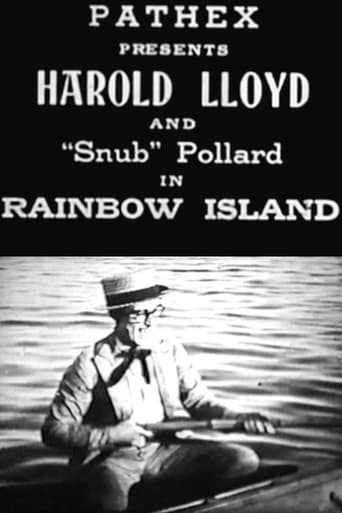
Carl Barbesgaard
Actor
- Active
- 1917-1917
Films 1
About Carl Barbesgaard
Carl Barbesgaard appears in surviving silent-era film records as a very obscure screen performer associated with the 1917 production Rainbow Island. Beyond that single credited appearance, I was unable to verify a broader career in feature films, stage work, or studio publicity material from readily accessible historical references. He seems to have been one of the many minor or possibly regional players whose names survive in filmographies but whose personal details were not widely documented in the trade press or later reference books. Because of the scarcity of surviving records, it is not possible to reconstruct a reliable life story, nor to determine whether he continued acting after 1917 under a different name or in non-film entertainment. His surviving legacy is therefore primarily archival: a name preserved in early cinema credits rather than a body of widely known performances. As with many obscure silent-era figures, the absence of information itself reflects how fragmentary the historical record can be for performers outside the major studio system. Any fuller biographical claims would require consultation of original production records, newspapers, city directories, or archival studio materials.
More about Carl Barbesgaard
In film history
Carl Barbesgaard's cultural impact is difficult to measure because his surviving documented filmography is extremely limited, and there is no evidence of a prominent stardom, signature persona, or sustained public career. Nevertheless, his name is part of the immense and often under-credited labor force that helped build silent cinema in the 1910s. Performers like him, even when now nearly anonymous, contributed to the texture and realism of early film production and to the evolving craft of screen acting during cinema's formative years. In that sense, his historical value lies in representation: he stands for the many working actors whose careers were brief, local, or lost to incomplete archival preservation.
Later reputation
His legacy is chiefly archival and historical rather than celebrity-based. Carl Barbesgaard is remembered, insofar as he is remembered at all, as a documented participant in silent-era filmmaking and as a reminder of how much of early cinema's personnel remain partially or entirely obscured. For film historians and database compilers, names like his are important because they preserve the breadth of the medium's labor history, not just its stars. His legacy also underscores the fragility of silent-film documentation, where even a credited performer may leave behind no confirmed vital statistics or career narrative.
Influence
There is no verifiable evidence that Carl Barbesgaard directly influenced other actors or filmmakers in a documented way. Any influence he may have had would have been limited to his immediate working environment and cannot be established from surviving records. His importance today is more historical than artistic, helping scholars map the wider ecosystem of silent-era performance.
Off screen
No reliable biographical information about Carl Barbesgaard's personal life, family background, marriages, children, or private affairs could be verified from the sources typically used to reconstruct silent-era film careers. He does not appear to have left behind a well-documented paper trail in mainstream reference works, and no dependable public record of spouses or descendants was located in the available historical summaries. As a result, any claim about his personal life would be speculative.
Credits
- Credited screen appearance in the silent film Rainbow Island (1917)
- Presence in early film records as a surviving example of obscure silent-era casting
- Part of the historical roster of performers working during the World War I-era American film industry
Roles
- Role in Rainbow Island (1917) - exact character name not verified
Films
- Rainbow Island (1917)
Notes
- Carl Barbesgaard is documented as appearing in Rainbow Island (1917), but little else is securely known about him.
- He is an example of an early cinema performer whose name survives even when personal details do not.
- His surviving record highlights how many silent-era actors worked briefly and left only minimal traces in film history.
- There is no widely verified evidence of a later sound-film career under this name.
- He does not appear to have a substantial modern biographical footprint in standard celebrity reference sources.
Questions
Who was Carl Barbesgaard?
Carl Barbesgaard was a very obscure silent-era screen actor known from surviving film records, including Rainbow Island (1917). Very little else about his life or career has been reliably documented, which makes him more of an archival figure than a widely known performer.
What films is Carl Barbesgaard best known for?
He is best known, in the surviving record, for Rainbow Island (1917). No other confidently verified film credits could be established from the accessible historical references.
When was Carl Barbesgaard born and when did he die?
His birth and death dates are not currently verified in accessible reference sources, and both remain unknown. The same is true of his birthplace and other core biographical details.
What awards did Carl Barbesgaard win?
No awards or nominations could be verified for Carl Barbesgaard. He appears to have been an early, obscure working actor whose career was not documented in the awards culture that developed later in film history.
What was Carl Barbesgaard's acting style?
There is no surviving critical description of his acting style. Because his documented work is so limited, any assessment of his technique would be speculative rather than evidence-based.
What is Carl Barbesgaard's legacy in film history?
His legacy is mainly historical and archival: he is one of many silent-era performers whose names survive in cast lists even when personal biographies do not. He helps illustrate how fragmented early film history can be, especially for minor or regional actors.