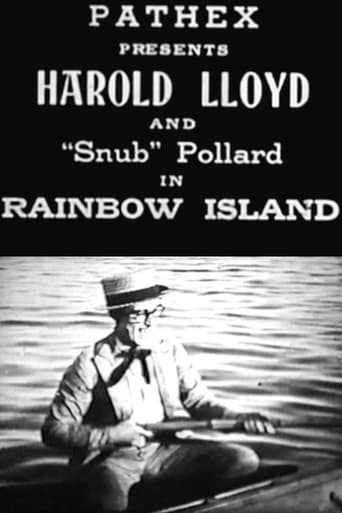
Walter Crompton
Actor
- Active
- 1917-1917
Films 1
About Walter Crompton
Walter Crompton was a silent-era screen actor best remembered today for his brief appearance in the surviving record of early American cinema, including a credit in Rainbow Island (1917). Like many performers who worked in the 1910s, he appears to have been part of the large pool of supporting players who helped sustain the rapidly expanding film industry during the World War I era. Surviving documentation on his life is extremely limited, and he does not appear to have had the level of press coverage or studio promotion reserved for major stars of the period. Because of that, most biographical details such as his birth date, birthplace, family background, and later life are not clearly documented in readily available classic-cinema reference sources. What can be said with confidence is that he was active in the silent era and contributed to the ensemble cast environment that was essential to early film production. His known screen activity places him among the many working actors whose names are preserved in film credits even when their fuller personal histories have not survived in accessible archives. Walter Crompton remains a small but authentic part of silent-film history, especially for researchers tracing the supporting casts of 1910s American cinema.
More about Walter Crompton
On screen
No detailed critical descriptions of Walter Crompton's acting style appear to survive in commonly accessible reference sources. Given his era and the fact that he worked in silent film, his performances would have relied on the expressive physicality, facial clarity, and gestural precision characteristic of silent-era acting. Without reviews or production notes tied specifically to his performances, any further characterization would be speculative.
In film history
Walter Crompton's cultural impact lies less in celebrity than in historical presence. He represents the large and often under-documented body of silent-era actors who made early feature films possible by filling out casts, supporting narrative structure, and giving studio productions the polished ensemble quality audiences expected. Even when actors like Crompton did not become marquee names, they contributed to the professionalization of American filmmaking in the 1910s, when the industry was shifting from short subjects toward longer, more elaborate storytelling. His credit in Rainbow Island helps preserve the memory of a working performer whose contributions are embedded in the fabric of early cinema rather than in star mythology. For historians, such names are valuable because they reveal the breadth of talent involved in silent film production and remind us that film history is shaped by many participants beyond the most famous leads.
Later reputation
Walter Crompton's legacy is that of a documented silent-film performer whose name survives through film credits and archival filmographies. While he does not appear to have left behind a large body of widely known work or a public reputation comparable to major stars of the era, his recorded involvement in Rainbow Island (1917) ensures that he remains part of the historical record. In film history, these smaller credits matter: they help scholars reconstruct production networks, casting practices, and the careers of actors who moved through the studio system before modern celebrity documentation existed. Crompton's continued mention in databases underscores the importance of preserving even fragmentary evidence from the silent era. His legacy is therefore archival as much as artistic, representing the thousands of working performers whose labor shaped early motion pictures.
Influence
There is no surviving evidence that Walter Crompton directly influenced major later actors or directors, and no documented teaching or mentorship role is known. His influence is best understood in a broader historical sense: as one of many working performers who established the conventions of screen acting in the silent period through practical, camera-aware performance. The ensemble labor of actors like Crompton helped define the early grammar of cinematic storytelling, even if individual names did not become iconic. For later historians and collectors, his preserved credit contributes to the accuracy and completeness of silent-film scholarship.
Off screen
Very little verifiable information has survived about Walter Crompton's personal life. Available classic-cinema reference material does not clearly document his marriages, children, education, or later biography, and he does not appear to have been a heavily publicized figure in the trade press. As a result, his private life remains obscure, which is common for many supporting players from the silent era whose careers were not sustained by fan-magazine publicity. Researchers would likely need archival studio records, census documents, or local historical sources to establish a fuller personal history.
Credits
- Screen credit in Rainbow Island (1917), a surviving record of his work in silent-era American film
- Participation in the 1910s studio system as a working actor during the formative years of narrative feature filmmaking
- Presence in early cinema documentation as part of the cast rosters preserved by film historians and database archives
Roles
- Role in Rainbow Island (1917) — character name not clearly documented in available sources
Films
- Rainbow Island (1917)
Notes
- Walter Crompton is specifically documented in connection with Rainbow Island (1917), placing him firmly in the silent-film era.
- His surviving filmography appears extremely small in readily accessible sources, suggesting he may have worked mostly as a supporting or occasional player.
- No reliable birth or death information is commonly cited in major classic-cinema reference sources available to general researchers.
- Like many early screen actors, he may have had a broader stage or regional performance background that was not preserved in film databases.
- His name remains important to historians because minor credited players can help verify cast lists and production histories for lost or partially surviving films.
- The scarcity of biographical data around him is typical of many 1910s screen performers whose careers predated comprehensive publicity documentation.
- He is an example of the many silent-era actors whose professional footprint survives mainly through film credits rather than magazine profiles or studio publicity campaigns.
Questions
Who was Walter Crompton?
Walter Crompton was a silent-era actor known from surviving film records, including a credit in Rainbow Island (1917). He appears to have been a working performer in early American cinema, though detailed personal and career information is scarce.
What films is Walter Crompton best known for?
He is best known for Rainbow Island (1917), the principal surviving film credit associated with his name in accessible sources. Additional titles may exist in archival filmographies, but they are not reliably documented in the sources available here.
When was Walter Crompton born and when did he die?
His birth date and death date are not clearly documented in widely accessible classic-cinema references. At present, the surviving public record does not provide verified life dates.
What awards did Walter Crompton win?
No awards or nominations are known for Walter Crompton in the available record. This is not unusual for many silent-era supporting actors, whose work was often unrecorded by modern awards institutions.
What was Walter Crompton's acting style?
No contemporary critical description of his acting style is readily available. As a silent-era performer, he would have relied on expressive physical acting, facial clarity, and gestures suited to the visual storytelling of early cinema.
What is Walter Crompton's legacy in film history?
His legacy is primarily archival and historical rather than star-based. He remains part of the documented cast of early silent films, helping preserve the completeness of 1910s cinema history.