Films
1 film
About V. Uspensky
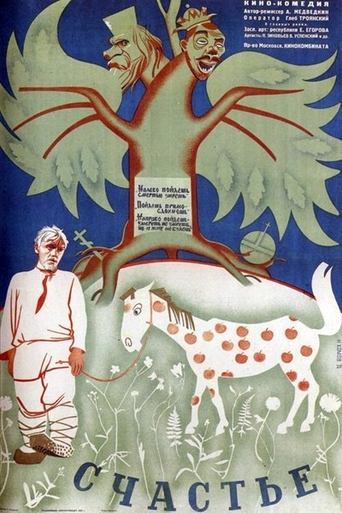
V. Uspensky appears once in this catalog: Happiness (1935). His known filmography consists of a single appearance in Aleksandr Medvedkin's 1935 satirical comedy 'Happiness' (Счастье), which was one of the notable Soviet films of its era. Like many actors from this period of Soviet cinema, particularly those in supporting or minor roles, detailed biographical information is scarce due to limited documentation and the tumultuous historical context of the time. The film 'Happiness' itself was a significant work that used comedy to explore themes of collectivization and rural life in the Soviet Union, though Uspensky's specific role in the production is not well documented in available sources. His brief appearance in this film represents his entire known contribution to cinema, making him one of the many minor figures who participated in the burgeoning Soviet film industry during its formative years.
The Craft
Milestones
- Appeared in Aleksandr Medvedkin's 'Happiness' (1935)
Best Known For
Must-See Films
Working Relationships
Worked Often With
Studios
Why They Matter
Impact on Culture
V. Uspensky's contribution to cinema, while minimal, represents the collective effort of countless actors who participated in the development of Soviet film during the 1930s. His appearance in 'Happiness' places him within the context of early Soviet satirical cinema, which used humor to promote socialist ideals and critique social issues. Though his role was likely minor, he was part of a film that has since been recognized as an important work in Soviet cinema history, demonstrating how even the smallest contributors play a role in the broader cultural landscape.
Lasting Legacy
As a minor actor from early Soviet cinema, V. Uspensky's legacy is primarily tied to his participation in 'Happiness' (1935), a film that has endured as an example of Soviet satirical filmmaking. While individual details about his life and career remain obscure, his inclusion in this historically significant film ensures his place in the broader narrative of Soviet cinema history. His story exemplifies the countless supporting actors and bit players who contributed to the golden age of Soviet film without achieving widespread recognition.
Who They Inspired
Due to the limited scope of his known work, V. Uspensky's influence on other actors or directors cannot be substantiated with available historical records. Like many minor actors from this era, his contribution exists primarily as part of the ensemble that brought important Soviet films to life during a crucial period in the development of the national cinema.
Off Screen
Very little is known about V. Uspensky's personal life, which is typical for minor actors from early Soviet cinema whose contributions were not extensively documented.
Did You Know?
- Only known film appearance was in 'Happiness' (1935)
- Worked during the Stalinist era of Soviet cinema
- Participated in a film directed by notable Soviet filmmaker Aleksandr Medvedkin
- His entire known film career spans a single year
- Like many Soviet actors from this period, detailed biographical information is extremely limited
Frequently Asked Questions
Who was V. Uspensky?
Soviet with credits in this catalog. Very little biographical information about him survives, which is common for minor actors from early Soviet cinema.
What films is V. Uspensky best known for?
Titles linked here include Happiness (1935).
When was V. Uspensky born and when did he die?
The birth and death dates of V. Uspensky are not documented in available historical records, which is typical for minor actors from early Soviet cinema whose personal details were not extensively preserved.
What awards did V. Uspensky win?
There are no known awards or nominations for V. Uspensky, which is consistent with his status as a minor actor who appeared in only one film during a brief period in the 1930s.
What was V. Uspensky's acting style?
Due to the limited documentation of his work and the fact that he appeared in only one known film, V. Uspensky's acting style cannot be definitively characterized from available sources.