
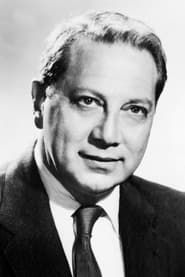
Luther Adler
Actor
Born: May 4, 1903 in New York City, New York, USA Died: December 8, 1984 Active: 1920s-1984
Films
1 film
About Luther Adler
Luther Adler was born into one of America's most prominent theatrical families, the son of Yiddish theater actor Jacob Adler. He began his career on the Yiddish stage alongside his famous siblings, including the renowned acting teacher Stella Adler. Making his Broadway debut in the 1920s, Adler quickly established himself as a serious dramatic actor known for his intense, psychologically complex performances. While he appeared in several Hollywood films during the 1940s and 1950s, including his memorable role as Majak in the film noir classic D.O.A. (1950), his primary focus remained the stage. Adler was among the first American actors to employ method-style techniques before they became mainstream, bringing unprecedented emotional depth to his characters. He continued acting on Broadway, in regional theater, and occasionally in films and television until his death in 1984, leaving behind a dual legacy as both a powerful performer and influential teacher.
The Craft
On Screen
Adler was known for his intense, psychologically complex performances that brought unprecedented emotional truth to his characters. He employed method-style techniques before they became mainstream in American theater, drawing from Stanislavski's system and his own theatrical heritage. His stage background gave him a commanding presence and powerful voice that translated effectively to film, where he specialized in playing troubled, morally ambiguous characters. Adler's approach emphasized deep character study and emotional authenticity, often immersing himself completely in his roles.
Milestones
- Broadway debut in the 1920s in Yiddish theater productions
- Transition to English-language theater in the 1930s
- Memorable film role as Majak in D.O.A. (1950)
- Long-running stage career spanning over five decades
- Teaching acting alongside family members
- Final film appearance in The Man in the Glass Booth (1975)
Best Known For
Iconic Roles
Must-See Films
Accolades
Won
- Tony Award for Best Featured Actor in a Play - Awake and Sing! (1966)
Nominated
- Tony Award nomination for Best Actor - The Iceman Cometh (1956)
- Tony Award nomination for Best Featured Actor - The Price (1968)
Special Recognition
- Inducted into the American Theater Hall of Fame
- New York Drama Critics Circle Award for Awake and Sing!
Working Relationships
Worked Often With
Studios
Why They Matter
Impact on Culture
Luther Adler played a crucial role in bridging Yiddish theatrical traditions with mainstream American theater and film. As part of the Adler acting dynasty, he helped legitimize method acting techniques in American theater before they became widely accepted. His performances brought psychological depth and emotional authenticity to American stage and screen, influencing generations of actors who followed. Adler maintained the rich heritage of Yiddish theater while adapting to changing American cultural landscapes, preserving important theatrical traditions while innovating within them.
Lasting Legacy
Luther Adler's legacy encompasses both his powerful body of work and his role in one of America's most influential acting families. He helped establish method acting as a legitimate approach in American theater and demonstrated how psychological depth could enhance both stage and screen performances. Through his teaching and the continued work of the Stella Adler Studio of Acting, his influence continues to shape contemporary acting. His performances in films like D.O.A. Remain touchstones of film noir, while his stage work helped define American dramatic acting in the mid-20th century.
Who They Inspired
Adler influenced American acting through his early adoption of method techniques and his psychologically complex characterizations. While his sister Stella became more famous as a teacher, Luther's performances demonstrated the practical application of these methods. He influenced actors like Marlon Brando, Robert De Niro, and Warren Beatty indirectly through the Adler family's teaching legacy. His approach to character study and emotional truth became foundational to American acting training programs and influenced the broader shift toward realism in American theater and film.
Off Screen
Luther Adler was deeply embedded in America's theatrical aristocracy, born to Jacob P. Adler and Sara Adler, both prominent Yiddish theater figures. He married actress Sylvia Sidney in 1938, though their marriage ended in divorce in 1947. In 1955, he married Julia Roche, with whom he remained until his death. Adler had one daughter, Ellen Adler, who also became an actress. Despite his family's theatrical prominence, he was known for being somewhat private and intensely focused on his craft, rarely seeking the spotlight outside his professional work.
Education
Attended Columbia University briefly, studied at the American Laboratory Theatre under Richard Boleslavski and Maria Ouspenskaya, informal training in his father's Yiddish theater company
Family
- Sylvia Sidney (1938-1947)
- Julia Roche (1955-1984)
Did You Know?
- Born into a family of six acting siblings, all of whom became professional performers
- Initially resisted acting as a career, wanting to become a lawyer before being drawn to the stage
- Spoke fluent Yiddish, English, and Russian, reflecting his multicultural theatrical heritage
- His father Jacob Adler was considered the 'Sarah Bernhardt of the Yiddish stage'
- Appeared in the original Broadway production of Clifford Odets' 'Awake and Sing!' in 1935
- Was known for his intense preparation methods, sometimes spending months studying for a single role
- His sister Stella Adler became one of America's most famous acting teachers
- Served in the Army during World War II, performing in morale-boosting theatrical productions
- Was offered the role of Willy Loman in the original Broadway production of 'Death of a Salesman' but declined
- His final Broadway appearance was in 'The Price' in 1968, earning a Tony nomination
In Their Own Words
Acting is not about being someone different. It's finding the similarity in what is apparently different, then finding myself in there.
The stage is not a place for ego; it's a place for truth.
Every character has a piece of you in them, and you have a piece of them in you.
Frequently Asked Questions
Who was Luther Adler?
American with credits in this catalog. He appeared in classic films including D.O.A. (1950) and had a Broadway career spanning over five decades.
What films is Luther Adler best known for?
Titles linked here include D.O.A. (1950), The Last Angry Man (1959).
When was Luther Adler born and when did he die?
Born May 4, 1903; died December 8, 1984.
What awards did Luther Adler win?
Luther Adler won a Tony Award for Best Featured Actor in a Play for his performance in 'Awake and Sing!' (1966) and received additional Tony nominations for 'The Iceman Cometh' (1956) and 'The Price' (1968).
What was Luther Adler's acting style?
Adler was known for his intense, psychologically complex performances employing method-style techniques before they became mainstream. He emphasized emotional truth and deep character study, bringing unprecedented psychological depth to his roles in both theater and film.
How was Luther Adler related to Stella Adler?
Luther Adler was the brother of Stella Adler, the renowned acting teacher. They were two of six Adler siblings who became professional actors, born to famous Yiddish theater actors Jacob and Sara Adler.
What was Luther Adler's contribution to American theater?
Adler helped bridge Yiddish theatrical traditions with mainstream American theater, early adoption of method acting techniques, and maintaining psychological realism in American dramatic performance. His work influenced the broader acceptance of method acting in American theater.