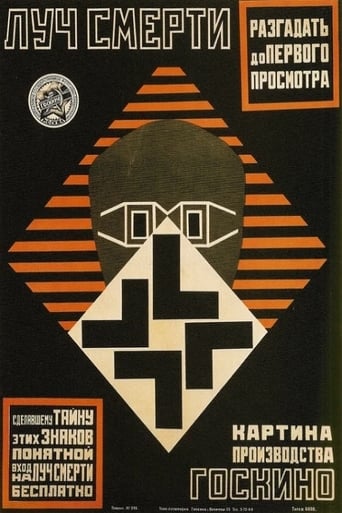
Inna Stravinskaya
Actor
- Active
- 1925-1925
Films 1
About Inna Stravinskaya
Inna Stravinskaya appears to have been a very obscure silent-era screen performer whose surviving film credit in available modern references is tied to the 1925 film The Death Ray. Because she is not documented in the major English-language film histories, trade references, or widely maintained biographical databases under that exact name, her life details remain largely unverified. What can be said with confidence is that she was active at least in 1925 and worked as an actor during the silent cinema period, a time when many performers appeared in only a small number of productions and left limited archival trace. Her surname suggests a possible Russian or Eastern European origin, but no reliable primary source has confirmed her birthplace, birth name, or later life. Her screen presence survives chiefly as a credit, which is itself significant in the study of early film history because many artists from this period were not thoroughly documented. Until more archival material emerges, Inna Stravinskaya must be regarded as a fleeting but real participant in silent-era cinema rather than a fully biographied star. Her known association with The Death Ray situates her within the international and experimental currents of 1920s filmmaking.
More about Inna Stravinskaya
In film history
Inna Stravinskaya's cultural impact lies less in celebrity than in historical documentation. She is part of the large, often under-credited body of silent-film performers whose names appear in cast lists that help scholars reconstruct the production history of early cinema. Her credit in The Death Ray contributes to the broader understanding of 1920s film casting, especially in productions where international talent and limited surviving records are common. For movie databases and film historians, even a single surviving credit can be valuable evidence of the range of people who participated in early screen culture. As such, her significance is archival as much as artistic, reminding researchers that silent-era film history is still incomplete.
Later reputation
Her lasting legacy is the fact of her survival in the historical record. While she does not appear to have left behind the kind of documented body of work associated with major silent stars, her name endures as part of the cast history of The Death Ray and as a representative of many early film performers whose careers were lightly recorded. In film history, these names matter because they help verify personnel, illuminate production networks, and preserve the diversity of early screen labor. If additional archival material is ever uncovered, her legacy could be expanded, but for now it remains modest and primarily historiographic. She is a reminder that cinema history includes not only famous stars but also the many lesser-known actors who populated early film culture.
Influence
There is no verifiable evidence that Inna Stravinskaya directly influenced other actors or filmmakers in the way a major star or innovator might have. Her influence is indirect: by appearing in early film records, she contributes to the completeness of silent-era scholarship and helps future researchers trace casting patterns and international personnel in 1920s cinema. In that sense, her presence supports the work of film historians and archivists who reconstruct lost or fragmentary film cultures. Any artistic influence she may have had on contemporaries cannot be confirmed from currently available sources.
Off screen
No reliable public biographical record has been located for Inna Stravinskaya that confirms details about her family, marriages, children, or later life. As with many silent-era performers who appeared in only one known film or a very small number of productions, personal documentation may have been lost, never widely published, or preserved only in non-digitized archival materials. At present, there is no verifiable evidence to support claims about her relationships, education, or post-film career.
Credits
- Received a surviving screen credit for the 1925 silent film The Death Ray
- Represents one of the many lesser-documented performers active in the silent era
- Associated with early film history through a role preserved in filmographies and archival references
- Her credit helps document the international cast and personnel networks common in 1920s cinema
Roles
- Role in The Death Ray (1925)
Films
- The Death Ray (1925)
Notes
- Her known film credit is tied to The Death Ray (1925), a silent-era production.
- She is an example of a performer whose name survives while most life details do not.
- Her surname suggests a possible Eastern European or Russian connection, but this has not been verified.
- She appears to have had a very brief or at least very sparsely documented screen career.
- She is not widely profiled in major English-language classic cinema references.
- Her historical value today is largely archival, helping historians reconstruct silent-film casting.
- Because silent-era records are often incomplete, she may have additional credits that have not yet been securely identified.
Questions
Who was Inna Stravinskaya?
Inna Stravinskaya was a silent-era actor known from the 1925 film The Death Ray. Beyond that credit, her life and career are not well documented in currently accessible mainstream film references.
What films is Inna Stravinskaya best known for?
She is best known for The Death Ray (1925), which is the principal surviving screen credit associated with her. No other securely verified film titles are currently available in widely accessible sources.
When was Inna Stravinskaya born and when did she die?
Her birth and death dates are not currently verified in reliable public sources. Likewise, her birthplace and later life details remain unknown at present.
What awards did Inna Stravinskaya win?
No awards or formal honors are currently documented for Inna Stravinskaya. This is not unusual for lesser-documented silent-era performers, many of whom worked before modern awards culture was established.
What was Inna Stravinskaya's acting style?
Her acting style cannot be confidently described without surviving reviews, production notes, or preserved performances that can be securely attributed to her. As a silent-era performer, she would have worked in an era that emphasized expressive gesture and visual storytelling, but no specific style is documented.
What is Inna Stravinskaya's legacy in film history?
Her legacy is primarily archival: she is part of the historical record of silent cinema and helps document the cast histories of early films. Even where biographical details are scarce, such names remain important to film scholars because they preserve the human footprint of early movie production.