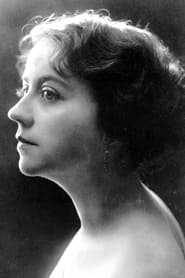
Helen Gardner
Actor
Born: September 2, 1884 in Binghamton, New York, USA Died: November 20, 1968 Active: 1911-1924 Birth Name: Helen Louise Gardner
Films
1 film
About Helen Gardner
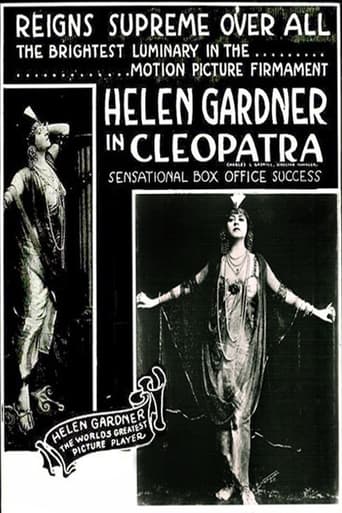
American actress and producer who emerged as one of the first female film stars during the early silent era. She began her career on the stage before transitioning to films with the Vitagraph Company in 1911, quickly becoming one of their leading actresses. Gardner made history in 1912 by starring in and producing 'Cleopatra,' one of the earliest American feature films, through her own production company, Helen Gardner Picture Players. This made her one of the first women to establish and run her own film production company in Hollywood. Throughout her career, she specialized in playing strong, exotic characters in historical and costume dramas, often taking on roles that showcased her dramatic range and commanding screen presence. Her production company produced approximately 20 films between 1912 and 1914, with Gardner frequently writing and directing in addition to starring. Despite her early success and innovation, her career declined as the film industry evolved toward the studio system, and she retired from acting in the mid-1920s. Gardner's legacy as a trailblazing female entrepreneur in early cinema remains significant in film history.
The Craft
On Screen
Gardner was known for her dramatic, theatrical style that reflected her stage background, characterized by exaggerated gestures and intense emotional expression typical of the early silent period. She excelled in portraying strong, commanding female characters, often in historical or exotic settings that allowed for elaborate costumes and dramatic storytelling. Her performances were marked by a commanding screen presence and the ability to convey complex emotions through facial expressions and body language, making her particularly effective in close-ups, a technique that was becoming increasingly important in cinema during her era.
Milestones
- Starred in 'Cleopatra' (1912), one of the earliest American feature films
- Founded Helen Gardner Picture Players, one of the first female-owned production companies
- Became one of the highest-paid actresses of the early 1910s
- Produced and starred in approximately 20 films through her own company
- Pioneered the concept of the female film star as an independent producer
Best Known For
Iconic Roles
Must-See Films
Accolades
Special Recognition
- Recognized as one of the first female film producers in Hollywood history
- Honored by film historians for her role in early cinema
- Featured in retrospectives on women in early film
Working Relationships
Worked Often With
Studios
Why They Matter
Impact on Culture
Helen Gardner's cultural impact extends far beyond her film performances, as she was a true pioneer who challenged the gender norms of early Hollywood. By establishing her own production company in 1912, she demonstrated that women could be successful entrepreneurs in the film industry at a time when such independence was rare. Her portrayal of Cleopatra helped establish the template for the historical epic in American cinema and influenced how powerful female characters would be depicted in film for decades. Gardner's success as both an actress and producer paved the way for future generations of women in film, showing that female stars could take control of their careers and creative output. Her work also contributed to the development of the feature film format in America, helping transition the industry away from short films toward longer, more ambitious productions.
Lasting Legacy
Helen Gardner's legacy as a trailblazer in early cinema has been increasingly recognized by film historians and scholars, though she remains lesser known to the general public. She is remembered as one of the first women to achieve creative and financial independence in Hollywood, predating more famous female pioneers like Mary Pickford. Her production company's output represents an important chapter in the development of the American film industry, particularly in the transition from short films to features. Gardner's career serves as an example of the opportunities available to women in the early film industry before the studio system became more rigid and male-dominated. Recent scholarship has highlighted her contributions to cinema history, and her films, particularly 'Cleopatra,' are studied as important examples of early American feature filmmaking and female entrepreneurship in the arts.
Who They Inspired
Gardner influenced subsequent generations of female filmmakers and performers by demonstrating that women could successfully produce and star in their own films. Her business model of creating a production company around a female star would later be emulated by more famous figures like Mary Pickford and others. Her dramatic acting style, while typical of the early silent era, helped establish conventions for portraying strong female characters that would influence actresses throughout the silent period. Gardner's success in costume and historical dramas also contributed to the development of these genres in American cinema, showing the commercial viability of elaborate productions. Perhaps most importantly, her example inspired other women in the early film industry to pursue creative and financial independence, challenging the gender barriers that would become more pronounced as Hollywood evolved.
Off Screen
Helen Gardner was married twice during her lifetime. Her first marriage was to actor-director Charles Gorman, though it ended in divorce. She later married Duncan C. Harrison, a businessman, with whom she spent her later years. After retiring from the film industry in the mid-1920s, Gardner largely withdrew from public life and focused on her marriage and personal interests. She spent her final years in Orlando, Florida, where she lived quietly until her death in 1968 at the age of 84. Despite her significant contributions to early cinema, she remained relatively unknown to later generations, a fact that film historians have worked to correct in recent years.
Education
Educated in Binghamton, New York; received theatrical training before entering films
Family
- Charles Gorman (1910-1912)
- Duncan C. Harrison (1920s-1968)
Did You Know?
- Helen Gardner was one of the first film stars to earn $1,000 per week, making her one of the highest-paid actresses of her time
- Her production company, Helen Gardner Picture Players, was established in 1912, the same year she starred in 'Cleopatra'
- The 1912 'Cleopatra' was an 8-reel feature film, unusually long for its time
- Gardner often performed her own stunts and dangerous scenes in her films
- She was one of the first actresses to use her own name in her production company, establishing the concept of the star as a brand
- Her films were distributed through the Universal Film Manufacturing Company, giving her wide reach despite being an independent producer
- Gardner wrote many of her own scenarios and scripts, demonstrating creative control beyond acting
- She was known for her elaborate costumes, which she often designed herself or had specially created
- Her production company was one of the few independent companies to successfully compete with major studios in the early 1910s
- Despite her early success, Gardner's films are now mostly lost, a common fate for early cinema
In Their Own Words
"I believe a woman should be her own master in the film business, just as in any other profession." (1913 interview)
"The motion picture industry offers women opportunities they can find nowhere else in the arts." (1914 statement)
"When I play Cleopatra, I don't just act the part - I live it, breathe it, become the queen of Egypt." (1912 interview)
"Independence in art is worth more than gold in the bank." (1913 quote about her production company)
Frequently Asked Questions
Who was Helen Gardner?
American actress and producer who was one of the first female film stars and one of the first women to establish her own production company in Hollywood. She was particularly known for her role in 'Cleopatra' (1912) and for being an independent entrepreneur in early cinema.
What films is Helen Gardner best known for?
Titles linked here include Cleopatra (1912), A Sister to Carmen (1913).
When was Helen Gardner born and when did she die?
Born September 2, 1884; died November 20, 1968.
What awards did Helen Gardner win?
Helen Gardner did not receive formal awards during her career, as the Academy Awards and other major film honors were established after her peak period. However, she is recognized by film historians as a female producer and one of the first women to achieve independence in Hollywood.
What was Helen Gardner's acting style?
Gardner's acting style was dramatic and theatrical, reflecting her stage background and typical of the early silent era. She was known for her commanding screen presence, exaggerated gestures, and ability to portray strong female characters, particularly in historical and costume dramas.