
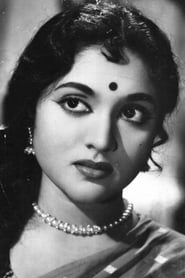
Vyjayanthimala
Actor
Born: August 13, 1936 in Chennai (then Madras), Tamil Nadu, India Active: 1949-1985 Birth Name: Vyjayanthimala Bali
Films
2 films
About Vyjayanthimala
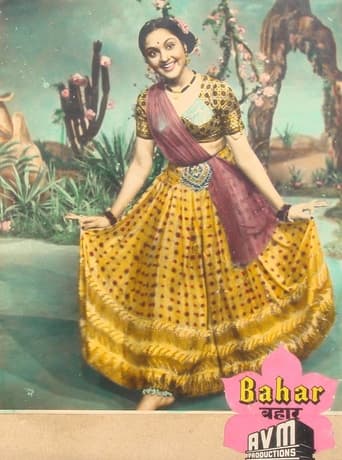
Vyjayanthimala Bali, known mononymously as Vyjayanthimala, was one of Indian cinema's most actresses and dancers during the Golden Age of Indian cinema. Born into a Tamil-speaking family, she began her career as a child artist in Tamil films before transitioning to lead roles. Her breakthrough came with the Tamil film 'Vazhkai Padagu' (1949), which was later remade in Hindi as 'Bahar' (1951), marking her debut in Hindi cinema. Throughout the 1950s and 1960s, she established herself as a versatile performer, excelling in dramatic roles, romantic comedies, and especially dance-oriented films. Her performance in 'Naya Daur' (1957) opposite Dilip Kumar became one of her most celebrated works, showcasing her acting prowess and dancing abilities. She was among the highest-paid actresses of her era and worked with virtually every major star and director of the time. After retiring from films in the early 1980s, she successfully transitioned into politics, serving as a Member of Parliament in the Indian government.
The Craft
On Screen
Vyjayanthimala was known for her natural acting style combined with exceptional dancing skills. She brought a unique blend of grace and intensity to her roles, particularly excelling in dramatic performances that required emotional depth. Her classical dance training (Bharatanatyam) significantly influenced her screen presence, making her musical sequences particularly memorable. She was equally comfortable in both traditional Indian roles and modern, westernized characters, showcasing remarkable versatility.
Milestones
- Film debut in Tamil cinema with 'Vazhkai Padagu' (1949)
- Hindi film debut with 'Bahar' (1951)
- Starred in blockbuster 'Naya Daur' (1957)
- Won first Filmfare Award for Best Actress for 'Sadhna' (1958)
- Became first South Indian actress to become a major star in Hindi cinema
- Received multiple Filmfare Awards throughout her career
- Successfully transitioned to politics after film career
Best Known For
Iconic Roles
Must-See Films
Accolades
Won
- Filmfare Award for Best Actress for 'Sadhna' (1958)
- Filmfare Award for Best Actress for 'Gunga Jumna' (1961)
- Filmfare Award for Best Actress for 'Sangam' (1964)
- Filmfare Award for Best Actress for 'Devdas' (1955)
- Padma Shri (1968)
- Filmfare Lifetime Achievement Award (2005)
Nominated
- Multiple Filmfare Award nominations throughout the 1950s and 1960s
Special Recognition
- Padma Shri (India's fourth highest civilian award, 1968)
- Filmfare Lifetime Achievement Award (2005)
- Dadasaheb Phalke Award (2010)
- Honored at International Film Festival of India
Working Relationships
Worked Often With
Studios
Why They Matter
Impact on Culture
Vyjayanthimala revolutionized the role of dance in Indian cinema, elevating it from mere entertainment to an art form integral to storytelling. She broke regional barriers by becoming one of the first South Indian actresses to achieve pan-Indian stardom in Hindi cinema. Her success paved the way for other South Indian actresses in Bollywood. She was instrumental in popularizing classical dance forms among the masses through her films. Her portrayal of strong, independent female characters challenged traditional gender roles in Indian cinema of the 1950s and 1960s.
Lasting Legacy
Vyjayanthimala's legacy extends beyond her film performances to her impact on Indian popular culture. She is remembered as. Her dance sequences in films like 'Madhumati' and 'Amrapali' are still studied and admired. Her successful transition from cinema to politics demonstrated the evolving role of film stars in Indian society. She remains an icon of grace, talent, and dignity, inspiring generations of performers.
Who They Inspired
Vyjayanthimala influenced countless actresses who followed, particularly in combining acting prowess with exceptional dance skills. Her work ethic and professionalism set standards in the Indian film industry. She demonstrated that classical arts could coexist with commercial cinema, influencing the integration of traditional art forms in mainstream films. Her success in both regional and national cinema inspired a more pan-Indian approach to film careers.
Off Screen
Vyjayanthimala married Dr. Sambhu Rama Bali in 1968, a Tamil Brahmin personal physician of the Chief Minister of Mysore. The couple has one son, Suchindra Bali, who briefly tried his hand at acting. After her film career, she became deeply involved in politics and social work. She was known for maintaining a low-profile personal life despite her immense fame and was respected for her dignity and professionalism throughout her career.
Education
Educated at Presentation Convent Higher Secondary School, Church Park, Chennai; later studied at Good Shepherd's High School; received classical dance training from Guru Vazhuvoor Ramiah Pillai in Bharatanatyam
Family
- Dr. Sambhu Rama Bali (1968-present)
Did You Know?
- Was discovered at age 15 by director A.V. Meyyappan
- Initially wanted to become a doctor before entering films
- Was the first South Indian actress to become a major star in Hindi cinema
- Refused to work with Raj Kapoor initially due to scheduling conflicts
- Her dance in 'Madhumati' was performed in freezing conditions
- Was offered a role in Hollywood but declined to focus on Indian cinema
- Fluent in Tamil, Telugu, Hindi, and English
- Her song 'Aaja Re Pardesi' from 'Madhumati' became an international hit
- Was one of the highest-paid actresses of her time
- Turned down many roles that went to other actresses and became hits
- Her dance performance in 'Amrapali' is considered one of the finest in Indian cinema
- Was offered the lead in 'Mughal-e-Azam' but declined
In Their Own Words
I never planned to be an actress. It just happened, and I'm grateful for the journey.
Dance is not just movement; it's the expression of the soul.
I believe in doing my work with sincerity and letting the results speak for themselves.
Classical dance gave me the discipline that helped me in my acting career.
I never chased stardom; I focused on doing good work, and stardom followed.
Frequently Asked Questions
Who was Vyjayanthimala?
Vyjayanthimala was one of Indian cinema's most iconic actresses and dancers during the 1950s and 1960s, known for her exceptional dancing skills and versatile acting in both regional and Hindi films. She later became a successful politician, serving as a Member of Parliament in India.
What films is Vyjayanthimala best known for?
Titles linked here include Naya Daur (1957), Madhumati (1958).
When was Vyjayanthimala born and when did she die?
Born August 13, 1936; died death date not listed.
What awards did Vyjayanthimala win?
Vyjayanthimala won multiple Filmfare Awards for Best Actress, received the Padma Shri in 1968, the Filmfare Lifetime Achievement Award in 2005, and the prestigious Dadasaheb Phalke Award in 2010 for her contributions to Indian cinema.
What was Vyjayanthimala's acting and dancing style?
Vyjayanthimala was known for her natural acting style combined with exceptional classical dance training in Bharatanatyam. She brought grace and emotional depth to her roles, particularly excelling in dance sequences that became integral to her films' storytelling.
How did Vyjayanthimala influence Indian cinema?
Vyjayanthimala revolutionized the role of dance in Indian cinema, broke regional barriers as a South Indian actress achieving pan-Indian stardom, and set new standards for professionalism. She proved that classical arts could successfully merge with commercial cinema, influencing generations of performers.
What was Vyjayanthimala's transition from cinema to politics?
After retiring from films in the early 1980s, Vyjayanthimala joined politics and was elected as a Member of Parliament, serving multiple terms. She represented the Congress party and later the BJP, continuing her public service beyond her entertainment career.