
Films
1 film
About Vera Stroyeva
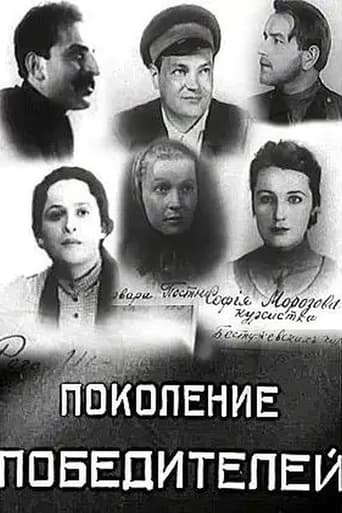
Soviet film director active during the Stalinist era of the 1930s, a period when the Soviet film industry was heavily state-controlled and focused on producing works that aligned with socialist realism principles. Her most notable and possibly only surviving film work was 'Generation of Victors' (1936), which reflected the ideological themes prevalent in Soviet cinema of the time, emphasizing collective achievement and the building of socialism. As a female director in the 1930s Soviet film industry, Stroyeva operated in a challenging environment where few women held creative leadership positions. Her work emerged during a transformational period in Soviet cinema, transitioning from the experimental avant-garde of the 1920s to the more rigid ideological requirements of the 1930s. The limited documentation of her career suggests she may have been part of the generation of filmmakers whose work was overshadowed by more prominent directors or whose careers were cut short by the political purges of the late 1930s. Her film 'Generation of Victors' represents the type of propaganda cinema that dominated Soviet production during this period, focusing on themes of industrial progress and the triumph of the Soviet system.
The Craft
Behind the Camera
Likely adhered to socialist realist principles common in Soviet cinema of the 1930s, emphasizing collective narratives and ideological messaging
Milestones
- Directed 'Generation of Victors' (1936)
Best Known For
Must-See Films
Working Relationships
Studios
Why They Matter
Impact on Culture
Vera Stroyeva's work represents the broader landscape of Soviet cinema during the 1930s, a period when the film industry was heavily centralized and focused on producing works that supported socialist ideology. Her film 'Generation of Victors' exemplifies the type of cinema that dominated Soviet screens during this era, serving both as entertainment and as ideological reinforcement of the Soviet system. As one of the relatively few female directors working in Soviet cinema during this period, her career, however brief, contributes to the understanding of women's roles in early Soviet filmmaking. The limited documentation of her work also reflects how many filmmakers from this era, particularly those who did not achieve international recognition or fell out of favor with the authorities, have been largely lost to film history.
Lasting Legacy
Vera Stroyeva's legacy is primarily preserved through her film 'Generation of Victors' (1936), which serves as a historical artifact of Soviet cinema during the Stalinist era. Her work represents the broader patterns of filmmaking in 1930s Soviet Union, where cinema was utilized as a tool for ideological education and social engineering. While not as well-documented or celebrated as contemporaries like Eisenstein or Pudovkin, her contribution adds to the understanding of the diverse range of filmmakers working within the constraints of the Soviet system. Her story also highlights the challenges faced by women directors in early cinema, particularly within the highly politicized environment of the Soviet film industry.
Who They Inspired
Due to the limited documentation of her career and apparent brief period of activity, Vera Stroyeva's direct influence on other filmmakers is difficult to trace. However, her work as part of the Soviet film industry of the 1930s contributed to the overall development of state-controlled cinema models that would influence other socialist countries. Her film, like others of its era, helped establish visual and narrative conventions for socialist realist cinema that would persist for decades in Soviet and Eastern European filmmaking.
Off Screen
Very limited information is available about Vera Stroyeva's personal life, which was not uncommon for Soviet-era filmmakers whose biographical details were often not extensively documented, especially if they were not among the most prominent directors of their time.
Did You Know?
- Vera Stroyeva was one of the relatively few women directing films in the Soviet Union during the 1930s
- Her film 'Generation of Victors' was released during the height of Stalin's purges, a dangerous time for artists in the Soviet Union
- The title 'Generation of Victors' reflects the optimistic and triumphalist tone common in Soviet propaganda films of the era
- 1936 was a significant year in Soviet cinema, marking the establishment of more rigid ideological controls over film production
- Very little biographical information about Stroyeva survives, which was not uncommon for Soviet filmmakers who were not part of the official pantheon of great directors
Frequently Asked Questions
Who was Vera Stroyeva?
Soviet on YTB.my. She was one of the few women working as a director in the Soviet film industry during this politically charged era.
What films is Vera Stroyeva best known for?
Titles linked here include Generation of Victors (1936).
When was Vera Stroyeva active as a filmmaker?
Based on available filmography records, Vera Stroyeva was active as a director in 1936, though she may have worked in other capacities in the film industry before or after this date.
What was Vera Stroyeva's directing style?
While specific details about her directing style are limited, her work likely adhered to the socialist realist principles that dominated Soviet cinema in the 1930s, emphasizing collective narratives and ideological messaging.
Why is so little information available about Vera Stroyeva?
The scarcity of information about Vera Stroyeva reflects the broader challenge of documenting the careers of many Soviet-era filmmakers, particularly those who were not among the most prominent directors or whose careers were cut short by political circumstances.