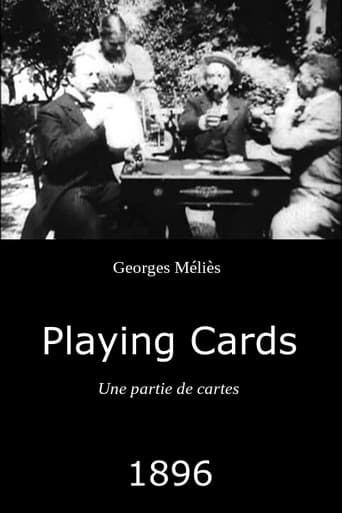
Films
1 film
About Octavie Huvier
Octavie Huvier was one of the earliest film actors in cinema history, appearing in Georges Méliès's 1896 short film 'Playing Cards' (Partie de cartes). She was active during the very birth of motion pictures, a time when filmmaking was experimental and actors were often drawn from theater or were acquaintances of the filmmakers. Her appearance in this early Méliès film places her among the performers who helped establish the medium of cinema. Like many actors from this nascent period, detailed records of her life and career are scarce, as the concept of film stardom had not yet developed. Her work represents the crucial transition from stage performance to screen acting, helping to define what it meant to perform for the camera. The brevity of her known film career (1896-1896) was typical for early cinema participants who often made only one or two films before returning to other pursuits.
The Craft
Milestones
- Appeared in Georges Méliès's 'Playing Cards' (1896), one of the earliest narrative films
- Participated in the birth of cinema as a performing medium
- Worked with filmmaker Georges Méliès during his most innovative period
Best Known For
Iconic Roles
Must-See Films
Working Relationships
Worked Often With
Studios
Why They Matter
Impact on Culture
Octavie Huvier's contribution to cinema, while small in scope, represents an important moment in film history as one of the first women to appear on screen in a narrative film. Her participation in Georges Méliès's work places her among the pioneers who helped establish the language of cinema. During an era when most people had never seen moving images, performers like Huvier were instrumental in demonstrating the potential of film as both entertainment and art form. Her work in 'Playing Cards' helped establish the convention of naturalistic behavior on camera, moving away from the exaggerated theatrical style that dominated early film performances.
Lasting Legacy
Octavie Huvier's legacy lies in her status as one of cinema's earliest performers, representing the foundational period of film history. While her name may not be widely recognized, her contribution to the medium is historically significant as part of the first generation of film actors. Her appearance in a Méliès film connects her to. She represents the countless anonymous performers who helped establish cinema as an art form before the concept of film stardom existed.
Who They Inspired
As an actor from the very dawn of cinema, Octavie Huvier's direct influence on later performers is difficult to trace, but her work contributed to establishing early conventions of screen acting. Her participation in Méliès's films helped demonstrate that natural behavior could be effective on camera, influencing how subsequent actors would approach film performance. The early techniques and approaches she and her contemporaries developed laid groundwork for the evolution of film acting that would follow in subsequent decades.
Off Screen
Very little is known about Octavie Huvier's personal life, which was typical for actors from the earliest days of cinema. Like many performers of this era, she was likely a theater actor or acquaintance of Georges Méliès who participated in his early film experiments. The lack of personal documentation reflects how anonymous early film performers were, as the concept of film celebrity had not yet emerged in 1896.
Did You Know?
- 'Playing Cards' (1896) was only about one minute long, typical of films from this era
- The film was directed by Georges Méliès, one of cinema's first great visionaries and special effects pioneers
- 1896 was only the second year of commercial cinema history, following the Lumière brothers' first screenings in 1895
- Most early film actors, including Huvier, were not credited on screen or in promotional materials
- The film was likely shot at Méliès's studio in Montreuil, outside Paris
- Early cinema actors often performed multiple roles or served as crew members due to small production teams
- Méliès was a magician before becoming a filmmaker, and many of his early collaborators came from theatrical backgrounds
- The film was distributed by Méliès's Star Film company, which would become
Frequently Asked Questions
Who was Octavie Huvier?
Screen credits include Georges Méliès's 1896 short film 'Playing Cards,' making her one of the earliest film actors in cinema history. She was active only in 1896, during the very birth of motion pictures as an art form.
What films is Octavie Huvier best known for?
Titles linked here include Playing Cards (1896).
When was Octavie Huvier born and when did she die?
Specific birth and death dates for Octavie Huvier are not known, which is typical for actors from the earliest days of cinema. She was active in 1896 and was French by nationality.
What awards did Octavie Huvier win?
Octavie Huvier did not receive any awards or nominations, as formal film awards did not exist in 1896. The Academy Awards would not be established until 1929, more than three decades after her film work.
What was Octavie Huvier's acting style?
While specific details about her acting style are not documented, performers in 1896 were typically transitioning from stage acting to screen performance. Early film actors often had to moderate their theatrical gestures for the intimacy of the camera, a technique that was still being developed during this period.