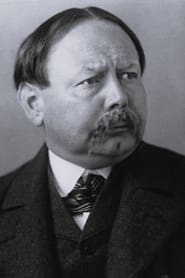
Reinhold Häussermann
Actor
Born: February 19, 1884 in Vienna, Austria Died: April 16, 1947 Active: 1924-1924
Films
1 film
About Reinhold Häussermann
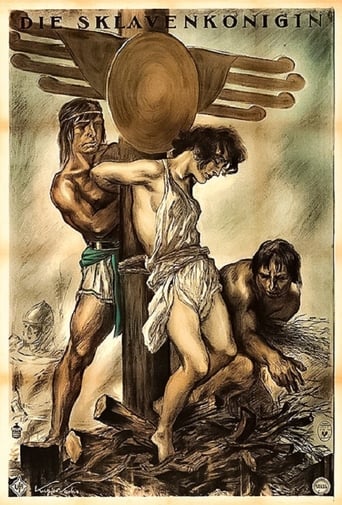
Reinhold Häussermann appears once in this catalog: Moon of Israel (1924). His most notable and perhaps only film appearance was in the 1924 epic 'Moon of Israel' (German title: 'Die Sklavenkönigin'), directed by Mihaly Kertész (later known as Michael Curtiz). This Austrian production was ambitious silent epics of its time, based on the novel by H. Rider Haggard. Häussermann was part of the ensemble cast that brought this biblical epic to life during the height of European silent cinema. His brief film career appears to have been concentrated in 1924, suggesting he may have been primarily a stage actor who made only this one foray into cinema. The film itself was a significant production for its time, featuring elaborate sets and thousands of extras, typical of the grand epics being produced in Europe during this period.
The Craft
On Screen
Silent era dramatic acting typical of European cinema of the 1920s, characterized by expressive gestures and theatrical presence suited for the epic scale of 'Moon of Israel'
Milestones
- Appeared in the epic silent film 'Moon of Israel' (1924)
- Part of Michael Curtiz's early Austrian film productions
- Contributed to
Best Known For
Iconic Roles
Must-See Films
Working Relationships
Worked Often With
Studios
Why They Matter
Impact on Culture
Reinhold Häussermann's contribution to cinema, while limited to a single film appearance, is part of the broader tapestry of European silent cinema. His participation in 'Moon of Israel' places him within the context of early Austrian epic filmmaking, which was attempting to compete with Hollywood productions of the era. The film itself represents an important moment in the career of director Michael Curtiz before his move to Hollywood, where he would become one of Warner Bros.' most celebrated directors.
Lasting Legacy
As a minor figure in silent cinema, Häussermann's legacy is primarily tied to his association with 'Moon of Israel,' a film that represents the peak of Austrian silent film production. The movie is historically significant as. While Häussermann himself did not achieve lasting fame, his contribution to this ambitious production makes him part of cinema history.
Who They Inspired
Given his brief film career, Häussermann's direct influence on subsequent generations of actors appears minimal. However, as part of the ensemble of 'Moon of Israel,' he contributed to a film that demonstrated European cinema's ability to produce epic spectacles comparable to Hollywood productions, influencing the scale and ambition of future European films.
Off Screen
Reinhold Häussermann was born and raised in Vienna, Austria, during the final decades of the Austro-Hungarian Empire. He lived through the dramatic political and social changes of the early 20th century, including the fall of the empire and the establishment of the Austrian Republic. His career appears to have been primarily focused on stage acting, with his film work being minimal. He passed away in Vienna in 1947, having lived through both World Wars.
Education
Likely received theatrical training in Vienna during the early 1900s, though specific educational details are not documented in available sources
Did You Know?
- 'Moon of Israel' was
- The film featured thousands of extras and elaborate sets depicting ancient Egypt
- Director Mihaly Kertész later became famous in Hollywood as Michael Curtiz, director of 'Casablanca'
- The film was based on H. Rider Haggard's novel 'Moon of Israel'
- Häussermann's film career appears to have lasted only one year, suggesting he was primarily a stage actor
- The film was an international co-production between Austria and Hungary
- Surviving copies of 'Moon of Israel' are rare, making Häussermann's screen performance difficult to access for modern audiences
Frequently Asked Questions
Who was Reinhold Häussermann?
Austrian with credits in this catalog.' His film career appears to have been brief, concentrated primarily in 1924, suggesting he may have been primarily a stage actor who made only one foray into cinema.
What films is Reinhold Häussermann best known for?
Titles linked here include Moon of Israel (1924).
When was Reinhold Häussermann born and when did he die?
Born February 19, 1884; died April 16, 1947.
What awards did Reinhold Häussermann win?
There are no documented awards or nominations for Reinhold Häussermann, which is not uncommon for supporting actors in European silent cinema of the 1920s, particularly those with very brief film careers.
What was Reinhold Häussermann's acting style?
As a silent era actor, Häussermann likely employed the dramatic, expressive acting style typical of European cinema in the 1920s, characterized by exaggerated gestures and facial expressions to convey emotion without dialogue, particularly suited for the epic scale of 'Moon of Israel'.