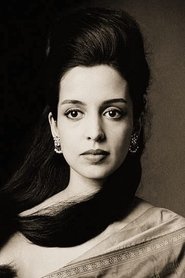
Leela Naidu
Actor
Born: March 19, 1940 in Mumbai, India Died: July 28, 2009 Active: 1957-1963
Films
1 film
About Leela Naidu
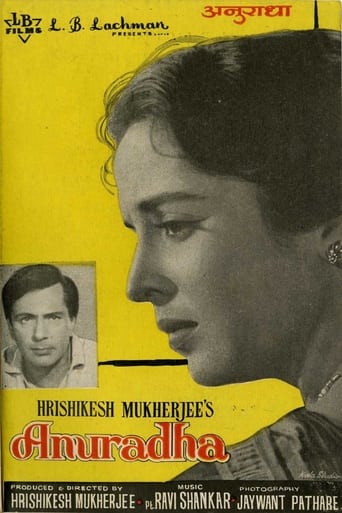
Leela Naidu worked on one surviving credit: Anuradha (1960). Born in Mumbai in 1940, she first gained national attention when she won the Miss India pageant in 1954 at just 14 years old, leading to international recognition including features in Vogue magazine. Her film career, though relatively brief, was marked by critically acclaimed performances, most notably in Hrishikesh Mukherjee's 'Anuradha' (1960), which won the National Film Award for Best Feature Film. Naidu was one of the few Indian actresses of her era to work in international productions, appearing in films like 'The Householder' (1963), which was produced by Merchant Ivory Productions. Her performances were characterized by a natural, understated style that contrasted with the more dramatic acting prevalent in Indian cinema of the time. Beyond her film work, she was known for her intellectual pursuits and associations with prominent literary figures. She stepped away from the film industry at a young age but remained a cultural icon remembered for her exceptional beauty and artistic contributions. Her later years were spent away from the public eye, though she occasionally appeared in documentaries about classic Indian cinema.
The Craft
On Screen
Natural and understated performances with remarkable screen presence, characterized by subtle emotional expressions and a minimalist approach that contrasted with the theatrical style prevalent in Indian cinema of her era. Her acting was marked by an innate grace and authenticity that brought depth to her characters without relying on dramatic gestures.
Milestones
- Won Miss India pageant in 1954 at age 14
- Starred in critically acclaimed 'Anuradha' (1960)
- Appeared in international production 'The Householder' (1963)
- Featured in Vogue magazine as one of the world's most beautiful women
- Worked with renowned director Hrishikesh Mukherjee
Best Known For
Iconic Roles
Must-See Films
Accolades
Won
- National Film Award for Best Feature Film for 'Anuradha' (1960) - as part of the cast
- Miss India 1954
Nominated
- Filmfare Award nomination for Best Actress for 'Anuradha' (1960)
Special Recognition
- Featured in Vogue magazine's list of the world's most beautiful women
- Recognized as one of India's most iconic beauty queens
- Honored at various classic Indian cinema retrospectives
Working Relationships
Worked Often With
Studios
Why They Matter
Impact on Culture
Leela Naidu represented a significant shift in Indian cinema during the transition from the golden age to the modern era. She embodied the new, sophisticated Indian woman who could bridge traditional values with international appeal. Her appearance in international productions helped pave the way for future Indian actors to work globally. As a former Miss India who successfully transitioned to serious acting, she challenged stereotypes about beauty queens in cinema. Her work in art house films like 'Anuradha' contributed to the parallel cinema movement in India, which focused on realistic storytelling and social issues. She remains a cultural reference point for discussions about beauty standards and artistic integrity in Indian cinema.
Lasting Legacy
Leela Naidu's legacy endures through her iconic status as one of India's most beautiful women and her contributions to quality cinema. The film 'Anuradha' continues to be studied as a classic of Indian parallel cinema, with her performance often cited as a model of naturalistic acting. She is remembered as a pioneer who showed that Indian actresses could succeed in international productions while maintaining their cultural identity. Her life story serves as an inspiration for those who value artistic integrity over commercial success. Film historians and critics frequently reference her when discussing the evolution of Indian cinema and the representation of women in films of the 1960s.
Who They Inspired
Leela Naidu influenced subsequent generations of Indian actresses by demonstrating that beauty and substance could coexist in cinema. Her natural acting style inspired actors to move away from theatrical performances toward more realistic portrayals. She showed that Indian actors could have international careers without compromising their artistic values. Her brief but impactful career encouraged filmmakers to cast actresses based on talent rather than just conventional beauty standards. Contemporary actresses who work in both Indian and international cinema often acknowledge pioneers like Naidu for opening doors previously closed to Indian talent.
Off Screen
Leela Naidu led a fascinating personal life that intersected with India's intellectual and artistic circles. She married businessman Tilak Raj Khosla in 1956, but the marriage ended in divorce in 1958. Her second marriage was to renowned poet and writer Dom Moraes, with whom she had a daughter named Maya. This marriage was highly publicized and placed her at the center of India's literary scene. She was known for her intelligence, multilingual abilities, and deep interest in literature and arts. After her film career ended, she lived a relatively private life, dividing her time between India and other countries. She maintained friendships with prominent figures in literature and art throughout her life.
Education
Educated at Cathedral and John Connon School in Mumbai,. She was known for her academic excellence and linguistic abilities from an early age.
Family
- Tilak Raj Khosla (1956-1958)
- Dom Moraes (1960s-1970s)
Did You Know?
- Won Miss India at the young age of 14 in 1954
- Was featured in Vogue magazine as one of the world's ten most beautiful women
- Was of mixed heritage - her mother was of French descent while her father was Indian
- Spoke multiple languages including English, Hindi, French, and Marathi
- Was a close friend of renowned writer Mulk Raj Anand
- Turned down several film offers to maintain selectivity in her career choices
- Her marriage to Dom Moraes was
- Was offered a Hollywood contract but chose to focus on Indian cinema
- Appeared in a documentary about classic Indian cinema shortly before her death
- Was known for her intellectual pursuits and extensive personal library
- Maintained a low public profile after retiring from films
- Was considered for a role in a James Bond film but declined the offer
In Their Own Words
Beauty is not in the face; beauty is a light in the heart.
I always believed that acting should be natural, not theatrical. The camera captures everything, especially pretense.
I chose quality over quantity in my career. One good film is better than ten mediocre ones.
Being beautiful was both a blessing and a curse. It opened doors but sometimes prevented people from seeing my talent.
I never saw myself as just an actress. I was a student of life, and cinema was just one of my classrooms.
Frequently Asked Questions
Who was Leela Naidu?
Indian actress and former Miss India (1954) known for her exceptional beauty and acclaimed performances in films like 'Anuradha' (1960). She was one of the few Indian actresses of her era to work in international productions and was considered a style icon who represented the sophisticated, modern Indian woman.
What films is Leela Naidu best known for?
Titles linked here include Anuradha (1960), The Householder (1963).
When was Leela Naidu born and when did she die?
Born March 19, 1940; died July 28, 2009.
What awards did Leela Naidu win?
Leela Naidu won the Miss India pageant in 1954 at age 14 and was part of the cast of 'Anuradha' (1960), which won the National Film Award for Best Feature Film. She also received a Filmfare Award nomination for Best Actress for her performance in 'Anuradha' and was internationally recognized when featured in Vogue magazine.
What was Leela Naidu's acting style?
Leela Naidu was known for her natural, understated acting style that contrasted with the dramatic performances typical of Indian cinema in the 1960s. She brought authenticity and subtlety to her roles, using minimal gestures and relying on emotional depth rather than theatrical expressions, which made her performances particularly memorable and realistic.
Was Leela Naidu married?
Yes, Leela Naidu was married twice. Her first marriage was to businessman Tilak Raj Khosla from 1956 to 1958, and her second marriage was to renowned poet Dom Moraes, with whom she had a daughter named Maya. Her marriage to Moraes placed her at the center of India's literary and artistic circles.
Why did Leela Naidu's film career end so early?
Leela Naidu stepped away from acting in the mid-1960s at the height of her career, choosing to prioritize her personal life and intellectual pursuits over commercial cinema. She was known for being selective about her roles and preferred quality over quantity, ultimately deciding to retire while still at the peak of her artistic abilities.
How did Leela Naidu influence Indian cinema?
Leela Naidu influenced Indian cinema by demonstrating that naturalistic acting could be powerful and effective, inspiring future generations of actors to adopt more realistic performance styles. As one of the few Indian actresses to work in international productions, she paved the way for cross-cultural collaborations and showed that Indian talent could succeed globally while maintaining cultural authenticity.