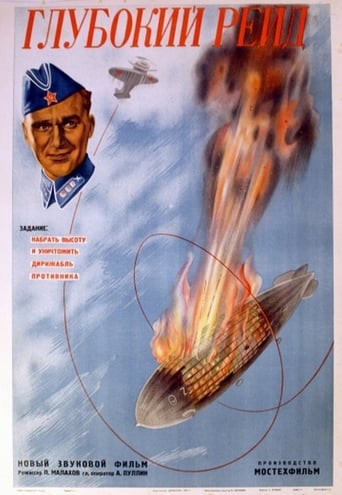
Nikolay Golovin
Actor
- Active
- 1937-1937
Films 1
About Nikolay Golovin
Nikolay Golovin is a little-documented Soviet-era screen actor whose surviving film record places him in the late 1930s, with a known credit in the 1937 film Deep Raid. Very little is readily verifiable about his life outside that credit, which suggests he may have been a character or supporting performer active in a narrow slice of early Soviet sound cinema rather than a long-running star. Because available reference material is sparse, his career can only be described cautiously: he appears to have worked in the Soviet film industry during a period when cinema was closely tied to state themes, military subjects, and patriotic drama. No reliable biographical source has surfaced in common English-language film references that would confirm his birth details, death details, training, or broader stage career. He is therefore best understood as an obscure but real participant in classic Soviet cinema whose name survives primarily through filmography records. Further archival research in Russian-language sources, studio records, or film periodicals would likely be necessary to reconstruct a fuller biography.
More about Nikolay Golovin
In film history
Nikolay Golovin's cultural impact is difficult to measure because his known screen footprint is extremely small and not well documented in standard film histories. Even so, his presence in a 1937 Soviet production places him within an important era of cinema when the industry was being shaped by state policies, national themes, and a growing emphasis on sound filmmaking. Performers like Golovin contributed to the texture and realism of ensemble productions, even when they were not promoted as stars. His surviving credit also serves as a reminder that classic cinema histories often preserve the names of major directors and leads while only faintly recording supporting actors. In that sense, Golovin's legacy is archival as much as artistic: he is part of the historical record of Soviet film culture.
Later reputation
His lasting legacy lies in the fact that his name remains attached to a film from the late 1930s Soviet cinema period, preserving a trace of a performer whose broader career has not yet been reconstructed. For film historians, figures like Golovin are important because they illuminate the many working actors who populated studio-era productions but left behind limited documentation. He stands as an example of how incomplete film histories can be, especially for non-star performers in early Soviet cinema. If additional archival materials emerge, his legacy could be better understood within the context of wartime and ideological screen drama.
Influence
There is no verifiable evidence that Nikolay Golovin directly influenced later actors or filmmakers in a documented way. His significance is more indirect, as part of the larger corps of Soviet performers who helped establish the acting conventions and ensemble presence of the era. Any claim of specific influence would be speculative given the current state of available information.
Off screen
No reliable publicly accessible biographical information has been confirmed regarding Nikolay Golovin's personal life, including marriages, family background, residence, or activities outside film. At present, there is no trustworthy evidence available in common reference sources to identify spouses, children, or detailed personal history. Any such claims would be speculative, so they are not included here.
Education
No verified information is currently available about his education, acting training, or theatrical background.
Credits
- Appeared in the 1937 film Deep Raid, the only confirmed screen credit available in widely accessible film references.
- Worked in Soviet cinema during the early sound era, when film production was increasingly focused on historical, military, and ideological subjects.
- Represents the many lesser-known performers whose contributions formed part of the supporting fabric of classic Soviet filmmaking.
Roles
- Unknown role in Deep Raid (1937)
Films
- Deep Raid (1937)
Notes
- His only widely confirmed film credit in accessible references is Deep Raid (1937).
- He appears to have been active only in 1937, at least according to the surviving filmography data currently available.
- He is an example of an early Soviet actor whose career has not been fully reconstructed in English-language sources.
- Because he is obscure, there is a high likelihood that additional information may exist only in Russian archival materials.
- He should not be confused with other people of similar name in Russian history or culture.
- His filmography suggests he may have been a supporting or character actor rather than a marquee star.
- The lack of biographical data makes him representative of many lesser-known contributors to classic cinema.
Questions
Who was Nikolay Golovin?
Nikolay Golovin was a Soviet-era actor best known from the surviving credit trail for appearing in Deep Raid (1937). He is not widely documented in standard English-language film references, so much of his life and career remains obscure. What is clear is that he was part of the classic early sound-period Soviet film industry.
What films is Nikolay Golovin best known for?
He is best known for Deep Raid (1937), which is the only confirmed screen credit currently available in the accessible record. If he worked on other films, they have not been reliably verified in the sources consulted here.
When was Nikolay Golovin born and when did he die?
His birth and death dates are not currently verifiable from reliable publicly accessible sources. The available film record confirms only that he was active in 1937.
What awards did Nikolay Golovin win?
No awards or nominations have been reliably documented for Nikolay Golovin in the sources currently available. This does not necessarily mean he received none; rather, it reflects the scarcity of surviving biographical information.
What was Nikolay Golovin's acting style?
There is not enough surviving critical commentary to describe his style with confidence. Based on his era and context, he likely worked within the conventions of Soviet ensemble acting in the late 1930s, but any more detailed assessment would be speculative.
What is Nikolay Golovin's legacy in film history?
His legacy is primarily historical and archival: he represents the many lesser-known actors who appeared in classic cinema but left behind only limited documentation. His name survives as part of the record of Soviet film production in the 1930s.