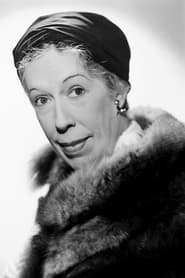
Edna May Oliver
Actor
Born: November 9, 1883 in Malden, Massachusetts, USA Died: November 9, 1942 Active: 1914-1942 Birth Name: Edna May Nutter
Films
4 films
About Edna May Oliver
American character actress: from Broadway to Hollywood's Golden Age. Born in Massachusetts in 1883, she began her career on the stage, making her Broadway debut in 1914 and quickly establishing herself as a formidable presence in theatrical productions. Oliver transitioned to films in the silent era and successfully made the leap to talkies, where her distinctive voice and sharp wit became her trademarks. She was particularly renowned for playing formidable, often comedic matriarchs and authority figures, bringing depth and humor to every role. Her commanding screen presence and impeccable timing made her one of Hollywood's most sought-after character actresses throughout the 1930s. Oliver received critical acclaim and an Academy Award nomination for Best Supporting Actress for her role in 'Drums Along the Mohawk' (1939). She continued working until her death in 1942, leaving behind a legacy as one of classic cinema's most memorable character performers.
The Craft
On Screen
Edna May Oliver was known for her commanding screen presence and distinctive acting style characterized by sharp wit, impeccable timing, and a formidable yet endearing demeanor. She specialized in playing strong-willed, often cantankerous characters who possessed underlying warmth and humor. Her acting technique combined theatrical precision with naturalistic delivery, making her characters both believable and memorable. Oliver had a unique ability to dominate scenes while supporting the lead actors, using her expressive face and distinctive voice to maximum effect. She excelled at both comedy and drama, often blending both elements seamlessly in her performances.
Milestones
- Broadway debut in 'The Quaker Girl' (1914)
- Transition to silent films in the 1920s
- Successful transition to talkies showcasing her distinctive voice
- Academy Award nomination for 'Drums Along the Mohawk' (1939)
- Memorable role as Aunt Pittypat in 'Gone with the Wind' (1939)
- Star on the Hollywood Walk of Fame
Best Known For
Iconic Roles
Must-See Films
Accolades
Nominated
- Academy Award nomination for Best Supporting Actress for 'Drums Along the Mohawk' (1939)
Special Recognition
- Star on the Hollywood Walk of Fame at 6549 Hollywood Boulevard
Working Relationships
Worked Often With
Studios
Why They Matter
Impact on Culture
Edna May Oliver significantly influenced the development of character acting in Hollywood, particularly in the portrayal of strong, complex female supporting roles. She helped establish the archetype of the formidable but lovable matriarch that would become a staple in American cinema. Her success in transitioning from stage to film demonstrated the value of theatrical training in early Hollywood, influencing how studios approached casting character actors. Oliver's ability to command attention in supporting roles helped elevate the importance of character actors in film production, leading to more substantial and nuanced supporting roles in subsequent decades.
Lasting Legacy
Edna May Oliver's legacy endures through her memorable performances in classic films that continue to be celebrated by film enthusiasts and scholars. She is remembered as one of Hollywood's most distinctive character actresses, whose unique blend of authority and humor created unforgettable characters. Her work in literary adaptations, particularly her portrayals of Dickens and Austen characters, set a high standard for such interpretations. Oliver's career demonstrated the vital importance of character actors in creating rich, textured cinematic worlds, and her influence can be seen in the work of subsequent generations of character actresses.
Who They Inspired
Oliver influenced generations of character actresses through her distinctive approach to supporting roles, showing that such characters could be as memorable and impactful as leads. Her technique of blending comedy with drama, and her ability to create fully realized characters in limited screen time, became a model for character actors. Contemporary actresses who specialize in playing formidable, witty matriarchs owe a debt to Oliver's work. Her success helped establish the value of experienced stage actors in Hollywood films, encouraging studios to cast more theater veterans in character roles.
Off Screen
Edna May Oliver married English banker David W. Turnbull in 1928, and their marriage lasted until her death in 1942. Despite her formidable on-screen persona, colleagues described her as warm and generous off-screen. She was known for her sharp intelligence and wit, which made her a popular figure in Hollywood social circles. Oliver maintained strong ties to her theatrical roots throughout her film career and often returned to stage work when possible. She passed away on her 59th birthday in 1942 from a heart attack at her home in Los Angeles.
Education
Educated in Massachusetts schools, later received theatrical training in New York
Family
- David W. Turnbull (1928-1942)
Did You Know?
- She died on her 59th birthday
- Her real name was Edna May Nutter
- She was a direct descendant of John Nutter, who came to America in 1635
- She was originally offered the role of Mammy in 'Gone with the Wind' but declined
- She was 5'7" tall, quite tall for actresses of her era
- She began her career as a chorus girl
- She was known for her distinctive, somewhat masculine speaking voice
- She was a favorite of director George Cukor, who cast her in multiple films
- She often played characters much older than her actual age
- She was one of the highest-paid character actresses of the 1930s
In Their Own Words
I'm not a character actress, I'm an actress who plays characters.
In the theater, you have to reach the back row. In pictures, you have to reach the heart.
I never play a character I don't like, no matter how wicked she may be.
Frequently Asked Questions
Who was Edna May Oliver?
American character actress known for her commanding presence and distinctive voice in Hollywood's Golden Age. She specialized in playing formidable, often comedic matriarchs and authority figures in films from the 1920s through the early 1940s.
What films is Edna May Oliver best known for?
Titles linked here include Little Women (1933), A Tale of Two Cities (1935).
When was Edna May Oliver born and when did she die?
Born November 9, 1883; died November 9, 1942.
What awards did Edna May Oliver win?
While she didn't win any major awards, Edna May Oliver received an Academy Award nomination for Best Supporting Actress for her performance in 'Drums Along the Mohawk' (1939) and has a star on the Hollywood Walk of Fame.
What was Edna May Oliver's acting style?
Oliver was known for her commanding presence, sharp wit, and distinctive voice. She excelled at playing strong-willed characters with underlying warmth, combining theatrical precision with naturalistic delivery, and seamlessly blending comedy with drama.