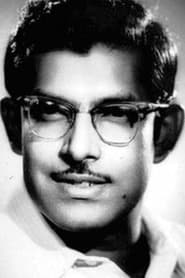
Hrishikesh Mukherjee
Director
Born: September 30, 1922 in Kolkata, Bengal Presidency, British India Died: August 27, 2006 Active: 1957-1998
Films
1 film
About Hrishikesh Mukherjee
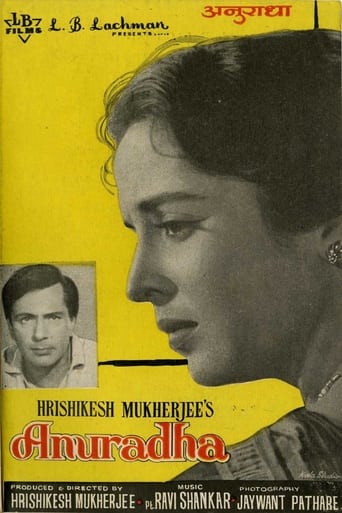
Indian film director and screenwriter who revolutionized Hindi cinema with his middle-of-the-road approach to filmmaking. Born in Kolkata in 1922, he began his career as a film editor and worked closely with director Bimal Roy, editing classics like 'Madhumati' and 'Sujata' before making his directorial debut with 'Musafir' in 1957. His breakthrough came with 'Anuradha' (1960), which won the National Film Award for Best Feature Film and established his reputation for creating socially relevant, family-oriented films. Over his four-decade career, he directed more than 40 films, many of which became classics for their sensitive portrayal of middle-class values, family relationships, and social issues. Mukherjee was known for his unique ability to blend entertainment with meaningful social commentary, working with the biggest stars of Indian cinema including Rajesh Khanna, Amitabh Bachchan, Dharmendra, and Jaya Bhaduri. He served as chairman of the Central Board of Film Certification and was instrumental in shaping Indian cinema's direction during its golden period. His films continue to be celebrated for their humanism, technical excellence, and enduring relevance to Indian society.
The Craft
Behind the Camera
Hrishikesh Mukherjee's directing style was characterized by its realism, subtlety, and focus on middle-class Indian life. He avoided melodrama and instead crafted films with naturalistic performances, using minimal but effective background music. His cinema often explored complex family dynamics and social issues with remarkable sensitivity and humor. Mukherjee was known for his precise editing background, which reflected in his tight narrative structures and attention to detail. He created what became known as 'middle-of-the-road cinema' - films that were neither purely commercial nor entirely art-house, but accessible to mainstream audiences while maintaining artistic integrity and social relevance.
Milestones
- Directorial debut with Musafir (1957)
- National Film Award for Anuradha (1960)
- Directed Anand (1970) - considered his masterpiece
- Filmfare Award for Best Director for Anupama (1966)
- Padma Vibhushan award (2002)
- Dadasaheb Phalke Award (1999)
Best Known For
Must-See Films
Accolades
Won
- National Film Award for Best Feature Film for Anuradha (1960)
- Filmfare Award for Best Director for Anupama (1966)
- Filmfare Award for Best Director for Aashirwad (1969)
- Filmfare Award for Best Director for Anand (1971)
- Dadasaheb Phalke Award (1999)
- Padma Vibhushan (2002)
- Padma Shri (1974)
Nominated
- Filmfare Award for Best Director for Guddi (1972)
- Filmfare Award for Best Director for Bawarchi (1973)
- Filmfare Award for Best Director for Abhimaan (1974)
- Filmfare Award for Best Director for Chupke Chupke (1976)
- Filmfare Award for Best Director for Mili (1976)
Special Recognition
- Chairman of Central Board of Film Certification (1981-1982)
- Sangeet Natak Akademi Award (1976)
- Maharashtra State Government's 'Raj Kapoor Award' (2000)
- Kalidas Samman (2003)
Working Relationships
Worked Often With
Studios
Why They Matter
Impact on Culture
Hrishikesh Mukherjee fundamentally changed Indian cinema by creating a new genre of films that spoke directly to the Indian middle class. His movies addressed social issues like caste discrimination, widow remarriage, and generational conflicts with remarkable sensitivity and without being preachy. He proved that films could be both commercially successful and socially meaningful, paving the way for more realistic storytelling in mainstream Indian cinema. His work influenced generations of filmmakers who followed his middle-of-the-road approach, balancing entertainment with substance. Mukherjee's films continue to be relevant today, often remade or referenced in contemporary cinema, demonstrating their timeless appeal and cultural significance.
Lasting Legacy
Hrishikesh Mukherjee's legacy endures through his vast body of work that continues to inspire filmmakers and entertain audiences. He is remembered as the pioneer of 'middle cinema' in India, creating films that were accessible yet artistically meaningful. His movies like 'Anand', 'Guddi', and 'Chupke Chupke' are considered cultural touchstones that defined an era of Indian cinema. The Dadasaheb Phalke Award and Padma Vibhushan he received recognize his immense contribution to Indian arts and culture. Contemporary directors frequently cite him as an influence, and his films are studied in film schools for their narrative techniques and social relevance. His ability to tell universal human stories rooted in Indian context has made his work timeless, continuing to find new audiences through television reruns and digital platforms.
Who They Inspired
Hrishikesh Mukherjee influenced Indian cinema by demonstrating that films dealing with everyday life and social issues could achieve both critical acclaim and commercial success. His realistic storytelling approach inspired directors like Basu Chatterjee, Sai Paranjpye, and later, filmmakers like Hitesh Bhatia and Rajkumar Hirani who continue his tradition of meaningful entertainment. He showed that strong characters and relatable stories could be more powerful than star power alone, though he worked with the biggest stars of his time. His editing background influenced his precise narrative structure, which became a model for efficient storytelling in Indian cinema. The humanism and empathy in his films set a standard for socially conscious cinema that continues to influence filmmakers today.
Off Screen
Hrishikesh Mukherjee married twice in his lifetime. His first marriage was to Meena Mukherjee, with whom he had three children. After her death, he married actress Rohini Hattangadi, though this marriage ended in divorce. He was known as a private person who rarely discussed his personal life in public. Despite his success in the film industry, he maintained a simple lifestyle and was respected for his integrity and humility. His children - Chandan, Arundhati, and Rinki - largely stayed away from the film industry.
Education
Bachelor of Science in Chemistry from University of Calcutta
Family
- Meena Mukherjee (1947-1981)
- Rohini Hattangadi (1984-1990)
Did You Know?
- Started his career as a film editor before becoming a director
- Worked as a chemist in a laboratory before entering films
- Edited over 20 films before directing his first movie
- His film 'Anuradha' was India's official entry to the Oscars
- Was known for completing films within budget and on schedule
- Often cast Amitabh Bachchan against his angry young man image
- His film 'Anand' featured Rajesh Khanna playing a terminally ill character
- Was a close friend of legendary singer Kishore Kumar
- Never used foreign locations for his films, believing in Indian authenticity
- His films often featured strong female characters ahead of their time
In Their Own Words
Cinema should reflect society, not distort it
I make films for the common man, not for critics
A good film is one that makes you think and feel
Entertainment without substance is like food without nutrition
I don't make films, I tell stories through the medium of cinema
Frequently Asked Questions
Who was Hrishikesh Mukherjee?
Legendary Indian on YTB.my. He directed over 40 films between 1957 and 1998, focusing on socially relevant stories about middle-class Indian life with remarkable sensitivity and realism.
What films is Hrishikesh Mukherjee best known for?
Titles linked here include Anuradha (1960), Anand (1970).
When was Hrishikesh Mukherjee born and when did he die?
Born September 30, 1922; died August 27, 2006.
What awards did Hrishikesh Mukherjee win?
He received numerous prestigious awards including the Dadasaheb Phalke Award (1999), Padma Vibhushan (2002), Padma Shri (1974), and multiple National Film Awards and Filmfare Awards. His film 'Anuradha' won the National Film Award for Best Feature Film and was India's official Oscar entry.
What was Hrishikesh Mukherjee's directing style?
Mukherjee's directing style was characterized by realism, subtlety, and focus on middle-class Indian life. He avoided melodrama, used naturalistic performances, minimal background music, and created what became known as 'middle-of-the-road cinema' - films that were both commercially successful and artistically meaningful.