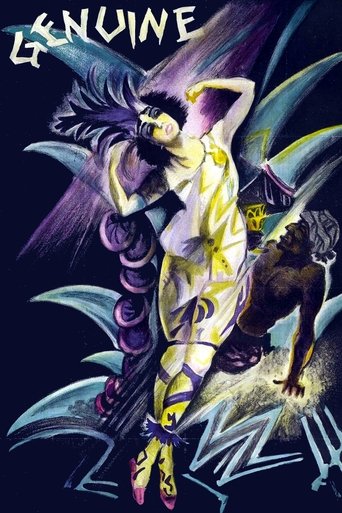
Films
1 film
About Ernst Gronau
Ernst Gronau worked on one surviving credit: Genuine: The Tragedy of a Vampire (1920). His most notable and possibly only significant film role was in Robert Wiene's 1920 silent horror masterpiece 'Genuine: The Tragedy of a Vampire,' which followed the director's success with 'The Cabinet of Dr. Caligari.' Gronau appeared during a remarkable period in German cinema when avant-garde filmmakers were pushing the boundaries of visual storytelling and psychological horror. His career appears to have been extremely brief, with his filmography concentrated primarily in the year 1920, coinciding with the golden age of German Expressionist cinema. Like many supporting actors of the silent era, Gronau's contributions to film history have been largely overshadowed by the more prominent stars and directors of his time. His participation in 'Genuine' places him within the context of one of cinema's most influential artistic movements, even though his personal legacy remains relatively obscure. The limited documentation of his career suggests he may have been a character actor or someone who briefly dabbled in film before pursuing other endeavors.
The Craft
Milestones
- Appeared in Robert Wiene's 'Genuine: The Tragedy of a Vampire' (1920)
- Participated in German Expressionist cinema movement
Best Known For
Iconic Roles
Must-See Films
Working Relationships
Worked Often With
Why They Matter
Impact on Culture
Ernst Gronau's cultural impact is primarily tied to his participation in 'Genuine: The Tragedy of a Vampire,' a significant work of German Expressionist cinema. While his individual contribution may have been minor, his involvement places him within the context of one of cinema's most influential artistic movements. The film itself, directed by Robert Wiene following his success with 'The Cabinet of Dr. Caligari,' represents the visual and thematic experimentation that defined German Expressionism and would later influence film noir and horror genres globally. Gronau's work, like that of many supporting actors from this period, contributed to the overall atmosphere and artistic vision that made these films so groundbreaking. The legacy of German Expressionist cinema continues to influence contemporary filmmakers, and actors like Gronau were integral parts of creating these enduring cinematic works.
Lasting Legacy
Ernst Gronau's legacy is that of a minor participant in one of cinema's most significant artistic movements. While he may not be remembered as an influential figure in his own right, his appearance in 'Genuine: The Tragedy of a Vampire' ensures his place in film history as part of the German Expressionist cinema movement. His story is representative of countless actors from the silent era whose contributions, while perhaps small individually, collectively helped create some of cinema's most enduring and influential works. The obscurity surrounding his career also highlights how many talented individuals from early cinema have been lost to history, with only the most prominent stars and directors being thoroughly documented and remembered.
Who They Inspired
Due to the brief and obscure nature of Ernst Gronau's career, there is no documented evidence of his direct influence on other actors or filmmakers. His influence is indirect, through his participation in the German Expressionist movement which itself profoundly influenced cinema worldwide. The visual style and psychological depth of films like 'Genuine' would later influence genres from film noir to modern horror, and actors like Gronau were part of creating these groundbreaking works.
Off Screen
Very little is documented about Ernst Gronau's personal life, which is typical for many supporting actors from the silent era whose careers were brief and whose contributions to cinema were not extensively recorded in historical archives.
Did You Know?
- Appeared in 'Genuine: The Tragedy of a Vampire' the same year its director Robert Wiene made the legendary 'The Cabinet of Dr. Caligari'
- Participated during the peak of German Expressionist cinema (1920-1926)
- His career appears to have been extremely brief, concentrated in a single year
- German Expressionist films like 'Genuine' were known for their elaborate, distorted sets and psychological themes
- The film 'Genuine' was considered lost for many years before being rediscovered
- Like many silent era actors, his career did not successfully transition to sound films
- German Expressionist cinema had a major influence on Hollywood film noir in the 1940s and 1950s
Frequently Asked Questions
Who was Ernst Gronau?
German with credits in this catalog. His career appears to have been extremely brief, with his filmography concentrated around the year 1920 during the height of German Expressionist cinema.
What films is Ernst Gronau best known for?
Titles linked here include Genuine: The Tragedy of a Vampire (1920).
When was Ernst Gronau born and when did he die?
Specific birth and death dates for Ernst Gronau are not documented in available historical records, which is common for many supporting actors from the silent era whose careers were brief and whose personal details were not extensively preserved.
What awards did Ernst Gronau win?
There are no documented awards or nominations for Ernst Gronau, which is typical for many character actors from the silent era who were not among the prominent stars of their time.
What was Ernst Gronau's acting style?
While specific details about Ernst Gronau's acting style are not documented, as an actor in German Expressionist cinema, he likely employed the exaggerated gestures and intense emotional expressions characteristic of that movement, which emphasized psychological states and inner turmoil through physical performance.