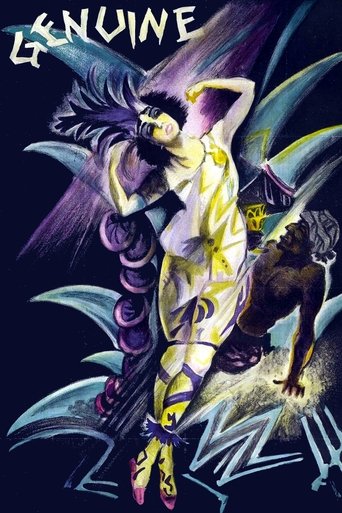
Films
1 film
About Albert Bennefeld
German actor active during the early Weimar Republic period, known primarily for his role in Robert Wiene's expressionist horror film 'Genuine: The Tragedy of a Vampire' (1920). His career appears to have been extremely brief, with his only documented film work occurring in 1920 during the height of German expressionist cinema. As a contemporary of actors working in the German film movement of the early 1920s, Bennefeld contributed to innovative periods in cinema history. His participation in 'Genuine' placed him within the orbit of director Robert Wiene, who had just achieved international fame with 'The Cabinet of Dr. Caligari' the same year. Unfortunately, like many supporting actors from the silent era, particularly in European cinema, detailed records of his life and career are scarce, suggesting he may have been a character actor or bit player who did not achieve lasting fame. The lack of additional film credits indicates either a very brief acting career or possibly that other roles have been lost to history or remain undocumented in surviving film archives.
The Craft
Milestones
- Appeared in Robert Wiene's 'Genuine: The Tragedy of a Vampire' (1920)
- Participated in German Expressionist cinema movement
Best Known For
Iconic Roles
Must-See Films
Working Relationships
Worked Often With
Why They Matter
Impact on Culture
Albert Bennefeld's cultural impact is primarily through his participation in the German Expressionist film movement,. Although his role was minor, his contribution to 'Genuine: The Tragedy of a Vampire' places him within the groundbreaking period that revolutionized visual storytelling and influenced film noir, horror, and psychological thrillers for decades to come. The film itself, directed by Robert Wiene following his success with 'The Cabinet of Dr. Caligari,' represents the artistic experimentation and psychological depth that defined German Expressionist cinema. Bennefeld, as part of this production, contributed to a film that helped establish visual and thematic conventions that would resonate throughout international cinema.
Lasting Legacy
Albert Bennefeld's legacy is that of a representative figure from the golden age of German Expressionist cinema, embodying the many supporting actors who contributed to revolutionary films but whose individual stories have been largely lost to history. His participation in 'Genuine' ensures his connection to one of cinema's most artistically significant movements, even if his personal contributions remain obscure. Like many bit players and character actors of the silent era, his story illustrates how film history is built not only on stars and directors but also on the countless lesser-known performers who brought these artistic visions to life.
Who They Inspired
Due to the limited documentation of Albert Bennefeld's career and the brevity of his filmography, there is no evidence of direct influence on other actors or filmmakers. His influence is indirect, through his participation in the German Expressionist movement that profoundly influenced international cinema, particularly in the realms of visual style, psychological storytelling, and horror film conventions.
Off Screen
Very little is known about Albert Bennefeld's personal life, which is typical for minor actors from the silent era whose records were not extensively preserved. Like many character actors of early German cinema, his life off-screen remains undocumented in available historical sources.
Did You Know?
- Appeared in 'Genuine: The Tragedy of a Vampire' the same year director Robert Wiene released his masterpiece 'The Cabinet of Dr. Caligari'
- Worked during the peak of German Expressionist cinema,
- His entire known filmography consists of a single year (1920)
- Like many silent era actors, his personal details and life story remain largely undocumented
- Participated in a film that was considered lost for decades before partial restoration
- The film he appeared in was notable for its avant-garde set designs and psychological themes
- German Expressionist cinema he participated in heavily influenced later film noir and horror genres
Frequently Asked Questions
Who was Albert Bennefeld?
German with credits in this catalog. His career appears to have been extremely brief, with all his documented work occurring in 1920 during the height of German Expressionist cinema.
What films is Albert Bennefeld best known for?
Titles linked here include Genuine: The Tragedy of a Vampire (1920).
When was Albert Bennefeld born and when did he die?
Unfortunately, Albert Bennefeld's birth and death dates are not documented in available historical records, which is common for minor actors from the silent era. His nationality is identified as German based on his participation in German cinema.
What awards did Albert Bennefeld win?
There are no records of Albert Bennefeld receiving any awards or nominations, which is typical for supporting actors from the early 1920s, particularly in European cinema where formal award systems were not yet established.
What was Albert Bennefeld's acting style?
While specific details about Albert Bennefeld's acting style are not documented, as a performer in German Expressionist cinema, he likely worked within the exaggerated, stylized acting approach characteristic of the movement, which emphasized psychological states through dramatic gestures and facial expressions rather than naturalistic performance.
What is the significance of Albert Bennefeld's film 'Genuine'?
'Genuine: The Tragedy of a Vampire' (1920) is significant as a work of German Expressionist cinema directed by Robert Wiene, following his success with 'The Cabinet of Dr. Caligari.' The film represents the artistic experimentation and psychological themes that defined this influential movement, which would go on to shape visual storytelling in cinema worldwide.