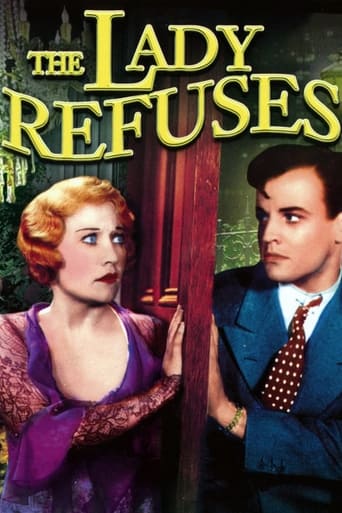
Films
1 film
About Dick Rush
Dick Rush appears once in this catalog: The Lady Refuses (1931). His extremely brief film career, limited to a single year of activity, suggests he may have been among the many contract players or bit actors who populated early Hollywood productions without achieving lasting recognition. The transition from silent films to talkies in the early 1930s created opportunities for many actors, but also led to short careers for those who couldn't establish themselves in the new medium. Like many minor actors from this period, detailed biographical information about Rush was not preserved in historical records, making him representative of the countless anonymous contributors to classic Hollywood cinema.
The Craft
Milestones
- Appeared in 'The Lady Refuses' (1931) directed by George Archainbaud
Best Known For
Must-See Films
Why They Matter
Impact on Culture
Dick Rush's cultural impact was minimal, limited to his single appearance in 'The Lady Refuses' during the early sound era. He represents the countless anonymous actors who contributed to early Hollywood films by filling supporting roles and background parts, helping to create the rich ensemble casts that characterized studio productions of the period. His brief career exemplifies the transient nature of many acting careers during the early 1930s, when the film industry was undergoing significant technological and artistic changes with the transition to sound.
Lasting Legacy
Dick Rush's legacy in film history is essentially nonexistent beyond his single documented appearance in 'The Lady Refuses' (1931). He serves as an example of the many actors who briefly passed through the Hollywood studio system without achieving individual recognition or lasting fame. His story represents the reality of the film industry during its early decades, where countless performers contributed to classic films without their names or personal stories being preserved for posterity.
Who They Inspired
Given his extremely limited filmography consisting of only one film appearance, Dick Rush had no documented influence on other actors, directors, or the film industry at large. His career was too brief and his role too minor to have left any lasting impact on the craft or business of filmmaking, which was typical of many bit players from this period.
Off Screen
Very little documented information exists about Dick Rush's personal life, which was typical for minor actors from early Hollywood who did not achieve significant fame. His brief appearance in 'The Lady Refuses' represents the only substantial record of his career in the entertainment industry, and like many bit players from this era, his life outside of this single film credit remains largely unknown to film historians.
Did You Know?
- Dick Rush's entire known filmography consists of a single film from 1931
- He appeared during the crucial transition period from silent films to talkies
- His film 'The Lady Refuses' was a pre-Code drama released before strict censorship enforcement
- The film was produced by RKO Radio Pictures, one of the major studios of the era
- Like many actors of his time, Rush likely worked as a contract player for a studio
- His brief active years covered only one year, making him one of Hollywood's most transient performers
- No photographs or additional biographical details about Rush are preserved in film archives
- He represents the estimated thousands of actors who appeared in early Hollywood films without achieving lasting recognition
- The film he appeared in was based on a story by John Francis Larkin
- 'The Lady Refuses' was one of many films exploring social themes before the enforcement of the Hays Code
Frequently Asked Questions
Who was Dick Rush?
American with credits in this catalog. His only documented film appearance was in the 1931 drama 'The Lady Refuses,' making him one of the many minor actors who passed through the studio system without achieving lasting fame.
What films is Dick Rush best known for?
Titles linked here include The Lady Refuses (1931).
When was Dick Rush born and when did he die?
Birth and death dates for Dick Rush are not documented in available historical records, which was common for minor actors from early Hollywood who did not achieve significant recognition or whose personal information was not preserved by the studios.
What awards did Dick Rush win?
Dick Rush did not receive any documented awards or nominations during his brief film career, which consisted of only one appearance in 1931. This was typical for bit players and supporting actors of his era.
What was Dick Rush's acting style?
Due to the limited documentation of his work and only one known film appearance, Dick Rush's specific acting style cannot be determined from available historical records. His role in 'The Lady Refuses' was likely minor, providing insufficient material to analyze his artistic approach.
Why did Dick Rush have such a short career?
While specific reasons for Dick Rush's brief career are not documented, many actors from this period had short careers due to the challenges of transitioning to sound films, the competitive nature of Hollywood, or the limited opportunities for minor actors in the studio system.