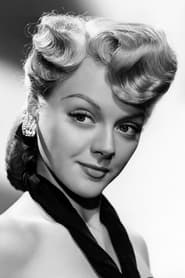
Leslie Brooks
Actor
Born: November 13, 1922 in Lincoln, Nebraska, USA Died: July 1, 2011 Active: 1943-1951 Birth Name: Virginia Campbell Gettman
Films
1 film
About Leslie Brooks
Leslie Brooks, born Virginia Campbell Gettman, was an American actress who rose to prominence during the Golden Age of Hollywood, particularly known for her work in film noir during the 1940s. Discovered while working as a model in Los Angeles, she signed with Columbia Pictures and quickly became one of the studio's featured players, often cast as the alluring blonde femme fatale. Her breakthrough role came in the 1945 film noir 'Blonde Fever' where she starred opposite Philip Dorn, establishing her as a serious dramatic actress. Throughout the late 1940s, she appeared in numerous crime dramas and noir pictures, including 'The Man Who Cheated Himself' (1950) opposite Lee J. Cobb. Brooks' career peaked in the early 1950s, but she gradually stepped back from acting after marrying and starting a family. Her performances, though often in supporting roles, left a lasting impression on the film noir genre, with her striking appearance and ability to portray complex, morally ambiguous characters making her a memorable presence in classic cinema.
The Craft
On Screen
Leslie Brooks was known for her sophisticated and sultry screen presence, specializing in playing femme fatales and mysterious women in film noir. Her acting style combined a cool, detached demeanor with underlying emotional complexity, allowing her to portray characters who were both alluring and dangerous. She had a distinctive blonde appearance that became her trademark, and she used her striking features to create memorable, morally ambiguous characters. Brooks' performances were marked by a subtle intensity and the ability to convey hidden depths beneath a glamorous exterior, making her particularly effective in the psychological thrillers and crime dramas of her era.
Milestones
- Discovered as a model and signed by Columbia Pictures (1943)
- Breakthrough role in 'Blonde Fever' (1945)
- Leading role in 'The Man Who Cheated Himself' (1950)
- Became a popular film noir femme fatale
- Retired from acting after marriage (1951)
Best Known For
Iconic Roles
Must-See Films
Accolades
Special Recognition
- Star on the Hollywood Walk of Fame for Motion Pictures
Working Relationships
Worked Often With
Studios
Why They Matter
Impact on Culture
Leslie Brooks made a significant contribution to the film noir genre during its golden age in the 1940s, helping to define the archetype of the femme fatale that became central to noir storytelling. Her portrayal of complex, morally ambiguous women reflected the post-war anxieties and changing gender roles of American society, particularly the tension between traditional femininity and emerging female independence. Brooks' work exemplified the noir aesthetic of psychological complexity and moral ambiguity, influencing how dangerous women were portrayed in subsequent crime films. Her distinctive blonde appearance and sophisticated style also contributed to the visual iconography of film noir, creating a template for future actresses in similar roles.
Lasting Legacy
Leslie Brooks' legacy lies primarily in her contributions to the film noir genre, where she helped establish the femme fatale as a compelling and complex character type. Though she never achieved major stardom, her performances in films like 'The Man Who Cheated Himself' and 'Blonde Fever' have been rediscovered by film noir enthusiasts and scholars, who recognize her as a significant figure in the genre's history. Her work represents an important example of how actresses of the 1940s navigated the challenging transition from traditional female roles to more complex, psychologically nuanced characters. Brooks' decision to retire at the height of her career to focus on family also reflects the choices many actresses of her era faced, making her story representative of the professional and personal tensions that characterized Hollywood's Golden Age.
Who They Inspired
While Leslie Brooks was not widely documented as a direct mentor to other actors, her work in film noir influenced subsequent generations of actresses playing femme fatale roles. Her ability to combine glamour with psychological complexity set a standard for how dangerous women could be portrayed with depth and nuance rather than as one-dimensional villains. Contemporary actresses who play similar roles in neo-noir films owe a debt to pioneers like Brooks who helped establish the conventions of the genre. Her performances continue to be studied by film scholars and cited as examples of effective noir acting, particularly in how she used subtle gestures and expressions to convey complex emotions beneath a glamorous exterior.
Off Screen
Leslie Brooks married Donald A. Shaughnessy, a Beverly Hills physician, in 1951, which led to her retirement from acting. The couple had two daughters together, and Brooks devoted herself to family life after leaving Hollywood. Despite her success in films, she preferred the private life of a wife and mother over the demands of a film career. She remained married to Shaughnessy until his death, and spent her later years in Sherman Oaks, California, away from the public eye.
Education
Educated in Lincoln, Nebraska; moved to Los Angeles as a teenager to pursue modeling career
Family
- Donald A. Shaughnessy (1951-2007, his death)
Did You Know?
- Began her career as a model for the Walter Thornton Modeling Agency
- Was discovered by Columbia Pictures head Harry Cohn
- Changed her name from Virginia Gettman to Leslie Brooks at the suggestion of Columbia Pictures
- Was often typecast as a 'bad girl' or femme fatale due to her striking blonde appearance
- Appeared in over 20 films between 1943 and 1951
- Retired from acting at age 29 after marrying Dr. Donald Shaughnessy
- Her film 'The Man Who Cheated Himself' was selected for preservation in the National Film Registry in 2021
- Was known for refusing roles that required her to appear in revealing costumes
- Lived a relatively private life after her acting career, rarely giving interviews
- Was one of the few actresses of her era to successfully transition from modeling to serious dramatic acting
In Their Own Words
"I never wanted to be a star. I just wanted to be a good actress." - Interview about her career goals
"Playing the femme fatale was interesting because these women weren't really evil, they were just trapped by circumstances." - On her film noir roles
"Hollywood was wonderful, but family life was more important to me. I have no regrets about leaving." - On her retirement from acting
Frequently Asked Questions
Who was Leslie Brooks?
American actress active during the 1940s, best known for her roles in film noir where she often played femme fatales. Born Virginia Gettman, she appeared in over 20 films before retiring at age 29 to focus on family life.
What films is Leslie Brooks best known for?
Titles linked here include Blonde Fever (1945), The Man Who Cheated Himself (1950).
When was Leslie Brooks born and when did she die?
Born November 13, 1922; died July 1, 2011.
What awards did Leslie Brooks win?
While Leslie Brooks did not receive major acting awards during her career, she was honored with a star on the Hollywood Walk of Fame for her contributions to motion pictures.
What was Leslie Brooks' acting style?
Leslie Brooks was known for her sophisticated and sultry screen presence, specializing in femme fatale roles in film noir. Her style combined a cool, detached demeanor with emotional complexity, using her striking blonde appearance to create memorable, morally ambiguous characters.