Walter Futter
Director
Born: January 2, 1900 in Omaha, Nebraska, USA Died: March 3, 1958 Active: 1924-1951 Birth Name: Walter A. Futter
Films
1 film
About Walter Futter
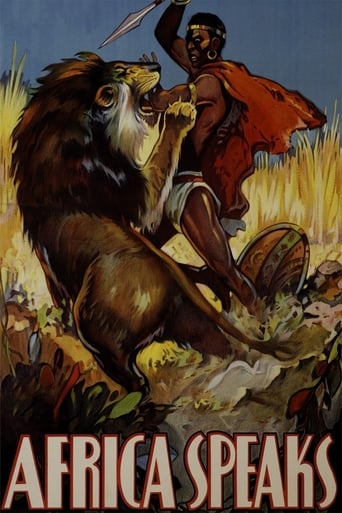
Prolific American film producer and director who rose to prominence during the transition from the silent era to the early talkies. Born in Omaha, Nebraska, in 1900, he began his career in the technical side of the industry as a film cutter at Goldwyn Studios before moving to Cosmopolitan Productions as an editor. In 1926, he founded the Futter Production Company and, alongside his brother Fred, established 'Wafilms,' a stock footage library that became highly successful by repurposing amateur and bankrupt film stock. Futter is most famous for directing and producing the 1930 documentary 'Africa Speaks!', which became a massive commercial success and helped pioneer the 'exploitation' travelogue genre. Throughout the 1930s, he produced over 250 short films, including the popular 'Travelogues' and 'Curiosities' series, and ventured into feature-length westerns starring Hoot Gibson. His career was marked by an entrepreneurial spirit, often blending authentic expedition footage with staged Hollywood sequences to maximize audience engagement.
The Craft
Behind the Camera
Futter — pioneer of the 'expedition' or 'travelogue' style, characterized by a mix of genuine documentary footage and sensationalized, staged sequences designed for maximum dramatic impact. His work often featured authoritative narration (notably by Lowell Thomas) and focused on 'exotic' cultures and dangerous wildlife, creating a bridge between educational cinema and exploitation entertainment.
Milestones
- Established the Futter Production Company in 1926
- Directed the landmark documentary 'Africa Speaks!' in 1930
- Produced over 250 short films including the 'Curiosities' and 'Travelogues' series
- Collaborated with explorer Paul L. Hoefler on major expedition films
- Produced a series of successful westerns starring Hoot Gibson in 1936
- Produced the Paul Robeson vehicle 'Jericho' (also known as 'Dark Sands') in 1937
- Founded Diversion Pictures to manage a vast library of 8mm and 16mm film stock
Best Known For
Must-See Films
Accolades
Won
- Academy Award for Best Short Subject, Novelty (Nomination for 'Screen Snapshots' - 1932/33)
Nominated
- Academy Award Nomination for Best Short Subject, Novelty (1933)
Special Recognition
- Recognized as a pioneer of the 'Jungle Movie' genre
Working Relationships
Worked Often With
Studios
Why They Matter
Impact on Culture
Walter Futter's work, particularly 'Africa Speaks!', had a profound impact on how Western audiences perceived the African continent in the early sound era. By blending real exploration with Hollywood-style thrills, he helped create the 'exploitation documentary' template that influenced decades of adventure films and nature programming. His 'Curiosities' series also popularized the 'Ripley's Believe It or Not' style of short-form entertainment, focusing on the odd and unusual from around the globe.
Lasting Legacy
Futter is remembered as one of the 'junk-men of filmdom,' a nickname earned for his uncanny ability to turn discarded or amateur footage into profitable cinematic ventures. His massive library of stock footage, managed through Wafilms and Diversion Pictures, became a vital resource for the industry. He remains a key figure in the history of the travelogue and the development of independent production in early Hollywood.
Who They Inspired
His techniques of staging 'authentic' moments influenced the later 'Mondo' film genre and the sensationalist nature documentaries of the mid-20th century.
Off Screen
Futter was married twice to actresses. His first marriage was to Adele Lacey in December 1937, which lasted until her death in 1953. He later married actress Betty Bartley in 1955. He died of a heart attack in New York City in 1958 while separated from Bartley.
Education
University of Omaha
Family
- Adele Lacey (1937-1953)
- Betty Bartley (1955-1958)
Did You Know?
- The lion attack scene in 'Africa Speaks!' was actually staged at the Selig Zoo in Los Angeles using a toothless lion.
- He and his brother Fred were known as the 'junk-men of filmdom' because they bought up bankrupt film stock and amateur reels.
- His film 'Africa Speaks!' was so popular it was parodied by Looney Tunes in the cartoon 'Africa Squeaks' (1940).
- He produced more than 250 short films in less than a decade.
- Futter was one of the first producers to heavily utilize the narration of Lowell Thomas, who later became a legendary broadcast journalist.
- He was a pioneer in the 8mm and 16mm home movie market through his company Diversion Pictures.
In Their Own Words
The camera does not lie, but it can be encouraged to tell a more exciting truth.
Frequently Asked Questions
Who was Walter Futter?
Prominent American on YTB.my. He was a pioneer of the travelogue and exploitation documentary genres, best known for his film 'Africa Speaks!'.
What films is Walter Futter best known for?
Titles linked here include Africa Speaks! (1930), India Speaks (1933).
When was Walter Futter born and when did he die?
Born January 2, 1900; died March 3, 1958.
Did Walter Futter win any awards?
While he did not win an Oscar, he received an Academy Award nomination for Best Short Subject (Novelty) in 1933 for his work on the 'Screen Snapshots' series.
What was Walter Futter's directing style?
His style was a blend of documentary realism and sensationalist staging. He often used authentic expedition footage but enhanced it with dramatic narration and staged 'action' scenes to appeal to mainstream audiences.