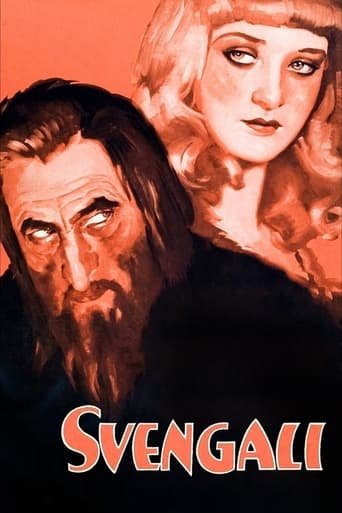

Marian Marsh
Actor
Born: October 17, 1910 in Trinidad, British West Indies Died: November 9, 2006 Active: 1929-1942 Birth Name: Violet Ethelred Krauth
Films
1 film
About Marian Marsh
Captivating actress of the early sound era who achieved stardom with her ethereal beauty and sensitive performances. Born Violet Ethelred Krauth in Trinidad, she moved to the United States as a child and was discovered by a talent scout while working as a teenager in New York. Warner Bros. Signed her to a contract, and her breakthrough came with the 1931 psychological drama Svengali, where she played the vulnerable Trilby opposite John Barrymore. This role catapulted her to instant fame and established her as one of Hollywood's most promising young actresses. Throughout the early 1930s, she appeared in numerous films for Warner Bros. And other studios, often cast as innocent, delicate heroines in melodramas. Despite her success, Marsh gradually reduced her film appearances after marrying in 1938, eventually retiring from acting to focus on family life and business ventures. Her career, though relatively brief, on early sound cinema and represented the transition from silent film stars to the new era of talking pictures.
The Craft
On Screen
Marian Marsh was known for her ethereal, otherworldly beauty and her ability to portray vulnerable, innocent characters with remarkable emotional depth. Her acting style was perfectly suited to the melodramatic requirements of early sound cinema, where she excelled at conveying inner turmoil through subtle facial expressions and a delicate, breathy vocal delivery. She had a particular talent for playing hypnotized or psychologically fragile characters, bringing a dreamlike quality to her performances that captivated audiences of the early 1930s. Her screen presence was both delicate and intense, allowing her to hold her own against powerful actors like John Barrymore while maintaining her character's essential vulnerability.
Milestones
- Breakthrough role as Trilby in Svengali (1931)
- Signed to Warner Bros. Contract in 1930
- Starred opposite John Barrymore in multiple films
- Successful transition from silent films to talkies
- Named one of the WAMPAS Baby Stars of 1931
Best Known For
Iconic Roles
Must-See Films
Accolades
Won
- WAMPAS Baby Star Award (1931)
Special Recognition
- Star on the Hollywood Walk of Fame (1719 Vine Street)
Working Relationships
Worked Often With
Studios
Why They Matter
Impact on Culture
Marian Marsh's impact on early sound cinema was significant, particularly in her role as Trilby in Svengali, which became one of the definitive psychological dramas of the early talkie era. Her portrayal of the hypnotized heroine helped establish visual and performance conventions for depicting psychological manipulation in film. She represented the ideal of feminine vulnerability and ethereal beauty that was highly prized in early 1930s cinema, influencing how actresses in similar roles would be cast and directed. Her successful transition from silent films to talkies made her a role model for other actresses navigating the challenging shift to sound, proving that delicate screen presence could translate effectively to the new medium.
Lasting Legacy
Marian Marsh's legacy endures through her memorable performances in early sound films, particularly Svengali, which remains a classic of psychological cinema. She is remembered as. Her star on the Hollywood Walk of Fame ensures her place in cinematic history, while her films continue to be studied by film historians and enjoyed by classic cinema enthusiasts. Her decision to retire at the height of her fame to focus on family life also made her a subject of interest in discussions about women's choices in early Hollywood.
Who They Inspired
Marsh influenced subsequent generations of actresses through her subtle, nuanced approach to playing vulnerable characters. Her work in psychological dramas helped establish techniques for conveying altered states of consciousness and psychological manipulation on screen. Many actresses who followed in similar roles, particularly in melodramas and film noir, drew inspiration from her ability to combine fragility with inner strength. Her success as a contract player during the studio system era also demonstrated how actresses could navigate the constraints of the system while maintaining artistic integrity.
Off Screen
Marian Marsh married twice during her lifetime. Her first marriage was to Albert Scott, a real estate developer, in 1938, with whom she had two children. After Scott's death, she married Clifford Henderson, a aviator and showman, in 1950. Following her retirement from films, Marsh focused on raising her family and became involved in various business ventures, including real estate and restaurant ownership. She was known for her philanthropic work, particularly in supporting children's charities and arts education programs.
Education
Limited formal education due to early entry into entertainment industry; attended private schools in New York City before being discovered
Family
- Albert Scott (1938-1954)
- Clifford Henderson (1950-1978)
Did You Know?
- Born Violet Ethelred Krauth, she changed her name when entering films
- Discovered by a talent scout while working as a model in New York
- Was one of the 13 WAMPAS Baby Stars of 1931
- Her role in Svengali was originally offered to another actress who turned it down
- John Barrymore personally recommended her for the lead in Svengali
- Spoke multiple languages fluently, including French and Spanish
- Retired from films at age 32 to focus on family life
- Became a successful real estate investor after leaving Hollywood
- Lived to be 96 years old, one of the longest-surviving stars from early sound films
- Her star on the Hollywood Walk of Fame was dedicated in 1960
In Their Own Words
In Svengali: 'I am yours, Svengali. I belong only to you.'
On acting: 'The camera doesn't lie. You must be truthful in every moment, even when playing someone under a spell.'
On Hollywood: 'It was a magical time, but I knew when to leave. Family was more important than fame.'
On John Barrymore: 'He taught me more about acting in one scene than I learned in all my previous experience.'
Frequently Asked Questions
Who was Marian Marsh?
American actress of the early sound era, best known for her role as Trilby in the 1931 film Svengali opposite John Barrymore. She was one of the WAMPAS Baby Stars of 1931 and appeared in numerous films during the early 1930s before retiring from acting to focus on her family.
What films is Marian Marsh best known for?
Titles linked here include Svengali (1931), The Mad Genius (1931).
When was Marian Marsh born and when did she die?
Born October 17, 1910; died November 9, 2006.
What awards did Marian Marsh win?
Marian Marsh was named one of the WAMPAS Baby Stars of 1931 and received a star on the Hollywood Walk of Fame at 1719 Vine Street. She was recognized for her breakthrough performance in Svengali.
What was Marian Marsh's acting style?
Marian Marsh was known for her ethereal beauty and ability to portray vulnerable, innocent characters with emotional depth. She excelled at conveying inner turmoil through subtle facial expressions and had a delicate vocal delivery well-suited to early sound cinema melodramas.
Why did Marian Marsh retire from acting?
Marian Marsh retired from acting in the early 1940s to focus on her family life after marrying Albert Scott in 1938. She chose to prioritize her marriage and children over her Hollywood career, though she remained involved in business ventures and philanthropy.
What was Marian Marsh's real name?
Marian Marsh was born Violet Ethelred Krauth. She changed her name when she entered the film industry, as was common practice for actors during Hollywood's golden age.