
David Sharpe
Actor
Born: February 2, 1910 in St. Louis, Missouri, USA Died: March 30, 1980 Active: 1922-1978 Birth Name: David Herring Sharpe
Films
1 film
About David Sharpe
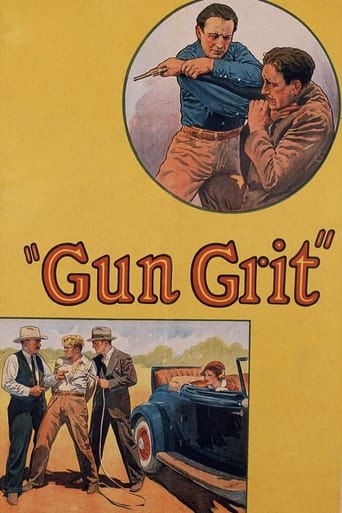
David Sharpe appears once in this catalog: Gun Grit (1936). Born in St. Louis, Missouri, he was a world-class athlete and a member of the 1924 U.S. Olympic gymnastics team, a background that allowed him to perform breathtaking acrobatic feats that few others could replicate. During the 1930s, he became a popular leading man in 'Poverty Row' Westerns and serials, such as 'Gun Grit' (1936) and 'The Adventures of Captain Marvel' (1941), where he often performed his own stunts. His incredible agility earned him the nickname 'The Human Fly,' and he was frequently called upon to double for major stars like Tony Curtis and Alan Ladd. Beyond his on-screen roles, Sharpe revolutionized the stunt industry by developing safer techniques for high falls and fight choreography. He remained active in the industry well into the 1970s, transitioning from a daring young lead to a respected elder statesman of the Hollywood stunt community.
The Craft
On Screen
Sharpe's acting style was characterized by immense physical energy and a natural, athletic grace that translated well to the action-heavy Westerns and serials of the 1930s. Unlike many of his contemporaries who relied on theatrical delivery, Sharpe's performances were grounded in his physical capabilities, making his action sequences appear seamless and authentic. He possessed a youthful, earnest charm that made him a favorite for 'boyish hero' roles in early talkies. Even in dramatic scenes, he maintained a disciplined poise derived from his years of competitive gymnastics training.
Milestones
- Member of the 1924 U.S. Olympic Gymnastics Team
- Star of the 1930s Western series 'The Range Busters'
- Stunt double for Douglas Fairbanks Jr. And Tony Curtis
- Inducted into the Stuntmen's Hall of Fame (Inaugural Class)
- Pioneered the 'suicide wrap' fall technique in stunt work
- Stunt coordinator for major epics like 'Spartacus' (1960)
Best Known For
Iconic Roles
Must-See Films
Accolades
Won
- Stuntmen's Hall of Fame Induction (1979)
- Golden Boot Award (Posthumous, 1994)
Special Recognition
- Recognized as one of the 'Greatest Stuntmen of All Time' by the Hollywood Stuntmen's Association
- Life Achievement recognition from the Motion Picture & Television Fund
Working Relationships
Worked Often With
Studios
Why They Matter
Impact on Culture
David Sharpe's impact on cinema is most visible in the evolution of the 'action hero.' Before the modern era of CGI, Sharpe proved that a human being could perform near-superhuman feats of agility on camera, setting a standard for physical performance that influenced the choreography of superhero films decades later. He was instrumental in transitioning stunt work from 'daredevilry' to a calculated, professional craft. His work in the 'Captain Marvel' serial is still cited by film historians as some of the finest flight-simulation stunt work ever captured on film.
Lasting Legacy
Sharpe is remembered as the 'King of the Stuntmen' during Hollywood's Golden Age. His legacy resides in the hundreds of films he improved through his physical presence and the safety standards he helped establish for the stunt profession. He bridged the gap between the silent era's slapstick acrobatics and the modern era's sophisticated action choreography. Today, he is a foundational figure for historians of the B-Western and the Saturday matinee serial.
Who They Inspired
He influenced generations of stunt performers to incorporate formal gymnastics into their repertoire. His 'Human Fly' techniques influenced how urban climbing and roof-to-roof jumps were filmed, a precursor to modern parkour-style action in cinema. Actors like Jackie Chan have been compared to Sharpe for their ability to blend high-level acrobatics with character-driven performance.
Off Screen
David Sharpe was known within the industry as a humble and deeply disciplined professional. He was married to fellow performer and stuntwoman Margaret 'Margie' Carroll, and later to Gertrude Messinger, who was also a well-known actress in the 1930s. His personal life was largely defined by his dedication to physical fitness; even in his later years, he was known to perform backflips to entertain friends and colleagues. He passed away in 1980 from amyotrophic lateral sclerosis (ALS) in Altadena, California.
Education
Attended various schools in Los Angeles while working as a child actor; received elite-level athletic training through the YMCA and U.S. Olympic developmental programs.
Family
- Gertrude Messinger (1932-1935)
- Margaret Carroll (1940-1980)
Did You Know?
- He was only 14 years old when he competed in the 1924 Olympics.
- Sharpe was the stunt double for the flying sequences in 'The Adventures of Captain Marvel,' using a hidden wire rig he helped design.
- He appeared in over 4,000 films and television episodes as either an actor, stuntman, or coordinator.
- He was known for his ability to do a 'standing backflip' well into his 60s.
- In 'Gun Grit' (1936), he performed a famous mount onto a moving horse that became a stock footage staple.
- He often played multiple roles in the same film: a henchman who gets killed early on, and then a different character later.
- He was a close friend of fellow stunt legend Yakima Canutt.
- Sharpe was the one who performed the famous fall off the balcony in the 1931 'Dracula' (as a double).
In Their Own Words
The secret to a good stunt isn't being brave; it's being prepared. If you're just brave, you'll get hurt. If you're prepared, you'll get the shot.
I've spent my life falling down so that the stars could look like they were standing tall.
In the old days, we didn't have pads or safety wires. We had the ground, and we had to learn how to hit it without breaking.
Frequently Asked Questions
Who was David Sharpe?
Prominent American with credits in this catalog. He transitioned from a child actor in silent films to a leading man in 1930s Westerns and eventually became one of Hollywood's most respected stunt coordinators.
What films is David Sharpe best known for?
Titles linked here include Gun Grit (1936), The Adventures of Captain Marvel (1941).
When was David Sharpe born and when did they die?
Born February 2, 1910; died March 30, 1980.
What awards did David Sharpe win?
While he did not win an Oscar, he was an inaugural inductee into the Stuntmen's Hall of Fame in 1979 and received a posthumous Golden Boot Award in 1994 for his contributions to Western cinema.
What was David Sharpe's acting style?
His style was highly physical and athletic, characterized by a youthful energy and the ability to perform his own complex stunts. He brought a level of realism to action scenes that was rare for the early sound era of Hollywood.