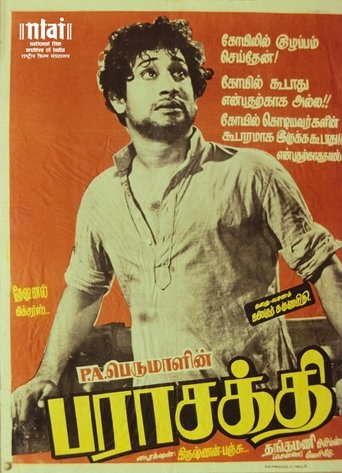

Films
4 films
About T. P. Muthulakshmi
Indian actress who worked in Tamil cinema during the early 1950s, appearing in two significant films that would become classics of the era. Her brief but memorable from 1950 to 1952, during which she established herself as a character actress capable of portraying strong female roles. She made her debut in 'Manthiri Kumari' (1950), a historical drama that showcased the emerging talent of Tamil cinema's golden age. Her most notable work came in 'Parasakthi' (1952), a revolutionary film that marked the debut of actor Sivaji Ganesan and addressed social issues prevalent in post-independence India. Despite her limited filmography, Muthulakshmi's performances contributed to two landmark films that helped shape the trajectory of Tamil cinema. Her career, though brief, coincided with a transformative period in Indian film history when cinema was becoming a powerful medium for social commentary and cultural expression.
The Craft
Milestones
- Debut in Manthiri Kumari (1950)
- Appeared in landmark film Parasakthi (1952)
- Part of Tamil cinema's golden age transition
Best Known For
Must-See Films
Working Relationships
Worked Often With
Why They Matter
Impact on Culture
T. P. Muthulakshmi, though having a brief career, was part of two films that significantly impacted Tamil cinema and Indian society. 'Parasakthi' in particular was revolutionary for its time, challenging traditional norms and addressing social issues like caste discrimination and women's rights. Her participation in these films, even in supporting capacities, contributed to the broader movement of using cinema as a vehicle for social change in post-independence India. The films she appeared in helped establish a new era of socially conscious filmmaking in Tamil cinema that would influence generations of filmmakers and actors to come.
Lasting Legacy
While T. P. Muthulakshmi may not have achieved lasting fame as an individual performer, her legacy is preserved through her association with two of Tamil cinema's most important early films. 'Parasakthi' and 'Manthiri Kumari' are frequently referenced in film studies and retrospectives of classic Indian cinema, ensuring that her contributions, however small, remain part of the historical record. Her work serves as a reminder of the many talented character actors who played crucial roles in building the foundation of regional cinema in India during its formative years.
Who They Inspired
Due to her brief career span, there is limited documentation of T. P. Muthulakshmi's direct influence on other performers. However, as part of the cast of 'Parasakthi', she contributed to a film that influenced an entire generation of actors and filmmakers in Tamil cinema. The film's success and social impact helped establish new possibilities for meaningful, issue-based storytelling in Indian cinema.
Off Screen
Very little is documented about T. P. Muthulakshmi's personal life, as was common for supporting actors of her era who often remained out of the public spotlight.
Did You Know?
- Appeared in only two known films during her career
- Her career coincided with the debut of legendary actor Sivaji Ganesan
- Both films she appeared in have become classics of Tamil cinema
- Parasakthi was controversial upon release for its social commentary
- Manthiri Kumari was based on a play by Udumalai Narayana Kavi
- Her filmography represents a crucial transitional period in Indian cinema
- The 1950s marked the beginning of the golden age of Tamil cinema
Frequently Asked Questions
Who was T. P. Muthulakshmi?
Indian actress who worked in Tamil cinema during the early 1950s, appearing in two notable films: Manthiri Kumari (1950) and Parasakthi (1952). She had a brief but significant career during a transformative period in Indian cinema.
What films is T. P. Muthulakshmi best known for?
Titles linked here include Parasakthi (1952), Manthiri Kumari (1950).
When was T. P. Muthulakshmi active in films?
T. P. Muthulakshmi was active in cinema from 1950 to 1952, appearing in films during the early years of independent India's golden age of cinema.
What was significant about the films T. P. Muthulakshmi appeared in?
Both films she appeared in were significant in Tamil cinema history. Parasakthi was groundbreaking for its social themes and launched Sivaji Ganesan's career, while Manthiri Kumari was a successful historical drama that contributed to the development of the Tamil film industry.
Why is there limited information about T. P. Muthulakshmi?
Limited documentation is common for supporting actors from early Indian cinema, particularly those with brief careers. Many character actors from this era were not extensively covered by media, and detailed records were not always preserved.
What was the cultural impact of the films T. P. Muthulakshmi appeared in?
The films she appeared in, especially Parasakthi, had significant cultural impact by addressing social issues and challenging traditional norms in post-independence India. They helped establish cinema as a medium for social commentary in Tamil Nadu.