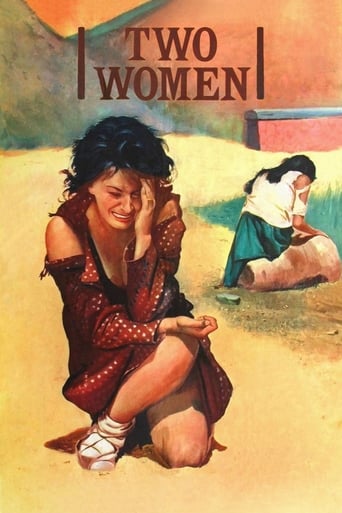

Films
1 film
About Eleonora Brown
Italian child actress who achieved cinematic immortality through her single, powerful performance in Vittorio De Sica's masterpiece 'Two Women' (1960). Born in Naples, Italy, she was discovered by director De Sica while still a young girl and cast in the pivotal role of Rosetta, the daughter of Sophia Loren's character Cesira. Her performance as the innocent victim of wartime brutality was widely praised for its naturalistic emotional depth and heartbreaking authenticity. Despite the critical acclaim she received for her debut, Brown chose not to pursue a full-time acting career after this film, instead focusing on her education and personal life. Her portrayal remains memorable child performances in cinema history, contributing significantly to the film's emotional impact and its success in winning Sophia Loren the Academy Award for Best Actress. The film itself was as the first foreign language performance to win an Oscar in a leading category. Brown's decision to step away from the spotlight has made her somewhat mysterious in film history, with 'Two Women' standing as her singular but monumental contribution to classic cinema.
The Craft
On Screen
Naturalistic and emotionally authentic, Brown's acting style was characterized by its raw innocence and genuine emotional response, typical of child actors in the Italian neorealist tradition who were often non-professionals chosen for their natural qualities rather than training.
Milestones
- Starred in Vittorio De Sica's 'Two Women' (1960)
- Delivered critically acclaimed performance as Rosetta
- Contributed to Sophia Loren's Oscar-winning performance
- Participated in
Best Known For
Iconic Roles
Must-See Films
Accolades
Special Recognition
- Recognized as one of cinema's most memorable child performances
Working Relationships
Worked Often With
Studios
Why They Matter
Impact on Culture
Eleonora Brown's performance in 'Two Women' had a profound cultural impact as it helped bring international attention to Italian cinema and the neorealist movement. Her portrayal of wartime trauma through a child's eyes contributed significantly to the film's anti-war message and its exploration of the devastating effects of conflict on innocent civilians. The film's success, partly due to her convincing performance, helped break barriers for foreign language films in Hollywood, paving the way for greater international recognition of world cinema. Her work alongside Sophia Loren created one of cinema's most powerful mother-daughter relationships, influencing how such dynamics would be portrayed in subsequent war films dealing with civilian experiences.
Lasting Legacy
Though her filmography consists of only one film, Eleonora Brown's legacy endures through her unforgettable performance in 'Two Women.' She represents the tradition of non-professional actors in Italian neorealism who brought authenticity and raw emotion to the screen. Her portrayal continues to be studied in film schools as an example of perfect casting and natural child performance. The role has ensured her place in cinema history as the young actress who helped create. Her decision to leave acting after this one perfect performance has only enhanced the mystique and impact of her contribution to classic cinema.
Who They Inspired
Brown's naturalistic acting style influenced subsequent generations of child actors in international cinema, particularly in films dealing with serious themes. Her performance demonstrated that child actors could handle complex emotional material with authenticity and depth. The success of her casting approach influenced directors to continue seeking non-professional children for authentic performances in neorealist and social realist films. Her work in 'Two Women' set a standard for child performances in war dramas that continues to be referenced and admired today.
Off Screen
After her brief acting career, Eleonora Brown chose to live a private life away from the entertainment industry. She focused on her education and later pursued other professional interests outside of acting. Despite the fame that came with her role in 'Two Women,' she maintained a low profile and rarely gave interviews about her experience in the film. Her decision to step away from acting has made her somewhat enigmatic in film history circles.
Education
Completed her education in Italy after her brief film career
Did You Know?
- Was discovered by director Vittorio De Sica while playing in her neighborhood in Naples
- Had no professional acting experience before being cast in 'Two Women'
- Her performance was so convincing that many viewers believed she was actually experiencing the emotions portrayed
- The film was shot on location in Italy, adding to the authenticity of her performance
- Despite her young age, she understood the gravity of the film's subject matter and delivered a mature performance
- She worked closely with Sophia Loren, who treated her like a daughter on and off set
- The film's success led to offers for other roles, but she chose to return to normal childhood
- Her role required her to portray traumatic wartime experiences, which she handled with remarkable professionalism
- The film was one of the first to show the devastating effects of war on civilians, particularly women and children
- Her performance contributed to the film winning the Academy Award for Best Actress for Sophia Loren
Frequently Asked Questions
Who was Eleonora Brown?
Italian child actress best known for her powerful performance as Rosetta in Vittorio De Sica's 1960 film 'Two Women' alongside Sophia Loren. Despite her acclaimed debut, she chose not to pursue a full-time acting career, making this her only film appearance.
What films is Eleonora Brown best known for?
Titles linked here include Two Women (1960).
When was Eleonora Brown born and when did she die?
Born January 14, 1948; died death date not listed.
What awards did Eleonora Brown win?
While Eleonora Brown did not receive personal awards or nominations, her performance in 'Two Women' was crucial to the film's success. The film won Sophia Loren the Academy Award for Best Actress, marking the first time an Oscar was awarded for a non-English speaking performance.
What was Eleonora Brown's acting style?
Brown's acting style was naturalistic and authentic, characteristic of the Italian neorealist tradition. As a non-professional child actor, she brought genuine emotion and raw authenticity to her role, creating a believable and heartbreaking portrayal of a child traumatized by war.