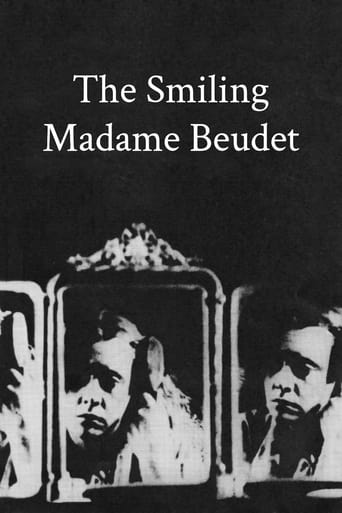
Films
1 film
About Yvette Grisier
This archive lists one role for Yvette Grisier: The Smiling Madame Beudet (1923). Her sole known film appearance was in Germaine Dulac's 1923 silent film 'The Smiling Madame Beudet,' which is now recognized as one of the earliest examples of feminist narrative cinema. Grisier's career, though brief, placed her at the forefront of cinematic innovation during a transformative period in French film history. The film in which she appeared was revolutionary for its psychological depth and visual experimentation, representing the French Impressionist cinema movement. While her role was supporting, her participation connected her to feminist filmmakers of the silent era. Very little documentation survives about Grisier's life beyond this single film credit, suggesting she may have been a theatrical actress who briefly ventured into cinema or someone who left the industry shortly after this appearance. Her contribution, though small, is preserved through her involvement in this historically significant work that continues to be studied by film scholars worldwide.
The Craft
On Screen
As an actress in French Impressionist cinema, Grisier likely employed the theatrical yet subtle acting style characteristic of the movement, which emphasized psychological realism and emotional expression through nuanced performance rather than the exaggerated gestures common in earlier silent films.
Milestones
- Appeared in Germaine Dulac's revolutionary feminist film 'The Smiling Madame Beudet' (1923)
- Participated in French Impressionist cinema movement
- Contributed to early avant-garde filmmaking
Best Known For
Iconic Roles
Must-See Films
Working Relationships
Worked Often With
Why They Matter
Impact on Culture
Yvette Grisier's cultural impact, while minimal due to her brief film career, is preserved through her participation in 'The Smiling Madame Beudet,' a film that revolutionized cinematic representation of women's inner lives and desires. The film itself became a cornerstone of feminist film theory and continues to influence filmmakers exploring psychological realism and female subjectivity. Grisier's contribution, though small, places her within the context of early cinematic innovation and the French avant-garde movement that challenged traditional narrative forms and visual techniques.
Lasting Legacy
Yvette Grisier's legacy is intrinsically tied to the enduring significance of 'The Smiling Madame Beudet' as a work of feminist cinema. While she did not achieve individual fame or recognition, her participation in this historically important film ensures her place in cinema history. The film continues to be screened at film festivals, studied in film courses, and analyzed by scholars, preserving Grisier's contribution to the art form for future generations.
Who They Inspired
Due to the limited scope of her documented work, Yvette Grisier's direct influence on other actors or filmmakers cannot be traced. However, her involvement in a film that influenced generations of feminist filmmakers and avant-garde cinema connects her indirectly to this broader cultural impact. The film's techniques and themes influenced directors from Alfred Hitchcock to Chantal Akerman, making Grisier a small part of this influential cinematic lineage.
Off Screen
Very little is known about Yvette Grisier's personal life, as she appears to have been a minor figure in French cinema with only one documented film credit. Her brief appearance in film history suggests she may have been primarily involved in theater or other performing arts, with 'The Smiling Madame Beudet' possibly being her only venture into the emerging medium of cinema.
Did You Know?
- 'The Smiling Madame Beudet' was one of the first films to explicitly explore female psychology and desire
- The film was directed by Germaine Dulac, a feminist filmmaker and theorist
- The film is considered a masterpiece of French Impressionist cinema
- The movie's innovative use of superimposition and visual effects represented groundbreaking cinematic techniques
- The film was restored by the Cinémathèque Française and remains one of the best-preserved examples of 1920s French avant-garde cinema
- Yvette Grisier's role in the film, while minor, places her in the company of cinema pioneers
- The film's title character was played by Germaine Dermoz, a major French stage and film actress of the era
- The movie was based on a play by Denys Amiel and André Obey
- The film's running time is only 38 minutes, typical of experimental shorts of the period
- The film was banned in several countries upon release due to its controversial subject matter
Frequently Asked Questions
Who was Yvette Grisier?
French actress from the silent film era, known exclusively for her appearance in the 1923 avant-garde film 'The Smiling Madame Beudet.' Her career appears to have been brief, with this single film credit representing her entire documented contribution to cinema.
What films is Yvette Grisier best known for?
Titles linked here include The Smiling Madame Beudet (1923).
When was Yvette Grisier born and when did she die?
Unfortunately, specific birth and death dates for Yvette Grisier are not documented in available historical records. She was active in French cinema in 1923, placing her career in the early silent film era.
What awards did Yvette Grisier win?
There are no documented awards or nominations for Yvette Grisier, which was common for supporting actors in the early 1920s, particularly in experimental or avant-garde films that were often outside mainstream recognition systems.
What was Yvette Grisier's acting style?
As an actress in French Impressionist cinema, Grisier likely employed the subtle, psychologically nuanced acting style characteristic of the movement, which emphasized internal emotional states over external gestures, though specific details about her performance are not extensively documented.