Keys: Space play/pause · ←/→ 10s · F fullscreen · M mute · </> speed
Plot
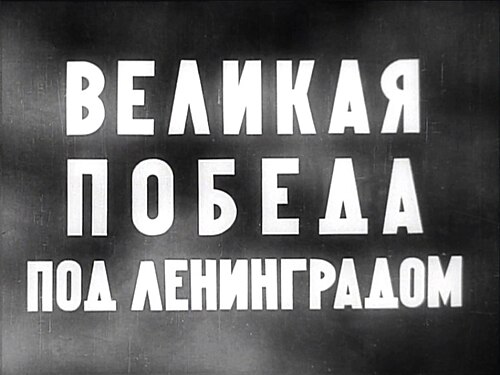
This powerful wartime documentary chronicles the momentous Soviet victory that ended the brutal 872-day Siege of Leningrad in January 1944. The film captures the final offensive operations by Soviet forces as they broke through the German blockade, bringing relief to the starving city that had endured unimaginable suffering. Through combat footage, strategic maps, and emotional scenes of liberation, the documentary documents the military tactics that led to this crucial turning point on the Eastern Front. The film also shows the devastating aftermath of the siege, with footage of destroyed infrastructure, starving civilians, and the immense human cost of the blockade. As a propaganda piece created during the ongoing war, it emphasizes Soviet resilience, military genius, and the ultimate triumph over Nazi forces.
Director
Valeri SolovtsovAbout the Production
Release Date 1944-06-01
Production Lenfilm Studio, Central Studio of Documentary Films
Filmed In Leningrad (now Saint Petersburg), USSR, Leningrad Oblast, USSR, Front lines of the Leningrad-Novgorod Offensive
Filmed under extremely dangerous conditions during active military operations in early 1944. Camera crews embedded with Soviet troops captured actual combat footage during the offensive. The documentary was rushed into production immediately after the siege was lifted to serve both historical documentation and propaganda purposes. Soviet authorities prioritized this film as a morale booster for both military and civilian audiences during the ongoing war effort.



Themes & Topics
SiegeWorld War IIDocumentaryPropagandaMilitary victoryLeningradSoviet UnionEastern FrontWar crimesCivilian sufferingLiberationHeroismNational defense
Historical Background
This documentary was created during a critical turning point in World War II, following the breaking of one of history's most brutal sieges. The Siege of Leningrad (September 1941 - January 1944) represented Nazi Germany's attempt to capture the Soviet Union's second-largest city and eliminate a key industrial and cultural center. The city's survival became a symbol of Soviet resistance and human endurance. By early 1944, when this film was made, the tide had turned decisively against Nazi Germany following major Soviet victories at Stalingrad and Kursk. The lifting of the Leningrad siege was not only a major military victory but also held enormous psychological importance for the Soviet war effort. The documentary served both to document this historic achievement and to bolster Soviet morale as the Red Army continued its advance toward Berlin.
Why This Film Matters
As one of the earliest visual records of the Siege of Leningrad's conclusion, this film became an essential historical document that shaped both Soviet and international understanding of this tragedy. It established many of the visual tropes and narrative frameworks that would later define Soviet war cinema. The documentary contributed to the mythologizing of Leningrad as a 'hero city' and helped cement the siege's place in Soviet collective memory as a symbol of sacrifice and resilience. Its influence extended to post-war Soviet culture, where the siege became a central theme in literature, art, and film. The documentary's propaganda value was significant, helping to maintain civilian and military morale during the final year of the war while also serving as evidence for war crimes trials that would follow.
Making Of
The production of this documentary was itself a testament to Soviet determination. Camera crews worked alongside combat troops during the Leningrad-Novgorod Offensive, often under direct enemy fire. Director Valeri Solovtsov coordinated multiple film units to capture different aspects of the operation - from strategic command meetings to front-line combat to civilian liberation. The filmmakers faced extreme conditions including sub-zero temperatures, limited supplies, and constant danger from enemy artillery and air raids. Many scenes showing the siege's aftermath were filmed in the ruins of Leningrad itself, where the crew witnessed firsthand the devastation and human suffering. The editing process was conducted in hastily established facilities in recently liberated areas, with the film being rushed to completion while other parts of the Soviet Union were still under German occupation.
What Critics Said
Contemporary Soviet critics praised the film as a powerful testament to Soviet courage and military achievement, with reviews emphasizing its historical importance and emotional impact. Soviet film journals highlighted the documentary's authenticity and the courage of the filmmakers who captured footage under combat conditions. Western critics who saw the film after the war acknowledged its historical value while noting its obvious propaganda elements. Modern film historians recognize the documentary as an important primary source document, despite its propagandistic elements, and praise its technical achievements given the difficult circumstances of its production. The film is now studied both for its historical content and as an example of wartime documentary filmmaking techniques.
Did You Know?
- The Siege of Leningrad lasted 872 days, making it one of the longest and deadliest sieges in human history
- Over 1 million civilians died during the siege, primarily from starvation and cold
- Director Valeri Solovtsov was one of the few Soviet filmmakers allowed access to front-line combat zones
- The documentary was completed and released just months after the siege was broken, making it remarkably timely
- Some footage was captured by camera operators who risked their lives during actual combat operations
- The film was shown not only in Soviet cinemas but also screened for Allied troops as part of wartime information exchanges
- Original camera negatives were nearly destroyed when the film laboratory was bombed during filming
- This documentary was one of the first visual records made available to the outside world about the siege's horrors
- The film's release coincided with the third anniversary of the siege's beginning
- Soviet authorities considered this film so important that it was given priority over entertainment films for distribution
Awards & Recognition
- Stalin Prize (Second Class) - 1946
More film details Visual style, music, quotes, restoration, and more
Visual Style
The documentary employs a mix of combat footage, aerial reconnaissance shots, and carefully composed post-liberation scenes. The cinematography captures both the epic scale of military operations and intimate human moments of suffering and relief. Camera work during combat sequences is notably raw and immediate, conveying the chaos and danger of the offensive. The aftermath footage uses stark, documentary-style compositions to emphasize the destruction and human cost. Technical achievements include footage shot from moving vehicles, aerial sequences, and night photography - all challenging given 1944 technology and field conditions. The visual narrative contrasts the gray, devastated landscapes of the besieged city with the determined faces of Soviet soldiers and civilians.
Innovations
Remarkable for its time, the documentary achieved several technical milestones given the extreme field conditions. The successful synchronization of multiple camera units across a vast military theater demonstrated sophisticated logistical planning. The film's use of actual combat footage, rather than staged reenactments, set it apart from many wartime documentaries. Camera operators developed new techniques for filming in extreme cold and under fire, including modified equipment and protective measures. The documentary also incorporated innovative map animations and strategic graphics to help audiences understand the complex military operations. Despite being filmed with limited resources during wartime, the technical quality of the footage remained high enough for both immediate distribution and historical preservation.
Music
The musical score incorporates Soviet martial music, somber themes reflecting the siege's tragedy, and triumphant compositions for the victory sequences. Traditional Russian folk elements are woven into the orchestral arrangements to emphasize national identity and resilience. The soundtrack also includes actual combat sounds captured during filming, adding authenticity to the battle sequences. Voice-over narration, delivered in the formal style characteristic of Soviet documentaries, provides historical context and emotional commentary. The sound design effectively contrasts the silence of the starving city with the noise of liberation, using audio to enhance the documentary's emotional and propaganda impact.
Famous Quotes
'For 872 days, Leningrad stood firm against the fascist hordes, becoming a symbol of Soviet courage and human endurance'
'Not even the most brutal siege in history could break the spirit of the Soviet people'
'From the ashes of destruction rises the phoenix of victory'
Memorable Scenes
- The dramatic sequence showing Soviet troops breaking through the German lines
- Poignant footage of emaciated civilians receiving their first proper meals after the siege
- Aerial shots revealing the full extent of the city's destruction and encirclement
- The emotional liberation of the first suburbs and suburbs surrounding Leningrad
- Scenes of Soviet artillery firing in coordinated barrage that shattered the German positions
What Audiences Thought
Soviet audiences received the film with intense emotional response, as many had personal connections to the siege's suffering and victory. Theatrical screenings reportedly moved audiences to tears and received standing ovations. For Leningrad survivors, the film served as validation of their endurance and sacrifice. The documentary was shown widely not only in cinemas but also in factories, military units, and collective farms as part of wartime morale-boosting efforts. International audiences, particularly Allied nations, viewed the film as evidence of Soviet suffering and resilience, helping to build support for the Soviet war effort. Post-war generations of Soviet viewers continued to regard the film as an important historical document and patriotic educational tool.
Film Connections
Influenced By
- Soviet montage theory
- Leni Riefenstahl's propaganda techniques
- Earlier Soviet war documentaries
- Newsreel journalism traditions
This Film Influenced
- The Unknown War (1978 TV series)
- Leningrad (2009 miniseries)
- Blockade (1974 documentary)
- Battle for Leningrad (various documentaries)
Film Restoration
The film has been preserved in the Russian State Film Archive (Gosfilmofond) and has undergone digital restoration. Original nitrate elements survived the war and have been transferred to safety stock. The documentary is considered part of Russia's national cultural heritage. Multiple copies exist in various international film archives, including the Library of Congress and the British Film Institute. The restored version has been shown at retrospectives of Soviet cinema and war documentaries.
Where to Watch
- Russian State Film Archive collections
- Selected military history documentary streaming services
- Academic film libraries specializing in Soviet cinema
- Museum screenings at the State Memorial Museum of Defense and Siege of Leningrad
- Occasional broadcasts on Russian historical television channels
- Online platforms specializing in classic documentaries