

Keys: Space play/pause · ←/→ 10s · F fullscreen · M mute · </> speed
Plot
Кем быть? (What to Be?) is a 1948 Soviet animated short film based on Vladimir Mayakovsky's popular children's poem. The film follows a young boy who dreams about various professions he could pursue when he grows up, exploring different occupations through whimsical animated sequences. Each profession is presented with its own distinctive visual style and musical accompaniment, from doctors and engineers to pilots and factory workers. The animation emphasizes the importance of choosing a meaningful career that contributes to Soviet society, reflecting the ideological values of post-war reconstruction. The boy's journey through potential futures serves both as entertainment and as moral education about career choices and social responsibility.
Director
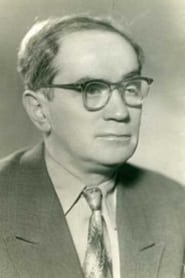 Dmitriy Babichenko
About the Production
Release Date 1948
Production Soyuzmultfilm
Filmed In Moscow, USSR
Produced during the early post-war period when Soviet animation was transitioning to more sophisticated techniques. The film utilized traditional cel animation combined with rotoscoping for more realistic character movements. The production team faced material shortages common in post-war USSR, requiring creative solutions for animation supplies. Mayakovsky's original poem was adapted specifically for this animated format, with some verses modified to better suit visual storytelling.
More Animation Films
View all →

More from Dmitriy Babichenko
View all →


Themes & Topics
children's educationcareer guidanceSoviet ideologyanimationpoetry adaptationprofessional choicessocial responsibilityMayakovskySoyuzmultfilmpost-war reconstruction
Historical Background
The film was produced in 1948, during the early years of the Cold War and the period of intense reconstruction following World War II. The Soviet Union was undergoing massive industrialization and urbanization, with a strong emphasis on technical education and professional training. Stalin's regime promoted the idea that every citizen should contribute to building socialism through their chosen profession. This film reflects the state's educational priorities and the socialist realist aesthetic that dominated Soviet arts during this period. The adaptation of Mayakovsky's work was significant because the poet, who died in 1930, had been officially rehabilitated and celebrated as a revolutionary writer. The film's release coincided with the Soviet Union's push to improve technical education and create a new generation of skilled workers and engineers.
Why This Film Matters
Кем быть? holds an important place in Soviet cultural history as one of the earliest examples of using animation for ideological education. The film helped establish the template for Soviet educational animation that would be followed for decades. It represents the intersection of high art (Mayakovsky's poetry) and popular culture (animation) that was characteristic of Soviet cultural policy. The film's influence extended beyond cinema into Soviet education, where it was used as a teaching tool about career choices and social responsibility. Its portrayal of various professions contributed to shaping generations of Soviet children's understanding of work and social roles. The film also demonstrates how Soviet animators adapted Western animation techniques to serve Soviet ideological goals, creating a distinctive national style of animation.
Making Of
The production of 'Кем быть?' took place at Soyuzmultfilm's Moscow studios during a challenging period of Soviet reconstruction. The animation team worked under strict government guidelines requiring films to promote socialist values and educational content. Director Dmitriy Babichenko, known for his innovative approach to combining poetry with animation, faced the challenge of visualizing Mayakovsky's abstract poetic concepts in concrete animated sequences. The voice recording sessions were particularly challenging as the studio was still recovering from wartime damage to its recording facilities. The animators used a multi-plane camera setup, one of the first such systems in Soviet animation, to create depth in the various profession scenes. The color palette was carefully chosen to reflect the optimistic tone of post-war Soviet society, with bright primary colors dominating the visual scheme.
What Critics Said
Contemporary Soviet critics praised the film for its faithful adaptation of Mayakovsky's poetry and its educational value. Pravda reviewed it positively, noting its 'bright, optimistic portrayal of Soviet professions.' Western critics who later discovered the film during cultural exchanges in the 1950s were impressed by its technical sophistication and artistic merit, though some noted its obvious ideological content. Modern film historians consider it an important example of early post-war Soviet animation, particularly significant for its role in establishing Soyuzmultfilm's reputation for high-quality children's programming. Animation scholars have studied it as an example of how poetry and visual arts were combined in Soviet media to create educational content.
Did You Know?
- Based on Vladimir Mayakovsky's famous children's poem written in 1928, making this adaptation 20 years after the original text
- Director Dmitriy Babichenko was one of the pioneering animators at Soyuzmultfilm, the studio that would become the USSR's most famous animation house
- The film was part of a series of literary adaptations that Soyuzmultfilm produced to make classic Russian literature accessible to children
- The voice actors Zinaida Bokareva and Viktoriya Ivanova were prominent voice artists in Soviet animation, working on dozens of films throughout their careers
- The animation style reflects the transition from early Soviet avant-garde influences to the more realistic socialist realist style mandated in the late 1940s
- Mayakovsky's original poem was written to help children think about future careers in the new Soviet society
- The film was distributed widely throughout Soviet schools and kindergartens as an educational tool
- Despite its short length, the film took nearly a year to produce due to the detailed hand-drawn animation techniques
- The musical score incorporates motifs from various Soviet folk songs to represent different professions
- This was one of the first Soviet animated films to be exported internationally after World War II
Awards & Recognition
- Honored at the 1949 Soviet Film Festival for Best Children's Animation
More film details Visual style, music, quotes, restoration, and more
Visual Style
The film's visual style combines traditional cel animation with innovative multi-plane camera techniques that create a sense of depth unusual for Soviet animation of this period. The cinematography uses bright, saturated colors to create an optimistic, child-friendly atmosphere. Each profession scene features its own distinct visual motif and color scheme - doctors appear in clean white environments, factory workers in industrial settings with mechanical elements, and pilots against vast blue skies. The animation employs smooth, flowing movements influenced by Disney techniques but adapted to Soviet aesthetic preferences. The film uses dynamic camera angles and transitions between scenes to maintain visual interest despite its educational content.
Innovations
The film pioneered several technical innovations in Soviet animation, including early use of the multi-plane camera system that allowed for more sophisticated depth effects. The production team developed new techniques for synchronizing poetry with animated action, creating a template for future literary adaptations. The film also experimented with color separation processes that allowed for more vibrant and consistent color reproduction than was typical in Soviet animation of the era. The rotoscoping techniques used for realistic human movement were particularly advanced for Soviet studios at the time. These technical achievements helped establish Soyuzmultfilm as a technically sophisticated animation studio capable of competing with international standards.
Music
The musical score was composed by Mikhail Ziv, a prominent Soviet composer who specialized in film music. The soundtrack incorporates original songs based on Mayakovsky's verses, with melodies designed to be easily remembered by children. The music draws from various Soviet folk traditions, using different musical styles to represent different professions - martial rhythms for soldiers, industrial motifs for factory workers, and soaring melodies for pilots. The voice work by Zinaida Bokareva and Viktoriya Ivanova features clear, expressive narration that emphasizes the poem's rhythmic qualities. The sound design includes subtle industrial and environmental sounds that enhance the visualization of different workplaces.
Famous Quotes
Кем быть? - этим вопросом мучаются все дети
Я бы лётчиком хотел бы стать, потому что в небе я летать мечтаю
Доктором быть - лечить людей, это дело для меня
Инженером хочу я стать, строить дома для всех
Memorable Scenes
- The opening sequence where the boy sits dreaming under a tree, contemplating his future profession; The transformation scenes where each profession comes to life through animated metamorphosis; The factory sequence with mechanical movements and industrial sounds representing engineering; The medical scene with clean white backgrounds and caring gestures showing the doctor's role; The final scene where the boy realizes the importance of choosing any profession that serves society
What Audiences Thought
The film was extremely popular among Soviet children and was shown repeatedly in schools and children's clubs throughout the late 1940s and 1950s. Many Soviet adults who watched it as children remembered it fondly for its catchy songs and colorful animation. The film's simple, direct message about choosing a profession resonated with parents and educators during a period when career guidance was becoming institutionalized in the Soviet education system. The film was so well-received that it inspired a series of similar educational animations from Soyuzmultfilm throughout the 1950s. Even decades after its release, the film remained a cultural touchstone for multiple generations of Soviet citizens.
Film Connections
Influenced By
- Disney animation techniques (particularly multi-plane camera usage)
- Mayakovsky's original 1928 poem
- Socialist realist art movement
- Soviet educational cinema
- Traditional Russian folk art and storytelling
This Film Influenced
- Subsequent Soyuzmultfilm educational animations
- Career guidance films in Eastern Bloc countries
- Later Soviet adaptations of literary works for animation
Film Restoration
The film has been preserved in the Russian State Film Archive (Gosfilmofond) and has undergone digital restoration as part of Soyuzmultfilm's classic animation preservation project. Original nitrate negatives were successfully transferred to safety film in the 1970s. A high-definition digital version was released in 2018 as part of a collection of restored Soviet animations.
Where to Watch
- Available on Russian film streaming platforms like Kinopoisk and Okko
- Included in Soyuzmultfilm's official YouTube channel
- Featured in various Soviet animation DVD collections
- Accessible through film archive databases for educational purposes
- Available on some international streaming services specializing in classic animation