A Day with Thomas A. Edison
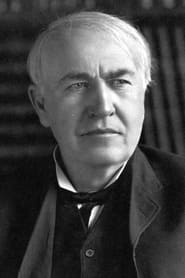
"Edison at seventy-four supervises his factory."
Keys: Space play/pause · ←/→ 10s · F fullscreen · M mute · </> speed
About this film
A six-part documentary visits seventy-four-year-old Thomas Edison at his West Orange laboratory, filming his meetings with industrial leaders and staff on the factory floor. Much of the surviving material records Edison's 1917 trip to the incandescent lamp works that made his name synonymous with electric light.
Cast & crew
More Documentary films
View all →
More about this film
About the production
Release date1922
ProductionEdison Manufacturing Company
Filmed inWest Orange, New Jersey, Edison Laboratory, Edison Lamp Works
the production was produced by Edison's own company as a promotional and historical document. The six-part structure allowed for detailed coverage of different aspects of Edison's work. The filming required special arrangements to capture Edison in his natural working environment without disrupting the factory operations. The documentary was shot using contemporary silent film equipment of the early 1920s, requiring careful lighting in the factory setting.
Themes
American innovationIndustrial progressScientific methodMass productionLeadership and management
Themes & topics
Thomas EdisonInventionFactoryLight bulbManufacturingIndustrial processDocumentarySilent filmBiographyAmerican history
Historical background
A Day with Thomas A. Edison (1922) reached screens through Edison Manufacturing Company. Exhibitors of the time built silent-era bills that mixed shorts, features, and live acts, so a clear premise helped A Day with Thomas A. Edison travel between cities and exchange markets.
Why this film matters
Archivists and revival programmers still cite A Day with Thomas A. Edison (1922) when tracing studio habits, casting pools, and the visual rhetoric audiences once took for granted. Even modest surviving prints help map how A Day with Thomas A. Edison fit beside competing releases of its day.
Making of
The production of 'A Day with Thomas A. Edison' required careful coordination between the film crew and the daily operations of Edison's extensive industrial complex. Filming had to be scheduled around Edison's actual work commitments and the factory's production schedule. The presence of cameras in the working factory was unusual for the time, and special accommodations had to be made to ensure that the filming didn't disrupt the manufacturing process. Edison himself reportedly took an interest in the filming process, occasionally offering suggestions about which aspects of his work should be highlighted. The documentary was likely conceived as both a historical record and a promotional piece for Edison's continuing business ventures. The crew had to work with the limited lighting conditions available in the factory, using portable lighting rigs that could be moved between different production areas.
What critics said
Trade coverage around 1922 discussed A Day with Thomas A. Edison for pacing, clarity, and program fit rather than blockbuster grosses. Later writers value it as evidence of period style and as a reference point beside other films from the same era.
Did you know?
- the production captures Thomas Edison at age 74, showing him still actively involved in his business operations despite his advanced age
- The documentary was produced by Edison's own company, making it essentially an authorized biographical piece
- The six-part structure was unusual for documentaries of this era, which were typically shorter single-reel films
- Edison's light bulb factory featured in the film was among the leading advanced manufacturing facilities of its time
- The film serves as one of the earliest examples of industrial documentary filmmaking in America
- Thomas Edison appears as himself, making this one of the few surviving motion pictures of the inventor in his later years
- The factory scenes provide valuable historical documentation of early 20th century mass production techniques
- Director H. Schroeder was relatively unknown, suggesting this may have been one of his few major directorial credits
- The film was created during Edison's lifetime, giving it an authenticity that posthumous biographies lack
- The documentary captures Edison's management style and his relationship with his employees
Visual style
The cinematography in this 1922 documentary reflects the technical limitations and stylistic conventions of early documentary filmmaking. The camera work is static and observational, typical of industrial films of the period, with long takes that allow viewers to observe processes in their entirety. The filmmakers had to contend with the challenging lighting conditions of the factory environment, using available light augmented by portable lamps. The camera positioning provides clear views of Edison's interactions with his staff and the various stages of the manufacturing process. The visual composition emphasizes scale and organization, showcasing the efficiency and modernity of Edison's operations. While not artistically ambitious by modern standards, the cinematography succeeds in its primary goal of clearly documenting Edison's work and the factory's production methods.
Innovations
While primarily a documentary record rather than a technical showcase, the film demonstrates several notable achievements for its time. The successful filming within an active factory environment represented a significant logistical challenge, requiring coordination between the film crew and industrial operations. The six-part structure allowed for comprehensive coverage of complex processes, an ambitious undertaking for early documentary filmmaking. The film also works as a technical document itself, preserving detailed visual records of early 20th century manufacturing techniques and equipment. The clear capture of Edison's interactions with his staff demonstrates early capabilities in recording synchronized human activity in industrial settings. The preservation of this footage for over a century, while not a technical achievement of the original production, speaks to the historical importance of its content.
Music
As a silent film from 1922, 'A Day with Thomas A. Edison' would have been accompanied by live musical performance during theatrical screenings. The typical accompaniment might have included piano or organ music, with selections ranging from classical pieces to popular tunes of the era. For industrial films like this one, the musical selections were often chosen to reflect the progressive and efficient nature of the subject matter. No original composed score exists for this documentary, as was common for non-fiction films of this period. Modern restorations and presentations may feature newly commissioned scores or carefully selected period-appropriate music to enhance the viewing experience.
Famous quotes
I have not failed. I've just found 10,000 ways that won't work.
Genius is one percent inspiration and ninety-nine percent perspiration.
Opportunity is missed by most people because it is dressed in overalls and looks like work.
Memorable scenes
- Edison examining light bulbs on the production line with his characteristic intensity
- The detailed sequence showing the complete manufacturing process of incandescent light bulbs
- Edison in deep conversation with his laboratory staff, gesturing to explain technical concepts
- The panoramic shots of the vast factory floor with workers at their stations
- Edison's personal inspection of finished products, demonstrating his hands-on management style
What audiences thought
The original audience for this documentary likely consisted of business associates, employees, and educational institutions rather than general moviegoing audiences. As a product of Edison's own company, it was probably screened at trade shows, industrial exhibitions, and special events related to Edison's businesses. Contemporary audiences who did see it reportedly found it fascinating to witness the famous inventor in his natural environment and to see the inner workings of his famous inventions. Modern audiences, particularly historians and film enthusiasts, value the documentary for its rare footage of Edison and its detailed look at early 20th century manufacturing. The film has found new life through archival screenings and digital availability, where it continues to educate viewers about Edison's legacy and the history of American industry.
Film connections
Influenced by
- Industrial films of the 1910s
- Early documentary movement
- Biographical shorts
- Educational films
This film influenced
- Later industrial documentaries
- Corporate promotional films
- Biographical documentaries
Film restoration
The film is preserved in the archives of several institutions including the Library of Congress and the Edison National Historic Site. While not widely distributed, the documentary has survived in reasonably good condition considering its age. Some deterioration is evident in existing copies, but the content remains viewable and historically valuable. The film has been digitized by several archives for preservation purposes and to make it more accessible to researchers and the public.
Where to watch
- Library of Congress National Screening Room
- Edison National Historic Site archives
- Various educational film archives
- Some public domain film websites
- Museum screenings related to Edison or industrial history