No Poster
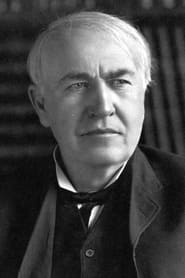
Thomas A. Edison
Actor
Born: February 11, 1847 in Milan, Ohio, USA Died: October 18, 1931 Active: 1888-1931 Birth Name: Thomas Alva Edison
Films
2 films
About Thomas A. Edison
Thomas Alva Edison was one of history's most prolific inventors and a pivotal figure in the development of motion pictures. While primarily known as an inventor and businessman rather than a professional actor, Edison did appear as himself in documentary films, most notably 'A Day with Thomas A. Edison' (1922), which showcased his daily work and inventions. His involvement in cinema began in the late 1880s when he developed the Kinetoscope, the first practical device for viewing moving pictures. In 1893, he established the Black Maria, the world's first film production studio, where his company produced over 1,200 short films. Edison's company was instrumental in the early film industry, creating equipment, producing films, and even engaging in patent wars that shaped the business of cinema. Though he appeared in only a handful of films as himself, his true contribution to cinema was technological and industrial rather than performative. His work laid the foundation for the entire motion picture industry, making him figures in film history despite never being a traditional actor or director.
The Craft
On Screen
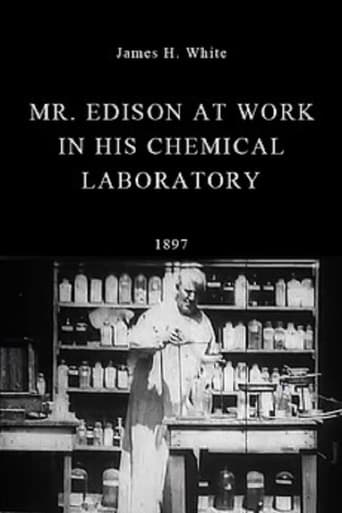
Edison was not a professional actor and only appeared as himself in documentary-style films. His on-screen presence was natural and authentic, showing him at work in his laboratory and discussing his inventions rather than performing scripted roles.
Milestones
- Invented the Kinetoscope motion picture device (1888)
- Built the Black Maria, the first film studio (1893)
- Founded Edison Manufacturing Company (1894)
- Produced over 1,200 short films through his company
- Appeared in documentary film 'A Day with Thomas A. Edison' (1922)
- Held over 1,000 patents including many for film technology
Best Known For
Iconic Roles
Must-See Films
Accolades
Special Recognition
- Congressional Gold Medal (1928)
- Inducted into National Inventors Hall of Fame
- Named one of the 100 Most Important People of the Millennium by LIFE magazine
Working Relationships
Worked Often With
Studios
Why They Matter
Impact on Culture
Thomas Edison's impact on cinema was revolutionary and foundational. His invention of the Kinetoscope created the first commercially viable method for viewing motion pictures, essentially inventing the film exhibition industry. The Black Maria studio he built became the prototype for all future film studios, establishing the concept of a dedicated space for film production. Edison's company produced some of the earliest narrative films and helped establish many cinematic conventions. His aggressive patent enforcement and business practices, while controversial, helped shape the early film industry's structure. The technological innovations his team developed laid the groundwork for the entire motion picture industry that would follow.
Lasting Legacy
Edison's legacy in cinema is that of a technological pioneer rather than a creative artist. While he didn't direct or act in traditional films, his inventions made the entire medium possible. The Edison Manufacturing Company's films represent some of the earliest examples of recorded moving images, providing invaluable documentation of late 19th and early 20th century life. His work in film technology paralleled his other inventions, always focusing on practical applications and commercial viability. Modern cinema owes its existence to Edison's early innovations in motion picture technology and his establishment of the first film production infrastructure.
Who They Inspired
Edison influenced countless filmmakers and inventors who followed, proving that motion pictures could be both technologically feasible and commercially successful. His work inspired early filmmakers like the Lumière brothers and Georges Méliès, who built upon his technological foundations. The studio system he pioneered influenced the development of Hollywood's major studios. His approach to film as both art and commerce set a precedent that continues to define the industry. Many modern film technologies can trace their lineage back to Edison's original innovations in motion picture cameras, projectors, and film stock.
Off Screen
Thomas Edison married twice and had six children. His first wife, Mary Stilwell, was one of his employees at his laboratory and died in 1884. He later married Mina Miller in 1886. Edison was known for his incredible work ethic, often working 16-18 hours daily, and maintained homes in West Orange, New Jersey, and Fort Myers, Florida. He was partially deaf from childhood and reportedly saw this as an advantage as it helped him concentrate on his work.
Education
Largely self-taught; attended public school for only three months before being homeschooled by his mother
Family
- Mary Stilwell (1871-1884)
- Mina Miller (1886-1931)
Did You Know?
- Edison's Black Maria studio was built on a rotating platform to follow the sun for optimal lighting
- His first motion picture was 'Monkeyshines No. 1' (1889-1890)
- Edison claimed he invented motion pictures but was inspired by Eadweard Muybridge's photographic experiments
- His company produced the first copyrighted film, 'Fred Ott's Sneeze' (1894)
- The term 'movie' was originally used to describe Edison's Kinetoscope films
- Edison's laboratory in West Orange is now a National Historic Park
- He was partially deaf, which he claimed helped him concentrate on his inventions
- Edison slept only 4-5 hours per night and took frequent naps
- His film company was eventually absorbed into what became RKO Pictures
- Edison's last film appearance was at age 75 in 'A Day with Thomas A. Edison'
In Their Own Words
Genius is one percent inspiration and ninety-nine percent perspiration
I have not failed. I've just found 10,000 ways that won't work
Opportunity is missed by most people because it is dressed in overalls and looks like work
The value of an idea lies in the using of it
There's a way to do it better – find it
Frequently Asked Questions
Who was Thomas A. Edison?
Prolific American inventor and businessman who played a crucial role in the development of motion pictures. While he appeared as himself in 'A Day with Thomas A. Edison' (1922), his primary contribution to cinema was technological, inventing the Kinetoscope and establishing the first film studio, the Black Maria.
What films is Thomas A. Edison best known for?
Titles linked here include A Day with Thomas A. Edison (1922).
When was Thomas A. Edison born and when did he die?
Born February 11, 1847; died October 18, 1931.
What awards did Thomas A. Edison win?
Edison received the Congressional Gold Medal in 1928 and has been posthumously inducted into the National Inventors Hall of Fame. While he didn't receive film industry awards, his contributions to motion picture technology were revolutionary.
What was Thomas A. Edison's role in cinema?
Edison's role in cinema was primarily as an inventor and industry pioneer rather than a filmmaker or actor. He developed the Kinetoscope motion picture device, built the first film studio (the Black Maria), and his company produced some of the earliest motion pictures, laying the technological foundation for the entire film industry.