A Hand Shake
"Dickson and William Heise shake hands in this early experimental film."
Keys: Space play/pause · ←/→ 10s · F fullscreen · M mute · </> speed
About this film
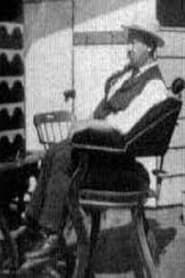
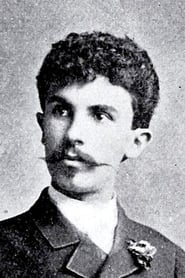
William K.L. Dickson and William Heise shake hands in this early experimental film.
Cast & crew
More films like this
More Documentary films
View all →



More from William Heise
View all →
More about this film
About the production
Release date1892
Box officeNot commercially released - shown on Kinetoscope machines
ProductionEdison Manufacturing Company
Filmed inEdison's Black Maria Studio, West Orange, New Jersey
Filmed in Edison's revolutionary Black Maria studio, which featured a retractable roof to allow natural sunlight for filming. The studio was built on a circular turntable that could be rotated to follow the sun's movement throughout the day. This film was shot using 35mm film with an Edison-designed camera, running at approximately 40-46 frames per second. The entire production was experimental in nature, intended to test the capabilities of the new motion picture technology rather than create entertainment for mass audiences.
Themes
CollaborationInnovationHuman interactionTechnological progressPioneering spirit
Themes & topics
HandshakeExperimentSilent filmShort filmBlack and whiteEarly cinemaTest filmDocumentaryEdison StudioBlack Maria
Historical background
Made in 1892, in United States, under William Kennedy Dickson, A Hand Shake belongs to documentary filmmaking during early cinema when shorts dominated nickelodeon programs.
Why this film matters
Within documentary history, William Kennedy Dickson's name attaches to the work; surviving prints help researchers study silent-era craft; archival value lies in recorded reality rather than fiction.
Making of
The making of 'A Hand Shake' took place during the pioneering days of motion picture invention at Thomas Edison's laboratory in West Orange, New Jersey. William K.L. Dickson, who appears in the film, was Edison's chief assistant and the primary inventor of the Kinetograph camera and Kinetoscope viewing system. William Heise, the other man in the film and its director, was Edison's principal camera operator during this period. The film was shot in the innovative Black Maria studio, which Edison's team had constructed specifically for motion picture production. The studio featured a unique design with a roof that could be opened to let in natural sunlight, as electric lighting was not yet suitable for film exposure. The entire production process was experimental and groundbreaking, with each short film serving as both a test of the technology and a demonstration of its capabilities. The simple act of shaking hands was chosen deliberately as it was a clear, recognizable action that could be easily captured and understood by viewers experiencing motion pictures for the first time.
What critics said
Contemporary reviews of A Hand Shake are sparse in open sources; later catalog entries chiefly summarize plot and credits.
Did you know?
- This is one of the earliest surviving motion pictures in cinema history
- William K.L. Dickson was Thomas Edison's primary assistant in developing motion picture technology
- The film was shot in Edison's Black Maria, the world's first movie studio
- The handshake symbolizes the collaboration between two cinema pioneers
- This film was created for viewing on Edison's Kinetoscope, an early motion picture device for individual viewing
- The film was shot on 35mm film, which became the industry standard for decades
- Dickson and Heise were both crucial figures in the development of early cinema technology
- The film was likely made as a test of the new technology rather than for commercial purposes
- Only a few seconds long, it represents the birth of narrative in cinema
- This film predates the Lumière brothers' first public screening by several years
Visual style
The cinematography of 'A Hand Shake' represents the most basic form of early motion picture photography. The camera was stationary, positioned to capture the action from a single, fixed angle. The lighting came entirely from natural sunlight entering through the retractable roof of the Black Maria studio. The film was shot on 35mm celluloid using Edison's Kinetograph camera, which was powered by an electric motor to ensure consistent speed. The frame rate was approximately 40-46 frames per second, much faster than the 24 fps that would later become standard. The composition is simple and functional, with the subjects centered in the frame to ensure maximum visibility. There was no camera movement, no close-ups, and no variation in shots - techniques that had not yet been invented. The visual quality would have been grainy and lacking in detail by modern standards, but was revolutionary for its time. The entire sequence was captured in a single continuous take, as editing techniques had not yet been developed.
Innovations
A Hand Shake" represents several major technical achievements in the history of cinema. It was filmed using Edison's revolutionary Kinetograph camera, one of the first motion picture cameras capable of capturing continuous movement. The film was shot on 35mm celluloid, establishing a format that would become the industry standard for over a century. The use of perforated film edges for smooth movement through the camera was a significant innovation. The film demonstrated the successful capture of human movement at a consistent frame rate, a major breakthrough in motion picture technology. The production took place in Edison's Black Maria studio, the first purpose-built motion picture production facility, featuring innovative design elements like a rotating structure and retractable roof for optimal lighting. The film's existence proved that motion pictures could record and reproduce human action with reasonable clarity. It also demonstrated the viability of short-form content for the emerging medium of cinema. The technical success of this film and others like it paved the way for the commercial development of motion pictures as an entertainment medium.
Music
No soundtrack was created for 'A Hand Shake' as it was a silent film made before the development of synchronized sound technology. The Edison Kinetoscope was a visual-only device, and audiences would have viewed the film in silence. In some exhibition contexts, particularly when films were later projected for audiences, live musical accompaniment might have been provided by a pianist or small orchestra, but this was not part of the original presentation. The film was created during a period when Edison was simultaneously working on combining motion pictures with his phonograph technology to create what he called the Kinetophone, but this synchronization technology was not yet perfected when 'A Hand Shake' was made. The absence of sound was typical of all films from this era, and audiences of the 1890s were accustomed to silent visual entertainment. Modern restorations or presentations of the film may include musical accompaniment, but this represents an addition rather than an element of the original work.
Famous quotes
There are no spoken lines in this silent film
Memorable scenes
- The entire film consists of a single memorable scene: William K.L. Dickson and William Heise approaching each other and shaking hands, representing one of the first recorded human interactions in cinema history
What audiences thought
The original audience for 'A Hand Shake' consisted primarily of visitors to Edison's laboratory and early adopters who paid to view films on the Kinetoscope machines. These viewers were experiencing motion pictures for the first time, and their reactions were typically ones of astonishment and wonder at the technology itself rather than appreciation of the content. Reports from the era suggest that audiences were fascinated by the lifelike movement and the ability to see recorded action, regardless of how simple the subject matter might be. The film, along with other Edison shorts, was shown at the first dedicated Kinetoscope parlor that opened in New York City in 1894, where patrons paid 25 cents to view five films. Modern audiences encountering 'A Hand Shake' through film archives, museums, or digital collections typically view it with historical curiosity, appreciating its place in cinema history while recognizing its limitations as entertainment. The film serves as an educational tool for understanding the origins of cinema and the technical limitations faced by early filmmakers.
Film connections
Influenced by
- Eadweard Muybridge's motion studies
- Étienne-Jules Marey's chronophotography
- Thomas Edison's phonograph technology
- Still photography traditions
This film influenced
- Other Edison Kinetoscope shorts
- The Lumière brothers' early films
- Georges Méliès' early experiments
- All subsequent narrative films
Film restoration
Preserved and available through various film archives and digital collections. The film has been restored and digitized by several institutions including the Library of Congress and the Museum of Modern Art. As one of the earliest surviving motion pictures, it is considered an important cultural artifact and has been carefully preserved for historical and educational purposes.
Where to watch
- Library of Congress website
- Museum of Modern Art film collection
- Various online archives specializing in early cinema
- Educational film databases
- YouTube through authorized channels