

A Lively Dream
"A Chaplin mimic stumbles into trouble"
Keys: Space play/pause · ←/→ 10s · F fullscreen · M mute · </> speed
About this film
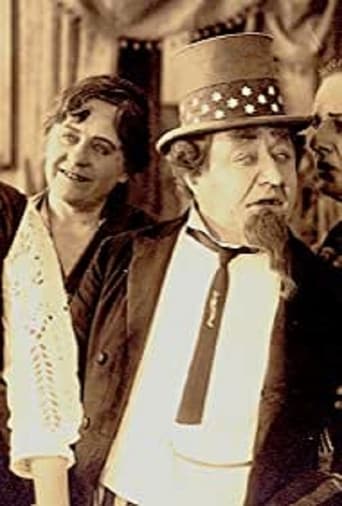
A young man practices an imitation of Charlie Chaplin, but his eagerness and clumsy excitement gets him in trouble more than once. In the end, the unfortunate Chaplin imitator manages to escape the most impossible situations after all. Or is it all in his head? (stumfilm.dk)
Cast & crew
More Comedy films
View all →






More from Lau Lauritzen Sr.
View all →
More about this film
About the production
Release date1917
ProductionNordisk Film
Filmed inCopenhagen, Denmark
The film was produced during the golden age of Danish cinema when Nordisk Film was one of Europe's leading production companies. As a silent comedy, the film relied heavily on physical comedy and visual gags, typical of the Chaplin-influenced style popular during this period. The production would have used the standard film stock and camera equipment of the 1910s, with intertitles providing dialogue and narrative progression.
Themes
Identity and imitationThe nature of reality vs. dreamsThe pursuit of fame and recognitionComedy as social commentaryThe power of imagination
Themes & topics
Chaplin imitationdream sequencephysical comedyslapstickmistaken identitysurrealismaspiring performercomedy of errors
Historical background
A Lively Dream appeared in 1917, when the silent era before Hollywood consolidated into a studio system shaped how movies were financed, distributed, and discussed. Audiences of the day encountered the work amid shifting tastes in acting, pacing, and spectacle. Its focus on a young man practices an imitation of charlie chaplin, but his eagerness and clumsy excitement gets him in trouble more than once mirrors themes circulating in popular culture of that moment.
Why this film matters
A Lively Dream (1917) belongs to the wider archive of world cinema, documenting a young man practices an imitation of charlie. Archivists and historians value such titles for what they reveal about craft, genre, and audience expectations. Restorations and festival screenings keep the work visible to viewers far beyond its first run.
Making of
The making of 'A Lively Dream' reflects the rapid industrialization of cinema in Denmark during the 1910s. Director Lau Lauritzen Sr. was part of a generation of Danish filmmakers who helped establish the country's reputation for quality film production. The casting of Edmond Barenco as the Chaplin imitator suggests the actor may have specialized in physical comedy or had a particular talent for mimicry. The film's production would have taken place in Copenhagen's growing film studio facilities, where Nordisk Film had established state-of-the-art production spaces. The dream sequence elements would have required innovative camera techniques for the time, possibly including dissolves or multiple exposure effects to create the surreal atmosphere. As with many silent comedies of this era, the film would have relied on carefully choreographed physical stunts and timing, requiring extensive rehearsal and coordination between the actor and camera crew.
What critics said
Press coverage from 1917 is fragmentary for many titles of this vintage; surviving notices for A Lively Dream tend to stress novelty, star power, or topical appeal. Later writing places the picture within its national and generic context, weighing both period conventions and moments that still land for modern viewers. Streaming and disc releases have revived discussion among classic-film audiences.
Did you know?
- This film was part of a wave of Chaplin imitations that swept Europe during the 1910s, as Charlie Chaplin's Tramp character became an international phenomenon
- Director Lau Lauritzen Sr. was a pioneering figure in Danish cinema who would later establish his own production company
- The film's title 'A Lively Dream' (original Danish title likely 'En livlig Drøm') suggests the dream-like quality of the protagonist's adventures
- 1917 was during World War I, when Denmark remained neutral and its film industry continued to produce content for international markets
- The Chaplin imitation genre was particularly popular in Scandinavia, where local comedians adapted the Tramp character for regional audiences
- Nordisk Film, the likely production company, was founded in 1906 and is one of the world's oldest film companies still in operation
- Silent comedies from this era typically ran between 10-30 minutes, as feature-length films were still becoming standardized
- The film would have been accompanied by live musical accompaniment during its original theatrical run
Visual style
As a 1917 Danish comedy, the cinematography would have employed the relatively stationary camera techniques typical of the era, with occasional movement for tracking shots during chase sequences. The film would have used the standard 35mm film format with black and white imagery. Visual storytelling would have been paramount, with careful composition of frames to highlight physical comedy and facial expressions. The dream sequences would have utilized special effects techniques available at the time, such as multiple exposures, dissolves, or matte shots to create surreal imagery. The cinematographer would have worked closely with the director to ensure that the Chaplin-esque physical comedy was clearly visible and properly framed within the shot.
Innovations
While 'A Lively Dream' was not a groundbreaking technical achievement, it would have utilized the standard film technology of 1917 at a high level of craftsmanship. The dream sequences would have required the use of available special effects techniques such as double exposure or dissolves to create the surreal atmosphere. The physical comedy sequences would have demanded precise timing between the performers and camera work. The film would have been shot and edited using the continuity editing system that was becoming standardized during this period. The production would have benefited from Nordisk Film's reputation for technical quality and professional standards in Danish filmmaking.
Music
As a silent film, 'A Lively Dream' would have been accompanied by live musical performance during its original theatrical run. The score would likely have been compiled from popular classical pieces and original compositions performed by a pianist or small orchestra in the cinema. The music would have been synchronized with the on-screen action, with upbeat, playful melodies accompanying the comedy scenes and more mysterious or dreamlike music for the fantasy sequences. The tempo and style of the music would have been crucial in establishing the comedic timing and emotional tone of each scene. Theatres might have used cue sheets provided by the distributor or created their own arrangements based on the film's content.
Famous quotes
As a silent film, dialogue was conveyed through intertitles and visual performance rather than spoken quotes
Memorable scenes
- The opening sequence where the protagonist first attempts his Chaplin imitation, likely featuring the iconic waddle walk and cane twirling; The climactic dream sequence where reality blurs into fantasy, possibly featuring impossible physical feats or surreal situations; The final scene that reveals the ambiguous nature of the protagonist's adventures, leaving the audience to question what was real and what was imagined
What audiences thought
Audiences in 1917 would have been familiar with Charlie Chaplin's work through the international distribution of his films, making the premise immediately accessible and entertaining. The combination of physical comedy and the dream narrative would have provided the escapist entertainment that wartime audiences craved. Danish audiences particularly appreciated comedy that balanced local sensibilities with international trends. The film's success would have depended largely on the lead actor's ability to create a sympathetic character while parodying Chaplin without being a mere copy. The ambiguous ending, questioning the reality of events, would have provided audiences with a sophisticated twist that elevated the film above simple slapstick.
Film connections
Influenced by
- Charlie Chaplin's Tramp character films
- Earlier Danish comedies
- American slapstick traditions
- European surrealist literature
- Music hall and vaudeville traditions
This film influenced
- Later Danish comedy films
- Other Chaplin imitation works
- Early European surreal comedies
Film restoration
As a 1917 Danish film, preservation status is uncertain. Many films from this era have been lost due to the fragile nature of early film stock and lack of systematic preservation efforts. However, if the film was part of Nordisk Film's catalog, there is a possibility that copies or elements may survive in the Danish Film Institute's archives or other European film archives. The film's survival would depend on whether it was considered significant enough for preservation during the mid-20th century when many early films were discarded or deteriorated.
Where to watch
- Due to the age and obscurity of this film, it is unlikely to be available on commercial streaming platforms. Potential viewing options might include: The Danish Film Institute's archive or special screenings; European film archive collections; Silent film festivals or specialized cinema events; Academic or research institutions with film studies programs; Online archives dedicated to early cinema, though availability would depend on preservation status and rights clearance