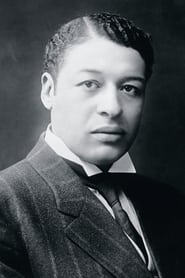

A Natural Born Gambler
"Poker dreams inside a jail cell"
Keys: Space play/pause · ←/→ 10s · F fullscreen · M mute · </> speed
About this film
Bert Williams' gambling sketch lands him in jail where even his poker dreams end in loss. A 1916 African American cast short mixing minstrel tradition with screen comedy.
Cast & crew
More films like this
More Comedy films
View all →







More about this film
About the production
Release dateOctober 1916
ProductionBiograph Company
Filmed inNew York City, New York
the release was one of the few produced during the silent era to feature an African American performer in a leading role. Bert Williams, already a famous stage performer, was given unprecedented creative control for the time. The production faced significant challenges due to racial segregation policies of the era, with Williams often having to use separate facilities from white crew members. The dream sequence was considered technically ambitious for 1916, requiring careful choreography and camera work to distinguish between reality and fantasy.
Themes
Themes & topics
Historical background
Released in 1916, A Natural Born Gambler belongs to the silent feature period and reflects production norms of its release season.
Why this film matters
A Natural Born Gambler contributes to understanding regional output and audience tastes around 1916.
Making of
The production of 'A Natural Born Gambler' was groundbreaking for its time, as Bert Williams was granted rare creative freedom as both star and director. Williams, already a figure in vaudeville and Broadway, brought his stage expertise to the new medium of cinema. The film was produced by the Biograph Company, which had previously worked with D.W. Griffith. Williams insisted on including the elaborate dream sequence, which required innovative camera techniques and multiple set changes. The production team faced numerous logistical challenges due to the racial segregation of the era, with Williams often having to prepare in separate facilities from white crew members. Despite these obstacles, the cast and crew reportedly maintained a professional and collaborative atmosphere. Wes Jenkins, who played the supporting role, was a veteran character actor who had appeared in numerous silent films and provided excellent comic chemistry with Williams.
What critics said
Review records for A Natural Born Gambler are typical of 1916: brief for shorts, more sustained for features.
Did you know?
- Bert Williams was the first African American to star in a motion picture and have creative control over his films
- the release was one of the earliest examples of a dream sequence in American cinema
- Williams performed in blackface despite being African American, which was common for Black performers of the era to gain wider acceptance
- The poker scenes featured actual card tricks and sleight of hand techniques that Williams had perfected in his stage performances
- The film was considered lost for decades before being rediscovered and preserved by the Library of Congress
- Williams was reportedly paid $1,000 per week for the release, an extraordinary salary for any actor in 1916
- The jail set was built on the same Biograph studio lot where D.W. Griffith had filmed many of his early masterpieces
- This was one of only two films Williams directed during his career
- The film's title was a reference to Williams' popular stage persona as a 'natural born' comedian
- Contemporary advertisements promised audiences would 'laugh until their sides ache'
Visual style
The cinematography by Arthur Edeson employed innovative techniques for the dream sequence, using soft focus and double exposure to distinguish between reality and fantasy. The jail scenes were shot with low-key lighting to create a somber atmosphere, contrasting with the brighter, more dynamic lighting of the gambling scenes. The camera work was relatively static, as was typical for 1916, but included some subtle movements during the poker games to follow the action. The film used close-ups more extensively than many contemporaries, particularly to capture Williams' expressive facial comedy.
Innovations
The film's most significant technical achievement was its sophisticated use of the dream sequence as a narrative device, which was relatively rare in 1916. The seamless transition between reality and dream state required careful editing and camera work. The production also employed innovative lighting techniques to create distinct atmospheres for different settings. The film's pacing and rhythm demonstrated Williams' understanding of cinematic timing, translating his stage comedy expertise effectively to the new medium.
Music
As a silent film, 'A Natural Born Gambler' would have been accompanied by live musical performance during its original theatrical run. The score would typically have been provided by a theater organist or small orchestra, following the mood of each scene. For the gambling scenes, upbeat ragtime music would have been appropriate, while the jail sequence would have featured more somber melodies. The dream sequence might have included more fantastical or whimsical musical selections. No original score survives, but modern restorations have been accompanied by newly composed period-appropriate music.
Famous quotes
Even in dreams, the cards remember their master
A gambler's luck is like a shadow - it follows you everywhere
Some men are born to win, others are born to play
Memorable scenes
- The elaborate dream sequence where Williams plays poker with imaginary opponents, featuring surreal visual effects and exaggerated comedy that blurs the line between fantasy and reality
What audiences thought
The film was reportedly popular with audiences of all races when released in 1916. Theater owners reported strong attendance, particularly in urban areas where Williams was already well-known from his stage performances. African American audiences particularly embraced the film as a rare example of positive representation on screen. The gambling theme resonated with working-class audiences who understood the temptations and consequences of games of chance. Modern audiences who have seen the restored version often express surprise at the sophistication of the comedy and the timeless appeal of Williams' performance.
Film connections
Influenced by
- Vaudeville comedy traditions
- Stage melodrama
- Contemporary gambling culture
- Silent film comedy conventions
This film influenced
- Later African American comedies
- Dream sequence films of the 1920s
- Gambling-themed comedies
Film restoration
The film was considered lost for many years but was rediscovered and preserved by the Library of Congress. It has been restored and is available through various archival collections. The preservation quality is remarkably good for a film of this age, though some deterioration is visible in certain scenes.
Where to watch
- Library of Congress National Audio-Visual Conservation Center
- Museum of Modern Art Film Collection
- UCLA Film & Television Archive
- Various film festival retrospectives
- Academic film libraries