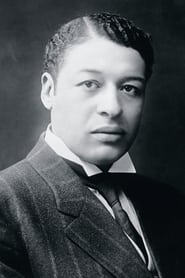
Bert Williams
Actor & Director
Born: November 12, 1874 in Nassau, Bahamas Died: March 4, 1922 Active: 1893-1922 Birth Name: Egbert Austin Williams
Films
1 film
About Bert Williams
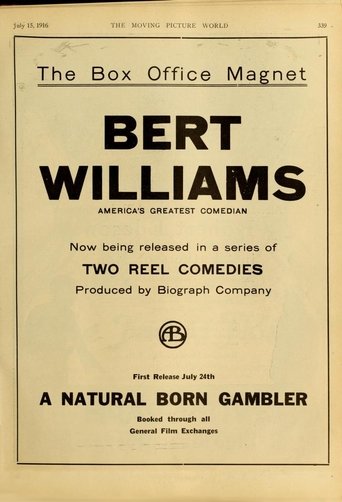
African American entertainer who broke racial barriers in vaudeville, Broadway, and early cinema. Born in the Bahamas and raised in California, he began his career as part of the successful comedy duo Williams and Walker with George Walker, becoming popular and highest-paid Black entertainers of the early 20th century. After Walker's death in 1909, Williams continued as a solo performer, joining the Ziegfeld Follies in 1910 as the first Black performer in the otherwise all-white production, where he became one of its biggest stars. His film career, though brief, included the 1916 film 'A Natural Born Gambler,' which he both directed and starred in, making it one of the earliest films to feature an African American director and cast. Williams was known for his sophisticated comedic timing and his ability to navigate the difficult racial stereotypes of the era while maintaining his dignity and artistic integrity. His screen career spanned the 1890s until his death in 1922, during which he influenced generations of performers and helped pave the way for future African American artists in entertainment.
The Craft
On Screen
Williams was known for his subtle, sophisticated comedic style that combined physical comedy with emotional depth. He often performed in blackface, a controversial practice of the era, but subverted the stereotypical portrayals by infusing his characters with humanity, intelligence, and pathos. His timing was impeccable, and he could convey complex emotions through slight gestures and expressions, making him a master of both comedic and dramatic moments.
Behind the Camera
While his directorial output was limited to 'A Natural Born Gambler,' Williams approached filmmaking with the same attention to detail and character development that characterized his stage work. The film demonstrated his understanding of visual storytelling and his ability to create authentic African American narratives that avoided demeaning stereotypes.
Milestones
- Formed Williams and Walker comedy duo (1893)
- Starred in 'In Dahomey' (1903), first all-Black musical on Broadway
- Joined Ziegfeld Follies as first Black performer (1910)
- Directed and starred in 'A Natural Born Gambler' (1916)
- Became one of the highest-paid entertainers of his era
- Published autobiography 'The Man Who Beat the Man Who Shot Liberty Valance'
Best Known For
Iconic Roles
Must-See Films
Accolades
Won
- Inducted into the International Tap Dance Hall of Fame (1989)
- Inducted into the American Theatre Hall of Fame (1979)
Nominated
- Posthumous recognition by the Black Filmmakers Hall of Fame
Special Recognition
- US Postal Service commemorative stamp (1996)
- Star on the Hollywood Walk of Fame (1975)
- Bert Williams Medal awarded by the Ziegfeld Club
Working Relationships
Worked Often With
Studios
Why They Matter
Impact on Culture
Trailblazer who fundamentally changed the landscape of American entertainment for African American performers. As the first Black star of the Ziegfeld Follies, he broke. His work in film, particularly 'A Natural Born Gambler,' represented one of the earliest examples of African Americans controlling their own cinematic narratives. Williams' success challenged prevailing racial attitudes and created opportunities for future generations of Black entertainers, though he often had to navigate the painful compromise of performing in blackface to achieve mainstream acceptance.
Lasting Legacy
Bert Williams' legacy extends far beyond his own performances; he is remembered as a pioneer who opened doors for African Americans in entertainment while maintaining his artistic integrity. His ability to subvert stereotypes from within the constraints of his era demonstrated remarkable courage and creativity. Modern scholars and performers continue to study his work for its technical brilliance and its historical significance. Williams is frequently cited as a major influence by comedians and performers across racial lines, and his story serves as a powerful reminder of both the progress made in American entertainment and the barriers that still exist.
Who They Inspired
Williams influenced generations of performers through his innovative approach to comedy and his dignified resistance to racial stereotypes. His sophisticated timing and emotional depth paved the way for future comedians like Jackie Gleason and Redd Foxx. In the African American community, his success inspired performers like Paul Robeson, Sidney Poitier, and later, Richard Pryor and Eddie Murphy. His willingness to take artistic risks and his determination to maintain his humanity in the face of degrading stereotypes set a powerful example for all marginalized performers.
Off Screen
Williams married Charlotte 'Lottie' Thompson in 1899, who was also his business manager and a crucial supporter of his career. Despite his professional success, Williams faced constant racial discrimination and was often forced to use separate entrances and facilities. He suffered from health issues, including heart problems and depression, which were exacerbated by the stress of performing in a racially hostile environment. His wife Charlotte died in 1923, just a year after his death.
Education
Limited formal education; primarily self-taught through observation and experience in entertainment
Family
- Charlotte 'Lottie' Thompson (1899-1922)
Did You Know?
- Was the first African American to headline a Broadway show
- Earned over $100,000 per year at the height of his career (equivalent to over $3 million today)
- W.C. Fields considered Williams the greatest comedian he ever saw
- His funeral was attended by over 5,000 people, including many white performers who broke racial barriers to attend
- Often had to stay in separate hotels from his white castmates even while being the star of the show
- His autobiography was ghostwritten by Charles MacArthur
- Suffered from chronic insomnia and often performed while exhausted
- Was a skilled poker player in real life, which inspired 'A Natural Born Gambler'
- Once performed with a broken leg, incorporating the injury into his act
- His death certificate listed his occupation as 'comedian' despite his many other talents
In Their Own Words
You can't be a success in any business without believing that it is the greatest business in the world.
I have never been able to discover that there was anything disgraceful in being a colored man. But I have often found it inconvenient.
The way to get ahead in this world is to work like hell and keep your mouth shut.
I'm a tired man. I'm a weary man. I'm a man that's been working all his life.
When I was a boy, I thought I could do anything. Now I know I can't do anything, but I still think I can.
Frequently Asked Questions
Who was Bert Williams?
African American entertainer who achieved fame as a vaudeville comedian, Broadway star, and early film with credits in this catalog. He was the first Black performer to join the Ziegfeld Follies and.
What films is Bert Williams best known for?
Titles linked here include A Natural Born Gambler (1916), Fish (1916).
When was Bert Williams born and when did he die?
Born November 12, 1874; died March 4, 1922.
What awards did Bert Williams win?
During his lifetime, Williams received few formal awards due to the racial barriers of his era, but he has been posthumously recognized with inductions into the International Tap Dance Hall of Fame (1989) and the American Theatre Hall of Fame (1979). He also received a Hollywood Walk of Fame star and was commemorated on a US Postal Service stamp in 1996.
What was Bert Williams' acting style?
Williams was known for his sophisticated comedic style that combined subtle physical comedy with deep emotional resonance. Despite often performing in blackface, he subverted stereotypes by infusing his characters with intelligence and humanity, using impeccable timing and nuanced expressions to create complex, memorable performances.
How did Bert Williams impact African American entertainment?
Williams fundamentally changed opportunities for African American performers by becoming the first Black star of major productions like the Ziegfeld Follies. His success proved that Black performers could headline mainstream shows, paving the way for future generations and demonstrating that artistic excellence could transcend racial barriers.
Why is 'A Natural Born Gambler' historically significant?
'A Natural Born Gambler' is historically significant as one of the earliest films directed by and starring an African American, representing a rare example of Black creative control in early cinema. The film provided an authentic portrayal of African American life that avoided demeaning stereotypes, making it a landmark in film history.