
A Nightmare
"A sleeping man meets a grinning, malevolent moon in his garden nightmare."
Keys: Space play/pause · ←/→ 10s · F fullscreen · M mute · </> speed
About this film
A man has a fantastical nightmare involving, among other things, a grinning malevolent moon. The film was shot outside in the garden of Méliès's property in Montreuil, Seine-Saint-Denis, with painted scenery. Méliès plays the sleeping man.
Cast & crew
More films like this
More Horror films
View all →

More from Georges Méliès
View all →
More about this film
About the production
Release date1896
BudgetNot recorded - films of 1896 had minimal budgets, typically just the cost of film stock and basic props
Box officeNot systematically tracked in 1896; early films were sold outright rather than earning box office percentages
ProductionStar Film Company
Filmed inGeorges Méliès's studio garden in Montreuil-sous-Bois, France
Filmed in Méliès's custom-built glass studio which allowed him to control lighting for his special effects. The film used multiple exposure techniques and substitution splices to create the magical transformations. The grinning moon effect was achieved through a combination of stage machinery and careful timing of camera stops and starts.
Themes
Dreams and nightmaresThe subconscious mindFear of the unknownReality versus illusionSupernatural intrusion
Themes & topics
nightmarefantasyhorrormoontransformationdreambedroomsupernaturalsurrealdevilmagicspecial effects
Historical background
Made in 1896, in France, under Georges Méliès, A Nightmare belongs to silent filmmaking during early cinema when shorts dominated nickelodeon programs. A Nightmare is a silent trick film created and released in 1896 and directed by Georges Méliès.
Why this film matters
Within silent history, Georges Méliès's name attaches to the work; surviving prints help researchers study silent-era craft; 1896 film by Georges Méliès.
Making of
Georges Méliès, a former magician and theater owner, built his own glass-walled studio in 1896 specifically to create films with elaborate special effects. 'A Nightmare' was produced during his most creative period when he was rapidly developing new cinematic techniques. The film's production involved careful choreography of actors and props to achieve the seamless transformations through substitution splicing. Méliès's theatrical background is evident in the film's staging, with actors performing in broad, exaggerated styles suitable for the silent medium. The moon prop was likely constructed from papier-mâché and painted to create the grinning expression, then maneuvered into frame using stage rigging adapted for film use.
What critics said
Contemporary reviews of A Nightmare are sparse in open sources; later catalog entries chiefly summarize plot and credits.
Did you know?
- This is one of the earliest horror films ever made, predating what many consider the first horror film by just a few months
- The film showcases Méliès's pioneering use of multiple exposure, a technique he perfected and used extensively throughout his career
- Jehanne d'Alcy, who appears in the film, was not only Méliès's frequent collaborator but later became his second wife
- The grinning moon character became one of Méliès's signature visual motifs, appearing in several of his later films including his most famous work 'A Trip to the Moon'
- The film was originally cataloged as Star Film #20 in Méliès's production listings
- Like many early Méliès films, it was hand-colored frame by frame for special screenings, though most surviving copies are black and white
- The nightmare theme allowed Méliès to showcase his theatrical background, incorporating elements from Parisian stage magic and féerie productions
- The film's surreal imagery was heavily influenced by the Symbolist art movement popular in France during the 1890s
- Méliès himself plays the main character, as he did in most of his early films due to budget constraints and his background as a performer
- The transformation effects were created by stopping the camera, changing the actors or props, then restarting filming - a technique Méliès discovered by accident
Visual style
The cinematography in 'A Nightmare' reflects Méliès's theatrical background, with a fixed camera position resembling an audience's view of a stage. The single static shot was typical of early cinema but served Méliès's needs for creating controlled special effects. The lighting was natural, coming through the glass walls of his studio, which allowed for consistent illumination throughout the day. The composition carefully frames the bed and surrounding space to maximize the impact of the supernatural elements. The film uses depth of field to create the illusion of the moon entering the room, with the moon prop moving from background to foreground. The visual style is deliberately artificial and theatrical, embracing the unreality of the medium rather than attempting photographic realism.
Innovations
'A Nightmare' showcases several groundbreaking technical achievements for 1896. The film demonstrates Méliès's mastery of multiple exposure, allowing ghostly images to appear and disappear. The substitution splice technique, discovered accidentally by Méliès when his camera jammed, enabled the magical transformations that define the film. The use of stage machinery adapted for film, particularly in the moon sequence, showed early innovation in practical effects. The film also exhibits careful control of continuity within a single shot, maintaining consistent positioning despite the complex special effects. These techniques, while primitive by modern standards, were revolutionary for their time and established the foundation for cinematic special effects.
Music
As a silent film, 'A Nightmare' had no synchronized soundtrack. During original screenings, the film would have been accompanied by live music, typically a piano or small ensemble. The musical accompaniment would have been improvised or drawn from popular classical pieces, with dramatic music timed to enhance the scary moments. Some venues might have used sound effects created by backstage assistants to complement the on-screen action. The choice of music could vary significantly between showings, as standardized film scores would not become common until the sound era.
Famous quotes
As a silent film, 'A Nightmare' contains no dialogue. The storytelling relies entirely on visual narrative and pantomime performance.
Memorable scenes
- The iconic sequence where the giant grinning moon phases through the bedroom window and looms over the sleeping man, its malevolent smile creating one of cinema's first truly frightening images. The moon's slow, deliberate movement and eerie fixed expression create a sense of supernatural menace that was revolutionary for 1896 audiences.
What audiences thought
Early audiences were reportedly astonished by Méliès's magical films, which differed significantly from the Lumière brothers' realistic actualities. 'A Nightmare' and similar fantasy films were popular attractions at fairgrounds and music halls throughout Europe. The film's surreal imagery and startling transformations were considered novel and entertaining to viewers who had never seen such effects before. Audience reactions to early horror films like this one helped establish that cinema could evoke emotional responses beyond simple wonder. The film was successful enough to be exported internationally, with copies sold to distributors in England, the United States, and other countries.
Film connections
Influenced by
- Parisian féerie theater productions
- Stage magic and illusion shows
- Gothic literature
- Symbolist art movement
- Theatrical melodrama
- Victorian ghost stories
This film influenced
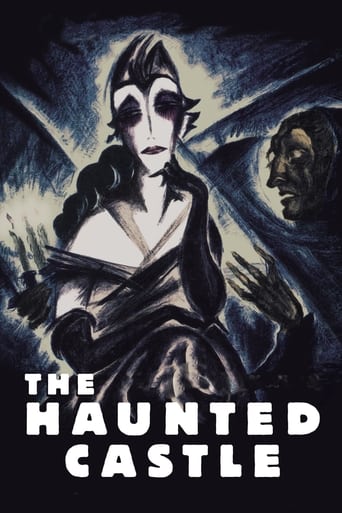
- The Haunted Castle (1896)
- The Astronomer's Dream (1898)
- A Trip to the Moon (1902)
- The Infernal Cauldron (1903)
- The Kingdom of the Fairies (1903)
- The Monster (1903)
Film restoration
The film survives in the archives of several major film institutions, including the Cinémathèque Française and the Museum of Modern Art. While some degradation is evident due to the age of the nitrate film stock, the essential content remains intact. Several restoration projects have preserved and digitized the film for modern viewing. Some hand-colored versions may exist in private collections, though most surviving copies are black and white.
Where to watch
- YouTube (various public domain uploads)
- Internet Archive
- The Criterion Channel (as part of Méliès collections)
- Kino Lorber DVD releases of Méliès films
- Museum of Modern Art film screenings
- British Film Institute streaming service